Translate

Thursday, December 5, 2013

IN WINTER'S SHADOW

I delivered the audio files for KINGDOM OF SUMMER today.  Pending approvals, it should be out in January 2014.  YAY!

Up next, the third and final book in the HAWK OF MAY, DOWN THE LONG WAY series by Gillian Bradshaw.

In Winter's Shadow

http://www.barnesandnoble.com/w/in-winters-shadow-gillian-bradshaw/1100076239?ean=9781402269639

http://www.amazon.com/Winters-Shadow-Gillian-Bradshaw/dp/1402240740


Wars of the Roses

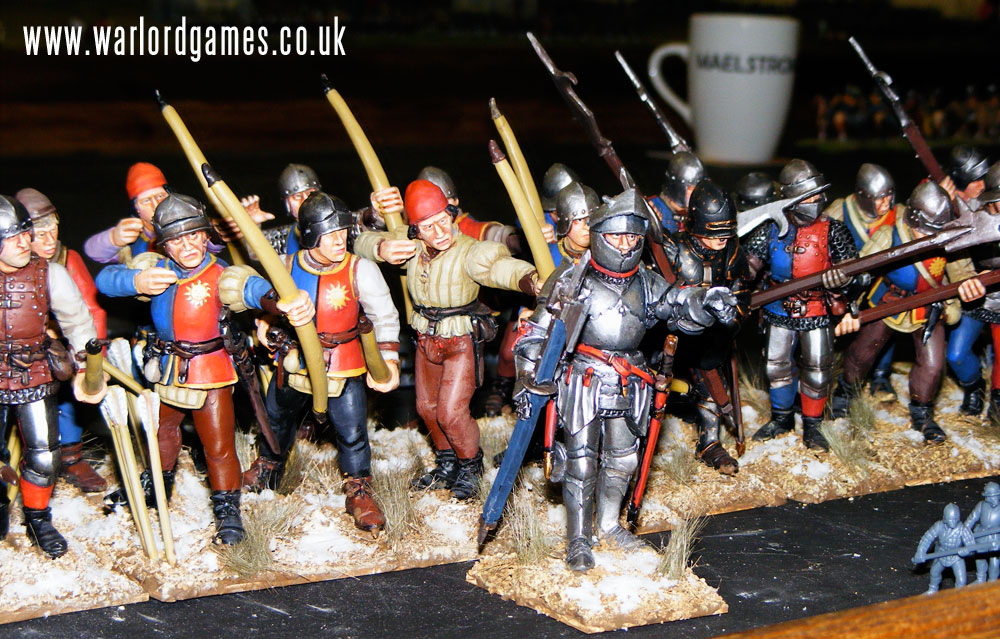
Plastic Perry War of the Roses Infantry 3-Ups 1


image: http://www.warlordgames.com/3728/new-release-perry-plastic-war-of-the-roses/
http://www.britannica.com/EBchecked/topic/509963/Wars-of-the-Roses

Wars of the Roses, (1455–85), in English history, the series of dynastic civil wars whose violence and civil strife preceded the strong government of the Tudors. Fought between the Houses of Lancaster andYork for the English throne, the wars were named many years afterward from the supposed badges of the contending parties: the white rose of York and the red of Lancaster.


Both houses claimed the throne through descent from the sons of Edward III. Since the Lancastrians had occupied the throne from 1399, the Yorkists might never have pressed a claim but for the near anarchy prevailing in the mid-15th century. After the death of Henry V in 1422 the country was subject to the long and factious minority of Henry VI. Great magnates with private armies dominated the countryside. Lawlessness was rife and taxation burdensome. Henry later proved to be feckless and simpleminded, subject to spells of madness, and dominated by his ambitious queen, Margaret of Anjou, whose party had allowed the English position in France to deteriorate.
Henry lapsed into insanity in 1453, causing a powerful baronial clique, backed by Richard Neville, the earl of Warwick (the “kingmaker”), to install Richard, duke of York, as protector of the realm. When Henry recovered in 1455 he reestablished the authority of Margaret’s party, forcing York to take up arms for self-protection. The first battle of the wars, at St. Albans (May 22, 1455), resulted in a Yorkist victory and four years of uneasy truce. Civil war was resumed in 1459. The Yorkists were successful at Blore Heath (September 23) but were scattered after a skirmish at Ludford Bridge (October 12). In France Warwick regrouped the Yorkist forces and returned to England in June 1460, decisively defeating the Lancastrian forces at Northampton (July 10). York tried to claim the throne but settled for the right to succeed upon the death of Henry. This effectively disinherited Henry’s son, Prince Edward, and caused Queen Margaret to continue her opposition.
Gathering forces in northern England, the Lancastrians surprised and killed York at Wakefield in December and then marched south toward London, defeating Warwick on the way at the Second Battle of St. Albans (Feb. 17, 1461). Meanwhile, York’s eldest son and heir, Edward, had defeated a Lancastrian force at Mortimer’s Cross (February 2) and marched to relieve London, arriving before Margaret on February 26. The young Duke of York was proclaimed King Edward IV at Westminster on March 4. Then Edward, with the remainder of Warwick’s forces, pursued Margaret north to Towton. There, in the bloodiest battle of the war, the Yorkists won a complete victory. Henry, Margaret, and their son fled toScotland. The first phase of the fighting was over, except for the reduction of a few pockets of Lancastrian resistance.
The next round of the wars arose out of disputes within the Yorkist ranks. Warwick and his circle were increasingly passed over at Edward’s court; more seriously, Warwick differed with the King on foreign policy. In 1469 civil war was renewed. Warwick and Edward’s rebellious brother George, duke ofClarence, fomented risings in the north; and in July, at Edgecote (near Banbury), defeated Edward’s supporters, afterward holding the King prisoner. By March 1470, however, Edward regained his control, forcing Warwick and Clarence to flee to France, where they allied themselves with the French king Louis XI and their former enemy, Margaret of Anjou. Returning to England (September 1470), they deposed Edward and restored the crown to Henry VI. Edward fled to the Netherlands with his followers and, securing Burgundian aid, returned to England in March 1471. Edward outmanoeuvred Warwick, regained the loyalty of Clarence, and decisively defeated Warwick at Barnet on April 14. That very day, Margaret had landed at Weymouth. Hearing the news of Barnet, she marched west, trying to reach the safety of Wales; but Edward won the race to the Severn. At Tewkesbury (May 4) Margaret was captured, her forces destroyed, and her son killed. Shortly afterward, Henry VI was murdered in the Tower of London. Edward’s throne was secure for the rest of his life (he died in 1483).
In 1483 Edward’s brother Richard III, overriding the claims of his nephew, the young Edward V, alienated many Yorkists, who then turned to the last hope of the Lancastrians, Henry Tudor (later Henry VII). With the help of the French and of Yorkist defectors, Henry defeated and killed Richard at Bosworth Field on Aug. 22, 1485, bringing the wars to a close. By his marriage to Edward IV’s daughter Elizabeth of York in 1486, Henry united the Yorkist and Lancastrian claims. Henry defeated a Yorkist rising supporting the pretender Lambert Simnel on June 16, 1487, a date which some historians prefer over the traditional 1485 for the termination of the wars.

Places of Napoleonic Interest

Nelson mortally wounded
Napoleon is led away from Waterloo

http://www.napoleonguide.com/index_places.htm
If you are a Napoleonic buff then we are pleased to point you in the direction of some of the more interesting battlefields, museums and places to visit. We have included tour and sightseeing suggestions for Napoleon Bonaparte's campaigns and battlefields, together with descriptions of the battles and nearby hotels.

Northern ItalyArcola - Bassano - Castiglione - Genoa - Marengo - Rivoli - Lodi - Lonato - Mantua - Magnano - Mondovi - Montenotte - Verona - and others

Ajaccio: 
Napoleon Bonaparte's birthplace and family home.

Elba: 
The island upon which he exiled in 1814 and escaped from nine months later.


St Helena: 
The isolated island he would die on after being banished for a second time following Waterloo.


ParisLes Invalides - Arc de Triomphe - Napoleon Bonaparte's Tomb - Place de la Concorde - and others

BelgiumLigny - Quatre Bras - Waterloo - Wavre 

PortugalRolica - Vimeiro - Oporto - Torres Vedras - and others 

SpainCorunna - Talavera - Salamanca - Burgos - Saragossa - Vitoria - Fuentes de Onoro - Badajoz - Ciudad Rodrigo - San Sebastian - and others

ViennaAusterlitz - Aspern-Essling - Wagram - Schonbrunn Palace - and others

MunichUlm - Ratisbon - Eckmuhl - Abensberg - Hohenlinden - Landshut

New OrleansBattlefield - site of the signing of the Louisiana Purchase 

LeipzigLeipzig - Lutzen - Jena - Auerstadt - and others

JenaLeipzig - Lutzen - Jena - Auerstadt - and others

Did King Arthur Really Exist?

King Arthur
King Arthur
Pic: John Hamer
http://celticmythpodshow.com/blog/did-king-arthur-really-exist/
We are proud to bring you a Guest Blog, by co-author & photographer of the book King Arthur – Lord of the Grail (details below). He and his partner Kaye Hennig belive that “Reason will prevail over romance, and legend will become history.” They say that for nearly a thousand years, people have been inspired and entertained by stories, poems, songs, paintings and tapestries about King Arthur, who has become the subject of one of the largest bodies of literature in the world. However, physical evidence has been so lacking as to appear systematically obliterated over the centuries.

Even so, an abundance of truths has preserved in books, and more recently in films, of King Arthur, the Knights of the Round Table, and the Holy Grail. All of these contain elements of truth and clues for those questing for historical facts behind the legends.
The body of Merlinius Ambrosius Dubricius, identified by historian Norma Lorre Goodrich in her bookMerlin as the man better known throughout history as “Merlin” was, according to Goodrich, discovered on Bardsy Isle by the Bishop of Llandaff. Goodrich maintains that the Merlin’s body was taken to the cathedral founded by Merlin at Llandaff, Wales. Geoffrey of Monmouth, author of one of the first histories of King Arthur, and an acquaintance of that same twelfth century Bishop of Llandaff, began his famousHistory of the Kings of Britain in 1120, the same year as the Bishop’s discovery of the body. Geoffrey attributed his source to “a very ancient book written in the British language” (The History of the Kings of Britain, by Geoffrey of Monmouth, Bishop of St. Asaph, translated by Lewis G. M. Thorpe.) Coincidentally, Geoffrey was appointed archdeacon of Llandsaff (sp) in 1140.
Since Geoffrey of Monmouth, non-fiction and fiction writers have researched and written about King Arthur, inspiring readers to search for evidence that might prove the existence of this ancient king and his legendary kingdom. At least three of these writers have made discoveries, and have written about evidence that can still be seen today by those conducting their own grail quest.

Searching for the Scottish Honours

Sir Walter Scott was a prolific poet and novelist. Historical fiction, a genre he helped create and popularize, reflected his keen interest in Scottish history, and his research led him to some major discoveries. He convinced the Prince Regent, later George IV, to search in Edinburgh Castle for the Scottish Honours, the Royal Scottish regalia which had disappeared over a hundred years before. The Honours were subsequently found. Sir Walter used to escort his friends at sunset to Calton Hill in Edinburgh to view below the Salisbury Crags ancient weathered carvings that he thought memorialized King Arthur.
One distinctive sculpted image that may be among those seen by Scott is still visible. It resembles a “helmeted man.” This image was recently re-discovered by Kaye Hennig, author of King Arthur Lord of the Grail, who believes that it was created by the famous Merlin as a memorial to the real King Arthur. This giant head can still be seen quite clearly in the late afternoon on the Salisbury cliffs just across from The Palace of Holyroodhouse car park.

Was Arthur in the Borders Area of Southern Scotland?

The late Dr. Norma Lorre Goodrich was professor emeritus of French and comparative languages at Claremont Colleges in California and the author of four Arthurian books: King Arthur; Guinevere; The Holy Grail; and Merlin. Her research located the territory of the ‘real’ Arthur in the borders area of what is now southern Scotland. She believed that the cave located on the Whithorn Peninsula, now called St. Ninian’s cave, is Merlin’s famous burial cave described by legends as created by request of his Lady of the Lake, Niniane. At this site Goodrich described seeing a burial niche high up on the left side of the ruins of the cave.
St Ninian's Cave
St Ninian’s Cave
Dr. Goodrich and thousands of other visitors to this cave site over the centuries failed to identify remains of ancient art. Rock sculptures and traces of rock paintings are still visible. The images and faded paintings of larger-than-life standing figures in ceremonial attire and large and small chiseled faces of helmeted warriors and beautiful ladies bear an uncanny resemblance to descriptions of legendary Arthurian ancients. Towering above all, forty feet above the floor of the cave, is a rugged crowned head with red beard, strong shoulders, and grey mantle. Over the right shoulder another symbol is still visible, a giant heart-shaped shield with a legendary sword through it.
Those looking for stone sculptures of mythological or historical figures have been conditioned to look for sculptures created in the style of the Greek or Roman sculptors, art that was created in marble that allowed the artist to produce very recognizable human likenesses. The stone at the cave on Whithorn Peninsula is brittle with fissures and does not lend itself well to sculptures. Artisans could cut and chip the stone within the limitations of the rock and tools used to create a likeness but would then be forced to stop as the rock broke in the wrong direction. Unlike the lifelike images of the American presidents carved into cliff in the Black Hills, these ancient sculptures appear quite basic and rough. However, the intent of the Merlin and his artists appeared very clear to the couple who discovered the images. Visitors that plan their walk to the Whithorn cave when late afternoon sunlight casts shadows will find that these are the best conditions for viewing the sculpted stone figures and images.
This recent discovery by author Kaye Hennig and her photographer husband, Terrance, provides dramatic new evidence that may help secure the legendary Arthurians a place in history. Beyond that, the symbols seen in this ancient art could help explain how the Arthurians came to be lost and could provide clues to unravel the mysteries surrounding the legends of the Holy Grail. The couple believes that the ancient art was created inside this burial cave to serve as a record of King Arthur and his Merlin and as memorials to the notables of their legendary lost kingdom.
[http://www.kingarthur-lordofthegrail.com/] Find the book on Amazon

Wednesday, December 4, 2013

War of the Roses: Important People


image:  http://www.heritage-history.com/www/heritage.php?Dir=wars&FileName=wars_roses.php

roses
http://warsoftheroses.com/people.cfm

Below are mini-biographies of the major noble participants in the wars. 
Notice that most families had more than one generation involved in the 
conflict. Those nobles that allied with the Lancastrian cause are labeled 
with a . Nobles that supported the Yorkists effort are labeled with a . 
Nobles that switched allegiances are marked with both in the order of their 
allegiance.

Audley
John Audley  (14xx - 1459)
Died leading the Lancastrian forces at Blore heath.

    John Audley   (14xx - 14xx)
    First supported the Lancastrians and was captured in 1459 at Calais. 
    Joined the Yorkist cause and was a member of Richard III's council.

Beaufort
Edmund Beaufort, duke of Somerset  (c. 1406 - 1455)
Died at battle of First St. Albans.

    Henry Beaufort,duke of Somerset  (c 1436 - 1464)
    Killed at Hexham.

    Edmund Beaufort  (14xx - 1471)
    Brother of Henry; killed at Tewkesbury.

Clifford
Thomas Clifford  (14xx - 1455)
Died at battle of First St. Albans.

    John Clifford   (14xx - 1461)
    First supported the Yorkist cause then fought against them at 
    Wakefield and Towton where he was killed.

Herbert
William Herbert, earl of Pembroke  (14xx - 1469)
Executed after the battle of Edgecote Moor

    William Herbert  (14xx - 1469)
    Executed after the battle of Edgecote Moor

Howard
John Howard, duke of Norfolk  (14xx - 1485)
Related to the Mowbrays. Awarded duke of Norfolk in 1483. 
Killed at Bosworth.


Mowbray
John Mowbray, duke of Norfolk    (1444 - 1476)
Married to the duke of York's niece. Switched allegiances many times.


Neville
Richard Neville, earl of Salisbury  (1400 - 1460)
An early Yorkist leader; was executed after the battle of Wakefield.

    Richard Neville, earl of Warwick, the Kingmaker  (1428 - 1471)
    The most powerful non-royal leader. Worked to make 
    Edward IV king. Killed at the battle of Barnet.


Percy
Henry Percy, 2nd earl of Northumberland  (1392 - 1455)
The Percies were the arch-enemies of the Neville family. 
Henry died at First St. Albans.

    Henry Percy, 3rd earl of Northumberland  (1421 - 1461)
    Died at the battle of Towton

      Henry Percy, 4th earl of Northumberland  (1449 - 1489)
      Imprisoned by Edward IV then pardoned. Killed by 
      peasants of Yorkshire.

    Ralph Percy  (14xx - 1464)
    Killed at the battle of Hedgley Moor.


Roos
Thomas Roos 
Executed after the battle of Hexham.