Translate

Monday, August 18, 2014

"a wonderful twist on the familiar story."


Kingdom of Summer | [Gillian Bradshaw]AudioBook Review:
Stars Overall: 4 Narration: 4 Story: 5

Everyone is somewhat familiar with the Arthurian legends and the story of the King and the Knights of the Round Table. Far from a very familiar feel, although presenting many of the characters in a new and different way, Gillian Bradshaw has retold the familiar story with several new twists, all unique and refreshing, that make for a wonderful story.

In the start of this story we are told of Gwalchmai’s (Sir Gawain) is starting a quest to find a long lost love that he wronged, Elidan. Used to set up the story Gwalchmai’s distraction and rather dry retelling of the history leave us with only his perspective, and while his regret is evident I most certainly would have appreciated seeing the events in real time, rather than in this retelling.

Gwalchmai’s travels bring him to stay with Rhys’ family, where dazzled with the knight and the possibility of more, he asks to sign on as his servant. From here, the story starts to gain traction with Rhys gaining in confidence and knowledge as the story unfolds. Particularly apt is Rhys’ ability in narrating the story, presenting information with his own observations, often spot on.

Unlike any other Arthurian Tale that I have read, this story manages to present a twist to the story that makes it feel very plausible and real. The world of Arthurian Britain is described with great detail and beautiful prose – sure to please history fans. There are two love stories here, that conceivably be stretched to three if the early infatuation and fascination that Rhys had with Arthur’s warband could be counted. A brief love soon cleared of its shine as Rhys is quickly learning the consequences of all actions.

Narration is provided by Nicole Quinn who aptly manages the often twisted pronunciation of names and places, many carrying the feel of the often-unpronounceable Welsh. Her own accent, and lack of great pretention in presenting the various characters, her smooth transitions and seamless transition from prose to poetic are easy to listen to and present the story with flair.

Layered with description, imagined history, danger, sorcery and the classic good versus evil conflict that fuels the story of Arthur, this is a wonderful twist on the familiar story. Best read after Hawk of May to have the full understanding, I thoroughly enjoyed this tale.

I received an AudioBook copy of the title via AudioBook Jukebox for purpose of honest review. I was not compensated for this review: all conclusions are my own responsibility. 

Friday, August 15, 2014

"A beautifully written story about Sir Gawain"


Originally posted at Fantasy Literature.

Hawk of May: Down the Long Way #1 | [Gillian Bradshaw]


I thought I was tired of Arthurian Legend and I’ve avoided reading one for quite a while now, but Gillian Bradshaw’s beautifully written story about Sir Gawain has changed my mind. Hawk of May takes place early in Arthur’s career and is inspired by the Welsh legends of King Arthur, the Sidhe, and Cú Chulainn. I’m looking forward to reading the rest of Bradshaw’s DOWN THE LONG WAY trilogy.

In Hawk of May, we meet Gwalchmai, son of the Morgawse, the beautiful sorceress who hates her father Uther Pendragon, and who seduced her half-brother Arthur years before. Morgawse is the wife of Lot, one of the kings of Britain who, now that the Romans are gone, are engaged in a power struggle amongst themselves and are simultaneously trying to fight off Saxon raiders. It seems that Arthur is the only man who realizes that all the in-fighting must stop and the kings must band together so that the entire country isn’t overrun by Saxons. Arthur is the strongest, but when he declares himself high king, the petty kings balk at this young illegitimate up-start.

Gwalchmai is a middle son and feels like he can’t measure up to his father’s expectations. His older brother Agravain is a great warrior, but Gwalchmai’s stature and temperament is more delicate. His mother offers to train him in her arts and Gwalchmai learns to read and write before being introduced to Morgawse’s more secret powers. When he finally witnesses one of her darks rites, and realizes that she is also influencing his younger brother, Gwalchmai is deeply disturbed and runs away. Then he has a mystical experience with “The Light” and decides to find and join Arthur’s band. On the way he experiences the brutality of the Saxons and the dilapidation of the Roman Catholic Church — issues that Arthur is trying to address. When Gwalchmai finally meets Arthur, the high king will not accept him and Gwalchmai doesn’t understand why. Gwalchmai must try to win Arthur over and prove that he serves the Light. Fortunately, the Light has given him a cool sword and some special powers and eventually he develops into a warrior (which is not a spoiler because, you know, it’s Sir Gawain). There is a pro-Christian slant to Hawk of May, as you might expect from Arthurian Legend. The “Light” seems to represent Christianity while the “Darkness” represents the witchcraft and old ways of pre-Roman Britain.

Besides Morgawse, Arthur, Sir Gawain and the rest of Arthur’s band, we meet some of Britain’s petty kings, Cerdic the Saxon king, the bard Taliesin, and… dun dun dun!… Medraut (aka Mordred). Guinevere has a small role which will, I assume, become more significant later. We all know pretty much how the story goes, so there aren’t a lot of huge surprises here — oh my gosh, a Saxon raid? Really?? And Arthur and Morgawse??….. but she’s his sister! — which is probably why I don’t read a lot of stories about King Arthur, but as I mentioned, Gillian Bradshaw won me over with her lovely prose and her realistically grungy portrayal of Britain’s dark ages. Also, you could really forget that Hawk of May is Arthurian at all — you could simply read it as a coming-of-age story in which a sensitive young man experiences the Darkness and the Light and struggles to make the right choice about how he should live. The story is focused much more on characters, especially Gwalchmai and Arthur, than battles and politics.

I listened to Sourcebook’s audio version of Hawk of May. It’s almost 12 hours long and is read by Nicole Quinn. At first I was put off by the choice of a female narrator for a story written from a boy’s first person POV, and I think a male narrator would have been a better choice, but Nicole Quinn did a great job. She has a beautiful British accent and handled all the parts well. Her voice for Morgawse is absolutely (and appropriately) mesmerizing.

Saturday, July 26, 2014

New Amazon Review!


Format:Kindle Edition
Although the story is set in the future, one wouldn't have to search far to find parallels in the present-day world... or in the past. The genius of this book is that the familiar is also the fantastic. We're hurled immediately into an astonishing action scene, written with gorgeous cinematic vividness, and plunged instantly into a universe of great peril and even greater heroism. It is a wild ride. Plan to stay up all night with this one; it is difficult to put it down.
Comment | 


click to go to Amazon

Tuesday, June 17, 2014

Women of the White Queen: Jacquetta of Luxembourg

http://scandalouswoman.blogspot.com/2013/09/women-of-white-queen-jacquetta-of.html


(Janet McTeer as Jacquetta in The White Queen)

If you have been watching Philippa Gregory’s THE WHITE QUEEN on Starz no doubt you are captivated by Janet McTeer’s performance as Jacquetta Woodville, Elizabeth Woodville’s mother.  Since the series starts when Elizabeth meets and marries the Queen, the audience is only privy to Jacquetta’s story through dialogue and her interaction with other characters. Jacquetta’s story, however, is interesting in its own right.  Elizabeth Woodville would never have thought she could aim so high as to marry the King of England if she hadn’t had the example of her parents’ marriage before her. If a mere knight could marry the widow of a royal duke, brother and uncle of a king, then nothing was out of the realm of possibility. Jacquetta managed not only marry for love which was almost unheard of in the 15th century, but she also managed to thrive and survive not only under the Lancastrians but under the Yorks as well. If that weren’t impressive enough, she also managed to beat a charge of witchcraft.

Jacquetta was born sometime in 1416; the exact date is unknown, probably at the family chateau in France. She was the second child of a noble family. Her father Peter was the Count of Saint-Pol, Conversano and Brienne.  He eventually inherited the title of Count of Luxembourg after the death of his great aunt.  Her mother Margaret de Baux was descended from Simon de Montfort and Eleanor of England. Although her family wasn’t royalty per se, Jacquetta was a distant relation of Sigismund, the Holy Roman Emperor, and King of Bohemia and Hungary.  She could also claim that she was descended from the water goddess Melusina who married Siegfried, the first Count of Luxembourg. Their marriage lasted until he saw her in her true guise, half-woman, half-fish, in the bathtub.  He was understandably a little freaked out.  Melusina and her bath sank through the rock of the castle and disappeared.

The world she was born into was a world at war.  England and France had been fighting over the French throne since 1337.  England claimed the throne through Edward II’s wife Isabella who was the daughter of Philip IV of France.  Since France operated under Salic law, which meant women couldn’t inherit the throne, the crown had gone to distant branch of the family, the House of Valois. By the time Jacquetta was born the year after the English victory at Agincourt; the war had gone on for almost 80 years, decimating both France and England.

Her family was vassals of the Duke of Burgundy who sided with the English against their traditional enemy France. Jacquetta’s Uncle Louis served as John, Duke of Bedford’s chancellor for 10 years and was named executor of his will. Her other uncle, Jean of Luxembourg, was Joan of Arc’s jailor after one of his vassals captured her at the siege of Compiegne and brought her to Beaurevoir, the family chateau. Jean held her for 4 months while his wife, step-daughter and great-aunt pleaded with him not to turn Joan over to the English.  However after his great-aunts death in 1430, Jean accepted 100,000 livres from the English to hand her over. 

Jacquetta’s education was typical for young woman of her class. She was probably taught to read, but not to write.  Rich people had scribes for that kind of thing. Nowadays we call them personal assistants. She was probably sent away as a young girl to live with noble relations, serving as a maid in waiting.  She would have learned the skills necessary to be a lady of the manor, embroidery, music, dancing, how to manage servants and the household. She would need all those skills in her new life as the wife of John, Duke of Bedford. His wife, Anne of Burgundy, had died in November of 1432.  It was a dynastic marriage, cementing the alliance between England and Burgundy.  Five months after his wife’s death, 17 year old Jacquetta married the 42 year old Duke in a service performed by her uncle Louis. Apparently the Duke of Bedford fell hard for Jacquetta’s beauty and youth.  However, the marriage came at a price. The Duke of Burgundy was furious; he considered the marriage an insult to his sister’s memory. The Duke of Bedford’s marriage brought neither territory nor a dowry. The alliance between Burgundy and England was hanging by a thread.  Burgundy would soon ditch England and throw in his lot with the French.

Jacquetta was now the first Lady in France and the 2nd Lady in England behind Catherine of Valois, the Queen Mother.  That must have been a huge responsibility for a 17 year old, but Jacquetta rose to the challenge.  The marriage seems to have been happy although they never had children.  Her husband not only had a huge library but also an alchemy laboratory, what more could a girl ask for? The couple spent a year in England after their wedding. The Duke of Bedford was at a crossroads.  After devoting much of his life to overseeing English territories in France, he longed to retire but the situation in France was too dicey.  Things weren’t much better in England.  There was a power struggle going on in England between Humphrey, Duke of Gloucester, the uncle of Henry VI and Edmund Beaufort, Duke of Somerset.  This power struggle would eventually end up as what we know as The War of the Roses.

Jacquetta barely had time to adjust to being the Duchess of Bedford before her husband died at Rouen on September 14th, 1435.  Before his death, he had appointed a 30 year old soldier as the new captain of the Calais garrison. As the Duke’s health failed, Jacquetta and Richard grew closer.  The Duke of Bedford made Jacquetta his sole heir, left her his lands for life, and also left his priceless library. A widow at 19, she was wealthy but her life still was not her own.  She was granted a widow’s pension but on the condition that she didn’t marry without the King’s permission.  But the heart wants what the heart wants, and Jacquetta and Richard fell in love.  They married sometime in late 1436 or early 1437.  When the King requested that Jacquetta come to England to court, the couple confessed and Jacquetta was fined £1,000 for her misalliance.  The King eventually forgave the couple, perhaps his heart was softened since his own mother Catherine of Valois had fallen in love with Owen Tudor.

Over the next twenty years, Jacquetta was kept busy raising her children when she wasn’t at court.  Like her daughter, Jacquetta gave birth to probably fifteen children, thirteen of whom survived to adulthood.  The Woodvilles were vassals of William de la Pole, the future Duke of Suffolk from whom they purchased the manor house of Grafton.  Richard had also served under Edmund, Duke of Somerset. They also spent time at court after Henry VI married Marguerite of Anjou.  Marguerite was a kinswoman of Jacquetta.  The new Queen’s uncle had married Jacquetta’s sister.  The two women became good friends.  They were both foreign women who had married into the English royal family.  Over time, Jacquetta became one of the Queen’s chief ladies-in-waiting.  Jacquetta tried to help the new Queen navigate the English court, advising her to temper her favoritism towards Edmund Beaufort and de la Pole but her advice fell on deaf ears. 

Jacquetta and her husband were loyal to the King, despite whatever they might have thought in private about his fitness to rule. They had both been raised to respect The House of Lancaster. Jacquetta had married into it; her husband had been raised to serve it. They had been well rewarded for their services; Richard had been made Baron Rivers. When they arranged their daughter Elizabeth’s married, it was to another loyal Lancastrian, Sir John Grey.  They proved their loyalty to the crown in many ways. When the King went into a catatonic state, and Marguerite tried to keep it a secret from the court, Jacquetta knew.  When the Duke of York was Lord Protector, he sailed from England to Calais. Woodville raised the chain across the harbor to prevent York from entering which didn’t endear him to the Duke.

However the Woodvilles were pragmatic. Despite their loyalties to the Lancastrians, they did not follow the royal family into exile, pledging to continue the fight. No, the Woodvilles made their peace with the new king.  Richard Woodville and his son Anthony were appointed to the King’s Council, and Jacquetta continued to receive her widow’s pension. Their position was solidified with their daughter Elizabeth’s marriage to the young Edward IV. The Woodvilles now rose higher than they ever had under Henry IV.  Jacquetta once again took the stage as a leading lady at the royal court as mother of the Queen. Richard Woodville was eventually made Earl Rivers in 1466 and Constable of England, and all of Elizabeth’s siblings made advantageous marriages.

The Woodville’s rise of course made them powerful enemies.  When the Earl of Warwick, who felt marginalized by the Woodvilles, rebelled against Edward the IV, the Woodvilles felt the sting of his blade literally.  Richard Woodville and his son John were captured and executed without trial by Warwick. Then just to stick the knife in a little more, Jacquetta was accused of witchcraft by Warwick. Witnesses claimed that Jacquetta made a love charm consisting of lead dolls of a man and a woman (presumably Elizabeth & Edward IV) bound with a gold thread. There is no proof one way or the other that Jacquetta dabbled in witchcraft although Philippa Gregory’s Jacquetta in The River Queen most assuredly does.  Jacquetta probably knew about the secret relationship between her daughter & the King, encouraged it, and helped things along. Elizabeth was beautiful and the King was randy, witchcraft probably had very little to do with the attraction between the two.  When you think about it, it’s kind of insulting to suggest that the only reason that the King married Elizabeth was because he was bewitched.

The punishment for witchcraft was death.  It was to be Warwick’s revenge against the family that supplanted him. Jacquetta must have been scared shitless.  Her husband had been murdered by Warwick, and her son-in-law was now a prisoner.  She was alone and defenseless.  She had seen at firsthand what happened when women were accused of witchcraft.  Joan of Arc had been condemned to death for witchcraft. Eleanor Cobham, the Duchess of Gloucester and Marjorie Jourdemayne had also been punished for practicing witchcraft, the former with imprisonment, and the latter to death.  No doubt Jacquetta thought her time was up. And then a funny thing happened. At the last minute, Warwick released her, without explanation. No one knows what changed his mind. Jacquetta had powerful friends amongst the Lancastrians still including Marguerite of Anjou.  Or it might just have been that once he realized that he couldn’t rule without Edward IV, he thought better of killing the King’s mother-in-law. Whatever his reasons, Jacquetta joined her daughter in The Tower of London.  Once Edward IV had been released by Warwick, Jacquetta appealed to the King to clear her name.  The witnesses subsequently recanted and Jacquetta was officially cleared of the charge of witchcraft.

Jacquetta lived long enough to see her son-in-law restored to the throne and proclaimed King once more in 1471.  She died in 1472 at the relatively early age (for us at least) of 56. Through her daughter Elizabeth, she was the great-grandmother of Henry VIII.  After her death, the allegations of witchcraft survived.  In 1484, Richard III revived the allegations, claiming that she and Elizabeth charmed Edward IV into marriage through witchcraft.
Sources:

Sarah Gristwood – Blood Sisters:  The Women behind the Wars of the Roses, Basic Books, 2013

David Baldwin, Philippa Gregory & Michael Jones – The Women of the Cousins' War: The Duchess, the Queen, and the King's Mother, Touchstone, 2011

Thursday, June 12, 2014

Maximilien Robespierre (1758-1794)


Maximilien RobespierreRobespierre was a French lawyer and politician who became one of the most influential figures of the French Revolution.
Maximilien Marie Isidore de Robespierre was born in Arras on 6 May 1758, the son of a lawyer. He was educated in Paris and entered the same profession as his father. He was elected a deputy of the estates-general (a form of parliament, but without real power) that met in May 1789, and subsequently served in the National Constituent Assembly.
Robespierre became increasingly popular for his attacks on the monarchy and his advocacy of democratic reforms. In April 1790, was elected president of the powerful Jacobin political club. After the downfall of the monarchy in August 1792, Robespierre was elected first deputy for Paris to the National Convention. The convention abolished the monarchy, declared France a republic and put the king on trial for treason, all measures strongly supported by Robespierre. The king was executed in January 1793.
In the period after the king's execution, tensions in the convention resulted in a power struggle between the Jacobins and the more moderate Girondins. The Jacobins used the power of the mob to take control and the Girondin leaders were arrested. Control of the country passed to the Committee of Public Safety, of which Robespierre was a member. He rapidly became the dominant force on the committee.
Against a backdrop of the threat of foreign invasion and increasing disorder in the country, the committee began the 'Reign of Terror', ruthlessly eliminating all those considered enemies of the revolution. These included leading revolutionary figures such as Georges Danton.
In May 1794, Robespierre insisted that the National Convention proclaim a new official religion for France - the cult of the Supreme Being. This was based on the thinking of the philosopher Jean-Jacques Rousseau of whom Robespierre was a passionate advocate.
The intensification of the 'Reign of Terror' and Robespierre's autocracy made him increasingly unpopular. French military successes served to undermine the justification for such ruthlessness and a conspiracy was formed to overthrow Robespierre. On 27 July 1794, he was arrested after a struggle. The following day Robespierre, wounded from a bullet to the jaw, and 21 of his closest supporters were executed at the guillotine.

Saturday, May 17, 2014

NAPOLEON, DIVORCE AND WOMEN’S RIGHTS

HTTP://ARTLARK.ORG/2014/01/10/NAPOLEON-DIVORCE-AND-WOMENS-rights/
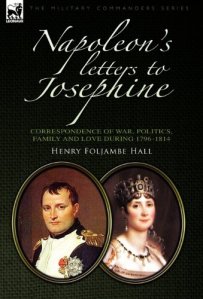
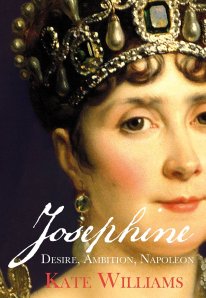
51vKKAg-jALOn the 10th of January 1810, the divorce ceremony of Napoleon Bonaparte and his wife Joséphine was performed as a grand social gathering, with each of the parties reading out a statement of devotion to the each other. A year prior to that, after a tense dinner together, Napoleon had announced to Joséphine that he had his mind set on separation. The emperor had long desired a son who would succeed him and continue the Bonaparte dynasty, but Joséphine, a widow six years his senior and already mother-of-two had been unable to provide him with a heir in their fifteen years together. Although their relationship was an unusual power-struggle with mutual distrust and infidelities, it seemed to have run deep and their separation had a heavy impact on both of them.
Allegedly, upon learning of Napoleon’s decision to divorce, the empress suffered a nervous fit and fainted, and had to be carried back to her chambers by her husband and his aide. The day after the divorce, as she wept at Malmaison, Napoleon went to console her and the couple walked hand-in-hand in the rain. Bonaparte’s  name was on Joséphine’s lips when she died in 1814, aged 51 of pneumonia (but her maid said that she died of grief), and her name was uttered by Napoleon on his deathbed in exile on St Helena seven years later. While in exile on Elba, he read about her death in a journal and is said to have locked himself in his bedroom for two days, refusing to see anyone. He claimed to a friend that “I truly loved my Joséphine, but I did not respect her.”( Felix Markham,  Napoleon, 1992).
81HewPx0abL._SL1417_
Whilst for most of us love equals respect, just as the rights of men equal those of women, Napoleon had a different view. If these were indeed his words, they were rather telling of his generalised view of women. Proof of which were the laws of his Napoleonic Code, or The French Civil Code 1800-1820, which caused quite a setback to aspirations of female equality. In “The Wife is Obliged”, Napoleon reaffirmed the legal right of men to control women. For instance, a woman could demand divorce only in case the husband moved his concubine into their common residence, but she could not remarry until after 10 months from the dissolution of their marriage! The Code dictated that married women in particular owed their husband obedience in all life matters, and were forbidden from selling, giving, mortgaging or buying property. Napoleon allegedly proclaimed: “Women ought to obey us. Nature has made women our slaves!” This backlash to women’s rights had consequences throughout Europe. In military campaigns, Napoleon carried the Code throughout Europe, where it served as a model to legislators in countries from Italy to Poland. Within France itself, the Code survived basically unaltered for more than 150 years. Only in 1965 did French wives get the right to work without their husband’s permission. Only in 1970 did husbands forfeit the rights that came with their status as head of the family. In many ways, the Code was the most enduring legacy of the French Revolution.
41J4S5Z6MVL
Napoleon’s divorce from Joséphine was in reality a double annulment and the climax of more than two years of speculation, gossip and negotiation which kept leading European courts and governments concerned with France’s innermost troubles. Napoleon and Joséphine both came under intense pressure to ensure the succession of the Bonaparte dynasty; therefore their union was first dissolved in the Senate and finally annulled by the Diocesan and Metropolitan tribunals. “The events during this period not only cover some of the major preoccupations of Napoleon and the French state – dynasty durability and stability, France’s relationships, both with the major political powers on the continent and with the Catholic Church – but also touch on more social issues – the legal basis of marriage in the 19th century – and some of the more complicated aspects of Canon Law.” (Fondation Napoléon 2008)

Tuesday, May 6, 2014

A History of Lingerie


photos:http://www.ecouterre.com/medieval-lingerie-from-15th-century-castle-stuns-fashion-historians/

fashion artifacts, eco-friendly lingerie, sustainable lingerie, eco-friendly underwear, sustainable underwear, Beatrix Nutz, Innsbruck University, Austria, Hilary Davidson, Museum of London, eco-fashion, sustainable fashion, green fashion, ethical fashion, sustainable style

Archaeologists have unearthed several 600-year-old bras that experts say could rewrite fashion history. While they’ll hardly send pulses racing by today’s standards, the lace-and-linen underpinnings predate the invention of the modern brassiere by hundreds of years. Found hidden under the floorboards of Lengberg Castle in Austria’s East Tyrol, along with some 2,700 textile remains and one completely preserved pair of (presumably male) linen underpants, the four intact and two fragmented specimens are believed to date to the 15th century, a hypothesis scientists later confirmed through carbon-dating.fashion artifacts, eco-friendly lingerie, sustainable lingerie, eco-friendly underwear, sustainable underwear, Beatrix Nutz, Innsbruck University, Austria, Hilary Davidson, Museum of London, eco-fashion, sustainable fashion, green fashion, ethical fashion, sustainable style

Unlike female undergarments, male underpants are frequently depicted in medieval imagery.


Want to know how and where lingerie originated? Then look no further, as we have compiled a concise, yet detailed, history for you of how lingerie has developed through the ages into what it is today. My how it has changed.
In one form or another, women have worn garments to support, suppress or accentuate their breasts as far back as 3000BC. Therefore, the modern day bra has developed from Cretan women who wore a hip corset beneath their ceremonial dress, the surcoate worn over the clothes in the middle ages. Depending on the fashions of the time the corset has aided to give shape and definition to the woman’s figure, such as the boyish shape of the Elizabethan & 1920’s.
By the 1500’s the corset elongated the body, flattened and raised the bust while hiding the stomach and hips. When worn with the ‘farthingale’ the wearer had to walk in a sedate gliding fashion. This is also the era of the iron corset - some say worn by Catherine D’Medici’s court as there were strict regulations which correlated a woman’s position in court by her waist size, others say it was for correcting bone deformities.
The corset, commonly known as a ‘stay’, was made of linen with boning and stiffened with paste. Women were then ‘straight-laced’ into them, and the term became synonymous with the pious Puritan women of the 17th century. By the latter part of this century the corsets were more elaborate and it was fashionable to wear them on the outside as in medieval times.
The flamboyant dresses of the 18th century gave way to the simple empire line frock after the French Revolution of 1789. The look did not require heavy corsetry as it kept a more natural shape. The stay was lengthened to shape the hips and thighs, although it is said some ladies wore no corset at all.
By 1825 the high waistline of the Regency style had dropped to a more natural level and corsets became essential to show off an hourglass figure with a desired waist of 18 inches (or less). The Victorian era was the heyday of the corset and advances in design were made through out the century. New metallic eyelets ensured that the tight lacing required to achieve the hourglass figure need not damage the corset. The invention of the sewing machine meant the corset could be produced more quickly than with hand stitching and corsets could be sold ready made. A huge variety of fashion corsets were made and also corsets for maternity, safari, sports, golfing and riding, even for these activities lacing and boning was still used. As corsets were in such demand whalebone became scarce, leading to the use of buffalo-bone, cane, steel, and steam moulding in corsetry.
By the beginning of the 20th century a bust bodices could be worn as an alternative to the corset and this supported the entire bosom as a whole. It was in 1914 when American Mary Phelps-Jacobs, patented her design in the name of Caresse-Crosby. It consisted of two silk handkerchiefs tied together with ribbon to make straps and a seam in the centre front, due to lack of interest, a few years later she sold her idea to Warner’s for $1500-. In 1935 Warner’s introduced the first cup sizing with only A, B &C. Britain continued to use the junior and medium sizing until the 50’s. In 1939 the word bra was added to the English dictionary, it is worth noting the brassiere in French means an infant’s bodice or harness, therefore soutien-gorge is the correct French term for bra.
Throughout the twentieth century the bra has been developed by advancements of man made fabrics such as, nylon, Du ponts’s Lycra, polyester, Elastane microfibres etc. These new fabrics have enabled garments to be lightweight, supportive, flexible and seamless, to have colourful prints and to be easier to wash.
The bra has taken many shapes through out the century. From the conical looks of the 1950’s sweater girls, maximum cleavage bras, sexy lace bras and of course the ‘burn your bra’ ethos of the Women’s Liberation Movement. It is estimated that the lingerie market was worth half a billion pounds at the end of the 1990’s.
The new millennium has seen further advancements in design and fabrics, with many innovative designs now in the market. There are also a number of celebrities who have their own lingerie range. Our own styles have developed and now offer a variety of styles for all occasions from 28-52 back B-K cup sizes.