Translate

Showing posts with label Margaret of Anjou. Show all posts

Tuesday, May 6, 2014

A History of Lingerie


photos:http://www.ecouterre.com/medieval-lingerie-from-15th-century-castle-stuns-fashion-historians/

fashion artifacts, eco-friendly lingerie, sustainable lingerie, eco-friendly underwear, sustainable underwear, Beatrix Nutz, Innsbruck University, Austria, Hilary Davidson, Museum of London, eco-fashion, sustainable fashion, green fashion, ethical fashion, sustainable style

Archaeologists have unearthed several 600-year-old bras that experts say could rewrite fashion history. While they’ll hardly send pulses racing by today’s standards, the lace-and-linen underpinnings predate the invention of the modern brassiere by hundreds of years. Found hidden under the floorboards of Lengberg Castle in Austria’s East Tyrol, along with some 2,700 textile remains and one completely preserved pair of (presumably male) linen underpants, the four intact and two fragmented specimens are believed to date to the 15th century, a hypothesis scientists later confirmed through carbon-dating.fashion artifacts, eco-friendly lingerie, sustainable lingerie, eco-friendly underwear, sustainable underwear, Beatrix Nutz, Innsbruck University, Austria, Hilary Davidson, Museum of London, eco-fashion, sustainable fashion, green fashion, ethical fashion, sustainable style

Unlike female undergarments, male underpants are frequently depicted in medieval imagery.


Want to know how and where lingerie originated? Then look no further, as we have compiled a concise, yet detailed, history for you of how lingerie has developed through the ages into what it is today. My how it has changed.
In one form or another, women have worn garments to support, suppress or accentuate their breasts as far back as 3000BC. Therefore, the modern day bra has developed from Cretan women who wore a hip corset beneath their ceremonial dress, the surcoate worn over the clothes in the middle ages. Depending on the fashions of the time the corset has aided to give shape and definition to the woman’s figure, such as the boyish shape of the Elizabethan & 1920’s.
By the 1500’s the corset elongated the body, flattened and raised the bust while hiding the stomach and hips. When worn with the ‘farthingale’ the wearer had to walk in a sedate gliding fashion. This is also the era of the iron corset - some say worn by Catherine D’Medici’s court as there were strict regulations which correlated a woman’s position in court by her waist size, others say it was for correcting bone deformities.
The corset, commonly known as a ‘stay’, was made of linen with boning and stiffened with paste. Women were then ‘straight-laced’ into them, and the term became synonymous with the pious Puritan women of the 17th century. By the latter part of this century the corsets were more elaborate and it was fashionable to wear them on the outside as in medieval times.
The flamboyant dresses of the 18th century gave way to the simple empire line frock after the French Revolution of 1789. The look did not require heavy corsetry as it kept a more natural shape. The stay was lengthened to shape the hips and thighs, although it is said some ladies wore no corset at all.
By 1825 the high waistline of the Regency style had dropped to a more natural level and corsets became essential to show off an hourglass figure with a desired waist of 18 inches (or less). The Victorian era was the heyday of the corset and advances in design were made through out the century. New metallic eyelets ensured that the tight lacing required to achieve the hourglass figure need not damage the corset. The invention of the sewing machine meant the corset could be produced more quickly than with hand stitching and corsets could be sold ready made. A huge variety of fashion corsets were made and also corsets for maternity, safari, sports, golfing and riding, even for these activities lacing and boning was still used. As corsets were in such demand whalebone became scarce, leading to the use of buffalo-bone, cane, steel, and steam moulding in corsetry.
By the beginning of the 20th century a bust bodices could be worn as an alternative to the corset and this supported the entire bosom as a whole. It was in 1914 when American Mary Phelps-Jacobs, patented her design in the name of Caresse-Crosby. It consisted of two silk handkerchiefs tied together with ribbon to make straps and a seam in the centre front, due to lack of interest, a few years later she sold her idea to Warner’s for $1500-. In 1935 Warner’s introduced the first cup sizing with only A, B &C. Britain continued to use the junior and medium sizing until the 50’s. In 1939 the word bra was added to the English dictionary, it is worth noting the brassiere in French means an infant’s bodice or harness, therefore soutien-gorge is the correct French term for bra.
Throughout the twentieth century the bra has been developed by advancements of man made fabrics such as, nylon, Du ponts’s Lycra, polyester, Elastane microfibres etc. These new fabrics have enabled garments to be lightweight, supportive, flexible and seamless, to have colourful prints and to be easier to wash.
The bra has taken many shapes through out the century. From the conical looks of the 1950’s sweater girls, maximum cleavage bras, sexy lace bras and of course the ‘burn your bra’ ethos of the Women’s Liberation Movement. It is estimated that the lingerie market was worth half a billion pounds at the end of the 1990’s.
The new millennium has seen further advancements in design and fabrics, with many innovative designs now in the market. There are also a number of celebrities who have their own lingerie range. Our own styles have developed and now offer a variety of styles for all occasions from 28-52 back B-K cup sizes.

Thursday, December 27, 2012

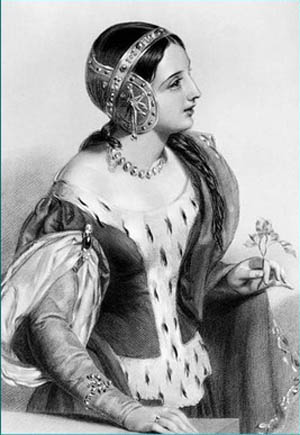
Margaret of Anjou


Margaret of Anjou was born on the 23 of March 1429 in the province of Lorraine. She was the daughter of René, Duke of Anjou and a neice of Charles VII. Margaret spent her early years living in the Rhone Valley and in Naples, where she was given a full education by her mother and the scholar, Antoine de la Salle.
In 1444, England made peace with France and Margaret was betrothed to King Henry VI ; she married him in April of the next year at Titchfield Abbey, Hampshire. The marriage was unpopular, Margaret being French, and became more so with time as no heirs were born. When the royal couple’s first, and only child, was born in 1453 it was even claimed that Henry was not the father. Margaret clearly dominated the couple and also tried to dominate politics. Unfortunately she wielded a very French view on most things and would never truly understand English politics – something that led her to make some grave mistakes. 
When King Henry fell ill in 1453, a seven-month pregnant Margaret tried to claim the regency, but found no support forthcoming, even from her allies. By the time she gave birth to a son, Edward, in October at Westminster Palace, the question regarding the regency had still not been settled. Then in 1454, Margaret’s mortal enemy, the Duke of York became regent and she was placed out of the way at Windsor Castle.
When the King was captured at the Battle of Northampton in 1460, Margaret did not submit, but instead became the real impetus behind the Lancastrian cause. The Queen raised an army and killed York, who was pushing his claim to the throne, at Wakefield along with several other prominent Yorkists. She then defeated the infamous Earl of Warwick at the battle of St. Albans where she was reunited with her husband.
In 1461, Henry and Margaret’s army was crushed at Towton. In 1462, she went to France where she persuaded Louis XI to finance an invasion. The invasion failed and Margaret and her supporters were forced to withdraw to Scotland. The Lancastrians suffered several more defeats and in 1465, Henry was captured.
Margaret lived in exile with her son until 1470 when her old enemy, Warwick arrived to make his peace with her and bring new hope to the Lancastrian cause. An alliance was formed between the two, and sealed with marriage of Edward, Prince of Wales to Warwick’s daughter Anne. The ‘Kingmaker’ soon restored Henry to the throne, but the Earl was defeated and killed at Barnet, before Margaret could join her husband.
Nevertheless, Margaret invaded with her own army the same year, but Edward in turn defeated her at Tewkesbury where her son was slain, along with many of the Lancastrian nobility. Her husband Henry was murdered in the Tower, just two weeks later leaving no figurehead for the remaining Lancastrians to follow.
After Tewkesbury, Margaret spent some time in the Tower, where she was eventually ransomed by the French King Louis. She died in her native province of Anjou, a poor and broken woman on August 25, 1482.

Thursday, December 13, 2012

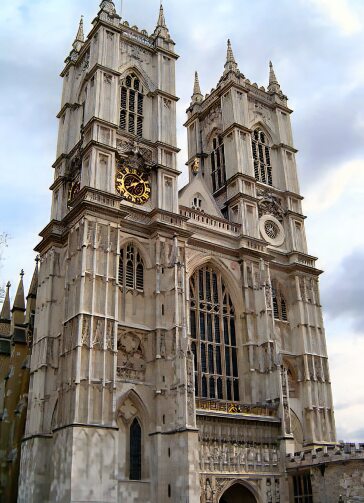
Westminster Abbey


One of England's finest Gothic buildings and the country's national shrine, Westminster Abbey was founded by the Saxon king, Edward the Confessor (1042-65) and consecrated on 28th December, 1065, a few days before his death. Known as the Abbey of St. Peter on Thorney Island, named due to the brambles that then covered the area, it was built on the misty low lying marshes which then edged the River Thames. Several churches, dedicated to St. Peter had previously occupied the spot. Tradition states that a shrine was first established at the site in in 616 following reports from a fisherman on the Thames, who claimed to have seen a vision of Saint Peter. The pious King Edward was buried at the newly completed abbey and his posthumous reputation came to be revered.
Edward's succesor, the Saxon King Harold II became the first King of England to be crowned at the abbey in January, 1066. Following his victory over the Harold at the Battle of Hastings in 1066, the NormanWilliam the Conqueror was also crowned at the abbey on Christmas Day, 1066. Every subsequent English monarch, with the exception of Edward V, Edward VIII and Lady Jane Grey have since been crowned there.
The Plantagenet King Henry III (1216-72) revered and venerated St. Edward the Confessor, who had been canonised in 1161, even having a mural painted of him in his bedchamber. He possessed a mania for building and his life's work was the rebuilding of the abbey in the Anglo-French Gothic style. The three master masons supervising the work were Henry of Reyns, John of Gloucester and Robert of Beverley. Building work continued after the death of Henry III, being finally completed by the architect Henry Yevele in the reign of Richard II.

Westminster Abbey, the West Front


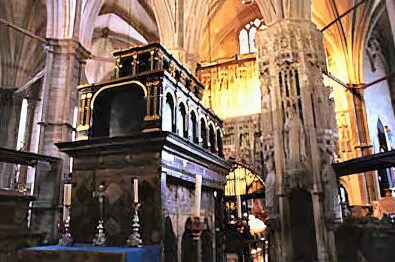
The magnificent shrine of St. Edward the Confessor at the heart of the abbey, was constructed by Henry III in 1241. The Confessor's body was carried in stately procession to its new resting place by Henry III himself, along with his younger brother, Richard, Earl of Cornwall. The chest which housed the relics of the saint was composed of precious metal, with a gabled roof. The shrine was to become a popular place of pilgrimage throughout the Middle Ages. Subsequent monarchs made costly offerings at the shrine. Edward I donated the crown of the Welsh prince, Llywelyn along with the rich spoils of his Scottish wars. Richard II made a gift of a silver table enamelled with impressions of the Confessor and the pilgrim. The ionoclasm of the Reformation saw the shrine stripped of its costly offerings by Henry VIII and the Confessor's body was reinterred beneath the stone base. The shrine was later restored by Henry's devout Catholic daughter, Mary I. The abbey was eventually commissioned as a "Royal Peculiar" by Queen Elizabeth I.

The shrine of St. Edward the Confessor

Edward the Confessor, tomb at Westminster Abbey
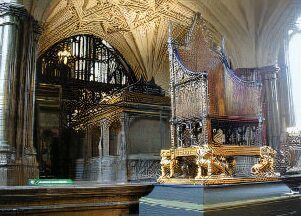
Henry III was buried in the Confessor's Chapel at the abbey in 1272, a magnificent bronze effigy of the king, by William Torel, adorns his tomb, previously his predecessors had been buried at the Abbey of Fontevrault in the Plantagenet lands in France but Westminster Abbey was later to become the mausoleum of English Kings. Henry's son Edward I and daughter-in-law, Eleanor of Castille, lie nearby, the place where Edward I lies is marked by a simple stone slab which bears the epitaph 'Here lies Edward, the Hammer of the Scots', while Eleanor's tomb is adorned by a beautiful bronze effigy of the queen by William Torel. Edward I captured the Stone of Scone in 1296, a venerated relic, which Scottish Kings had been crowned on since the Dark Ages, and removed it to Westminster. It was incorporated in a coronation chair specially built for this purpose at the abbey and has only recently been returned to Scotland.

During the reign of Edward I, many of the Crown Jewels were stored at Westminster Abbey. However, following a daring and successful robbery at the Abbey, when thieves escaped with much of the crown's treasure, a decision was reached that the Royal Treasury should be transferred to the greater security of the Tower of London. It has remained there ever since.
Also within Edward the Confessor's Chapel are the tombs of Edward I's grandson, Edward III and that of his queen, Phillipa of Hainault, Richard II and his first wife, Anne of Bohemia, as well as Margaret of York, the daughter of Edward IV. The abbey also contains the magnificent tomb of Henry V, conqueror of France, in accordance with the terms of his will a lavishly sculptured chantry chapel, designed by John Thirske, was built over the tomb.
Tomb of Henry V at Westminster Abbey
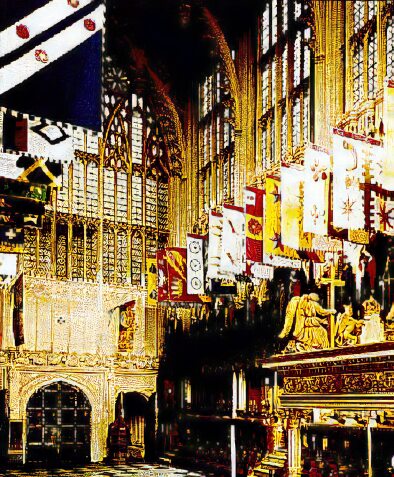
Henry VII, the first Tudor monarch, added a Perpendicular style chapel with a beautiful fan vaulted ceiling, which was dedicated to the Blessed Virgin Mary, in 1503, which became known as the Henry VII Chapel. In the chapel lie the tombs of Henry VII, Elizabeth of York, and his mother, Margaret Beaufort, their magnificent effigies were made by the Rennaissance sculptor, Pietro Torrigiano. Their grand-daughter, Elizabeth I was buried in the chapel along with her half-sister, Mary I, deeply antagonistic to each other in life they were to lie together eternally in death. Elizabeth's succesor, James I erected a fine effigy over Elizabeth's tomb, the Latin inscription at its base translates 'Partners both in throne and grave, here rest we two sisters, Mary and Elizabeth, in the hope of one resurrection.'
Also in the Henry VII Chapel stands a white marble container, which contains the reputed remains of the so called Princes in the Tower, Edward V and his brother Richard, Duke of York, who disappeared in 1483, amidst rumours that they had met their deaths in the Tower of London. Nearly two centuries later, in 1674, workmen employed in demolishing a staircase within the Tower , leading to the chapel of the White Tower, made the discovery of the bones of two children in an elm chest, at around a depth of ten feet. Charles II, then the reigning monarch, asked the architect Sir Christopher Wren to design a white marble container and they were reverently placed in the Abbey, close to the tomb of their sister, Elizabeth of York.

The Henry VII Chapel


By way of reparation for his earlier neglect of her, James I had the body of his mother, Mary Queen of Scots, executed on the orders of her cousin Elizabeth, translated to the Henry VII Chapel at Westminster Abbey, from Peterborough Cathedal, where it was reinterred close to the tomb of his paternal grandmother, Margaret Countess of Lennox, he provided a costly and majestic white marble monument to the memory of his mother. In 1867 a search was made by Dean Stanley within the royal tombs for the final resting place of James I, which had gone unrecorded, the first Stuart King was found to share the tomb of the first Tudor King, Henry VII and his consort, Elizabeth of York. The abbey is the final resting place of seventeen of England's monarchs in total.
The abbey suffered damage when it was attacked by Puritan iconoclasts in the 1640s. The Lord Protector, Oliver Cromwell (1599 - 1658) was buried in the abbey in 1658 but on 30th January, 1661, the twelfth anniversary of the execution of Charles I, the body of Oliver Cromwell was exhumed from Westminster and posthumously executed. His corpse was hanged in chains at Tyburn. The body was eventually thrown into a pit, while Cromwell's severed head was exhibited on a pole outside Westminster Abbey until 1685.
No major building has occured at the abbey since 1734, which saw the completion of the west front towers under the direction of Nicholas Hawksmoor, who used a design by Sir Christopher Wren, previously the towers were lower.
At Poet's Corner, in the abbey's South Transept a number of the nation's great poets, playwrights and writers are commemorated. Geoffrey Chaucer was the first to be buried there on 24th December, 1399, and was followed by a long list of others including Alfred Lord Tennyson, Robert Browning, Thomas Hardy, Charles Dickens and the actor Laurence Olivier. William Shakespeare, although buried at Stratford upon Avon, was honoured with a monument in Poet's Corner in 1740.
The abbey also serves as the burial ground for numerous politicians, scientists and artists, including Benjamin Disraeli, Charles Darwin and Sir Isaac Newton. The windows in the nave are dedicated to famous Britons including the engineers Isambard Kingdom Brunel and Robert Stevenson.
Those who died in the First World War are commemorated by a black slab, the Tomb of the Unknown Warrior, which is set into the pavement near the west door. Nearby stands a monument to Sir Winston Churchill, which was unveiled by the Queen in 1965.

Opening times

The Abbey is open to visitors from Monday to Saturday all year. On Sundays and religious holidays such as Easter and Christmas, it is open only for worship.

GUNS

File:Leonard da Vinci´s organ gun.jpg


Leonard da Vinci´s organ gun


File:Konrad Kyeser, Bellifortis, Clm 30150, Tafel 13, Blatt 74v.jpg
Konrad Kyeser, Bellifortis, Clm 30150, Tafel 13, Blatt 74v

http://en.wikipedia.org/wiki/Organ_gun

Ribauldequin, also known as a rabauldribaultribaudkininfernal machine or organ gun, was a late medieval volley gun with many small-caliber iron barrels set up parallel on a platform, in use during the 14th and 15th centuries. When the gun was fired in a volley, it created a shower of iron shot. They were employed, specifically, during the early fifteenth century, and continued serving, mostly, as an anti-personnel gun. The name organ gun comes from the multiple barrels with the likeness of pipe organ.
As an early type of multiple barrel firearm, the ribauldequin is sometimes considered the predecessor of the 19th century mitrailleuse.[1]
The first known ribauldequin was used by the army of Edward III of England in 1339 in France during theHundred Years' War.[citation needed] Edward's ribauldequins had twelve barrels which fired salvoes of twelve balls. Nine-barreled ribaults were used by Milan and other participants in the Italian Wars.[citation needed] Ribauldequins were also used in the Wars of the Roses. During the Second Battle of St AlbansBurgundian soldiers underYorkist control utilized the weapon against the Lancastrian Army led by Queen Margaret of Anjou.[2] In Eastern Europe, a heavier version of the organ gun was used by Stephen the Great of Moldavia as late as 1475, as attested to by Polish chronicler Bieski.[citation nee


Tuesday, December 11, 2012

15th Century Christmas

Christmas
By the 15th century Christmas tree decorating custom had changed slightly with the inclusion of ornaments. For the most part early ornaments were food items including; apples, onions, pears, nuts, candies, and fruits were placed on the tree. The custom of using food for decoration would continue, until the beginning of the 19th century.


Christmas in the 15th Century Swan at Lavenham


Swan at Lavenham in Suffolk

14-15th century carols


Medieval Christmas

Robert Campin, The Annunciation Triptych (Mérode Triptych), c. 1425-30. The Cloisters, Metropolitan Museum of Art, New York (Google Art Project).


Christmas is Medieval England was very different to Christmas now. The Church ensured that Christmas was a true religious holiday. Celebrations were for the birth of Christ as opposed to simply peasants enjoying themselves.
The first recorded use of the word "Christmas" was in 1038 when a book from Saxon England used the words "Cristes Maesse" in it.
Also of note for Medieval England was the fact that William the Conqueror had himself crowned king of England on Christmas Day 1066. Those noble men allowed inside Westminster Abbey cheered so loudly when the crowning ceremony was taking place that the guards outside thought something was happening to their master inside the abbey. They rushed inside, attacked people and houses near to Westminster Abbey were burned down.
However, some of the problems experienced at Christmas then have had a knock-on effect for us. For example, carol singers going from house to house now is as a result of carols being banned within churches in Medieval times. Carol singers in Medieval times took the word "carol" literally - it means to sing and dance in a circle. So many Xmas services were spoiled by carol signers doing just this, that the Church at the time banned them and ordered the carol singers into the street.
The Christmas crib originated in Medieval times but in Medieval Italy. In 1223, Saint Francis of Assisi is said to have used a crib to explain to the local people of Assisi the Christmas story. It seems that the part played by animals in the Christmas story also comes from the early 13th century even if the Bible does not mention them !
December 28th is a day children may not have enjoyed in Medieval times. December 28th is "Holy Innocents Day" or "Childermass Day". This is the day when King Herod ordered that all children under two years of age be killed. In some European towns it was the custom for a boy to be given charge of a town for one day after being made a bishop for just December 28th. In Medieval England, children were reminded of Herod’s cruelty by being beaten. December 28th was seen by many then as a day of bad luck. No-one would get married on that day; no-one would start a building on that day and Edward IV refused to be crowned on that day.
What was eaten on Christmas Day? Certainly not turkey. Turkeys naturally come from America and only got to Europe after the discovery of that continent in the late 15th century. So turkey would not have been on the Christmas menu of anybody in England. The rich would have eaten goose and, with the king’s permission, swan. If they could be caught, woodcock would also be eaten. To make a roast bird look even more tasty, medieval cooks used to cover the cooking bird with butter and saffron plant. This would give the cooked bird a golden colour by the time it was served. However, if the poor could afford it, the Church had a fixed price of 7 pence for a ready cooked goose. An uncooked goose would cost 6 pence - about a day’s wages.
Venison from deer would also be on the menu. It has also given us a famous saying !! The poor would not be allowed to eat the best parts of a deer. However, in keeping with the spirit of Christmas, a decent lord might let the poor have what was left of the deer. These parts were known as the deer's ‘umbles’. These were the heart, liver, tongue, feet, ears and brains. Mixed with whatever else a cook could get, they were made into a pie. Therefore, the poor would eat ‘umble pie’. Nowadays, if you have taken a tumble in life and have to live a standard of life you would not usually be used to, it is said that you are having to eat ‘humble pie’.
Mince pies are a tradition now for Christmas. In Medieval England a large mince pie was always baked. However, they were filled with all sorts of shredded meat along with spices and fruit. This recipe only changed in Victorian times when the shredded meat was left out.
It was also believed that if you made a wish with the first bite of your first mince pie, your  wish would come true. If you also refused the first mince pie someone offered you over Christmas, you would then suffer bad luck.
Christmas puddings in Medieval England were spicy porridge and known as "frumenty". This was considered a real treat. It was made of thick porridge (or boiled wheat). Currants and dried fruit were stirred in. The yolks of eggs were also added and, if available, spices such as cinnamon and nutmeg. The mixture was left to cool and set before being served.
A less than Christian practice at this time and found only really in the countryside was the practice of killing a wild boar, cutting off its head, and offering it to the goddess of farming so that you would have a good crop in the following year.
Christmas Day was also a "quarter day". This meant that the poor had to pay their rent on this day!
"Mumming" was also practiced at Christmas. This was where actors performed plays and dances in villages or castles. Mystery plays were also performed in which the story of Christ was told. King Herod would be in a mystery play and he would be the equivalent of a ‘baddie’ in a modern pantomime.
Boxing Day has traditionally been associated with the rich giving gifts to the poor in boxes. This is not strictly true. On Boxing Day, the poor did receive money from their masters but in hollow clay pots with a slit in the top. These had to be broken to get the money out. These small clay pots were nicknamed "piggies". As a result, we now have piggy banks for collecting money in.

Monday, December 10, 2012

Edmund Beaufort, Duke of Somerset

edmund beaufort

Edmund Beaufort, Duke of Somerset was born some time in 1406. In the early 1430s he illegally married Eleanor Beauchamp, daughter of the 13th Earl of Warwick. He was to become a favourite to the king and was created Earl of Dorset in 1442, then Marquess the following year. In 1444, the same year peace was made with France, he inherited the dukedom of Somerset from his brother. In 1449 he was made commander-in-chief in France. The Duke began his appointment by foolishly attacked and capturing the French town of Fougeres, breaking the truce with France and reopening the Hundred Years War.  Normandy was overrun that summer, with Somerset personally surrendering several towns.

In 1454, the Duke of York, Somerset’s predecessor in France became regent and sent the Duke to the Tower. He was released in January the following year but did not live to enjoy his freedom long. York was still determined to depose or kill Somerset and on may 22, 1455 met the royal army in battle at St Albans. Somerset met his death bravely; determined to avoid capture he led a charge out of the Castle Inn and killed several men before he too was slain, possibly by the Earl of Warwick himself.

Henry Stafford, Duke of Buckingham


Henry Stafford, Duke of Buckingham was born on the 4th of September 1454. He was only a year old when his Lancastrian father died at the battle of St. Albans. His grandfather, the Duke of Buckingham, died in battle five years later, but it was not until 1465 that Henry was recognized as Duke. At the age of twelve he was forced into marrying the Queen’s sister, Catherine Woodville, who at twenty-four was only interested in his lands and titles.

When Edward IV died in 1483, contrary to his will the Woodville family tried to cease control of the boy king, Edward V. In his contempt for the Woodvilles, Buckingham supported Richard, Duke of Gloucester in his quest for guardianship of the boy. When Gloucester took steps to seizing the throne Buckingham’s support diminished and the same year he led a rebellion in the name of Henry Tudor. The rebellion failed and Buckingham was captured. He tried, desperately, to speak with Richard III, before his death and his son later claimed that the Duke wished to stab King Richard. No audience was given however, and Buckingham was executed on the 2nd of November in Salisbury.


Sunday, December 9, 2012

Yolande Remembered

 http://xenophongroup.com/montjoie/yolande.htm

Margaret was raised by this grandmother


There are some claims [but expressed doubts by many scholars] that Yolande lived her last months and died in this large house, now called 'Maison de la reine de Sicile', located on an island in the Loire river that is connected to the center of the town of Samur by a bridge. From this small residence [now privately owned], the 'Queen of Sicily' could look across and see the fortress château of Samur looming high above the town. That magnificent structure had been one of her favorite residences at the height of her influence, though modern literature associates the château of Samur with where her famous son, 'the Good King' René d'Anjou resided until 1471, when he moved to Provence.
It is curious that few major French, or medieval feminist, scholars have addressed Yolande d'Aragon in a specific study, though she is often listed among the great women 'who made France'.

Jehanne d'Orliac's Yolande d'Anjou, la reine des quatre royamues (Paris 1933) contains considerable detail. While much of it can be corroborated in other works, the author's lack of citations is of serious concern and the work has some definite errors.
One of the best coverages of Yolande is the French historian Philippe Erlanger'sCharles VII et son mystère (Paris, Gallimard 1945, Perrin 1973, 1981), in which this recognized historian describes Yolande's prominent role in sustaining Charles VII during the critical stages of his reign. Yolande is again recognized in Erlanger's "9 femmes qui ont fait la France," Historia (Septembre 1971, pp.40-53). Erlanger's recognition of the significance of Yolande's roll is perhaps due to his having examined other ears, and he is not beholden to documents, studies, and scholars who have focused on 'the Maid'. Such a perspective has drawn some criticism from those infused with the singular attribution toward 'the Maid'. No doubt, there may be a perception by some that elevating the contribution of Yolande threatens the unique status of Jeanne d'Arc.

Women at War


Contrary to popular belief, women often engaged in medieval warfare. If the Chatelaine happened to be at home while their husband was away and their castle was besieged, it was routine for her to command the defences.
Here are some examples of notable Medieval femail warriors:
  • 8th century: Shieldmaidens fight at the Battle of Bråvalla on the side of the Danes.
  • 722: Queen Aethelburg of Wessex destroys the town of Taunton.
  • 750: Veborg, as well as many other Shieldmaidens, participate in the Battle of Bråvalla in Sweden.
  • 783: Saxon women throw themselves barebreasted into battle against Charlemagne's forces. Among them is Fastrada, who became Charlemagne's fourth wife.
  • Early 9th century: Cwenthryth fights Wulfred, Archbishop of Canterbury, for control of her abbey estates.
  • 880: Ermengarda defends Vienne.[20]
  • 912-922: Reign of Ethelfleda, ruler of Mercia. She commanded armies, fortified towns, and defeated the Danes. She also defeated the Welsh and forced them to pay tribute to her.
  • Mid 10th century: Queen Thyra of Denmark leads an army against the Germans.
  • 971: The Scandinavian ruler of Kiev attacked the Byzantines in Bulgaria in 971. When the Norsemen had been defeated, the victors discovered shieldmaidens among the fallen warriors.
  • Early 11th century: Freydís Eiríksdóttir, a Viking woman, sails to Vinland with Thorfinn Karlsefni. When she faced hostile natives while pregnant, she exposed her breasts and beat her chest with a sword. This caused the natives to run away.
  • 1040-1090: Sichelgaita of Salerno second wife of Robert Guiscard, Duke of Apulia, accompanies her husband on military campaigns, and regularly puts on full armor and rides into battle at his side. At the Battle of Dyrrhachium (1081) she rallied Robert's troops when they were initially repulsed by the Byzantine army.
  • 1046-1115: Lifetime of Matilda of Tuscany, who conducted wars to defend the papacy.
  • 1071: Richilde, Countess of Mons and Hainaut is captured fighting in the Battle of Cassel.
  • 1072: Urraca of Zamora, Infanta of Castile, defends the city of Zamora against her brother, Sancho II of Castile.
  • 1075: Emma de Guader, Countess of Norfolk defends Norwich castle while it is under siege.
  • 1090: A Norman woman Isabel of Conches rides armed as a knight.
  • 1121:Urraca of Castile fights her half-sister, Theresa, Countess of Portugal when she refuses to surrender the city of Tuy.
  • 1131-1160: Melisende of Jerusalem ruler of the crusader Kingdom of Jerusalem is one of the rulers involved in the Second Crusade.
  • 1136: Welsh princess Gwenllian ferch Gruffydd leads an army against the Normans. She is defeated and killed.
  • 1141: Matilda of Boulogne raises an army to continue the fight for the crown of England, after her husband, King Stephen is captured by the Empress Matilda.
  • 1145: Eleanor of Aquitaine accompanies her husband on the Second Crusade.
  • 1172: Alrude Countess of Bertinoro ends a siege of Aucona by leading an army into battle and crushing imperial troops.
  • Late 12th century: Eva MacMurrough conducts battles on behalf of her husband, the Earl of Pembroke.
  • 3rd May 1211. The chatelaine of Lavaur, Gerauda (or Geralda) de Lavaur, was murdered by Catholic Crusaders because of her part in resisting their siege of Lavaur during the Cathar Crusade. Click here to read more about the siege of Lavaur 
  • Mid 13th century: Eleanor of Castile accompanies her husband on his crusade. According to legend, she saves his life by sucking poison from his wound when he was injured.
  • 1264: Eleanor of Provence raises troops in France for her husband during the Baron's War.
  • 1271: Isabella of Aragon dies at Consenza on the way back from the Crusades.
  • 1290: An illustration of a woman named Walpurgis is shown training in sword and buckler techniques
  • 14th century: Jane, Countess of Montfort leads troops into battle. Countess Jeanne de Penthievre is among her antagonists.
  • 1326: Isabella of France invades England with Roger de Mortimer, and overthrows Edward II, replacing him with her son Edward III, with her and de Mortimer acting as regents.
  • 1334: Agnes Dunbar successfully defends her castle against a siege by the Earl of Salisbury.
  • 1335: The Scots defeat a company led by the Count of Namur. Amongst the Count's casualties was a female lancer who had killed her opponent, Richard Shaw, at the same moment that he had killed her. Her gender was only discovered when the bodies were being stripped of their armour at the end of the engagement. "The chronicler Bower seems to have been at least as impressed by the rarity of two mounted soldiers simultaneously transfixing one another with their lances as with the fact that one of them was a woman."
  • 1364-1405: Tamerlane uses female archers to defend baggage trains.
  • 1383: Eleanor of Arborea, ruler of Sardinia, conducts a defensive war against Aragon.
  • 15th century: Maire o Ciaragain leads Irish clans in rebellion.
  • 15th century: Isabella, Duchess of Lorraine, leads an army to rescue her husband from the Duke of Burgundy.
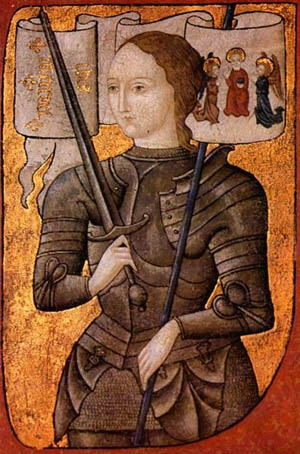
  • 1429: Joan of Arc leads the French army. Yolande of Aragon supports her. Pierronne, a contemporary of hers, also hears voices and fights for the king of France.
  • 1461: Queen Margaret of Anjou defeats the Earl of Warwick in the Wars of the Roses.
  • 1461: Lady Knyvet defends Buckingham Castle at Norfolk against Sir Gilbert of Debenhem
  • 1471: Queen Margaret of Anjou is defeated in battle at Tewksbury.
  • 1472: Onorata Rodiana from Cremona, Italy is mortally wounded in battle. She had disguised herself as a man to become a soldier.
  • June 27, 1472: Jeanne Hachette rips down the flag of the invading Burgundians at Beauvais, inspiring the garrison to win the engagement
Eleanor of Arborea
Isabella of France
Joan of Arc

Saturday, December 8, 2012

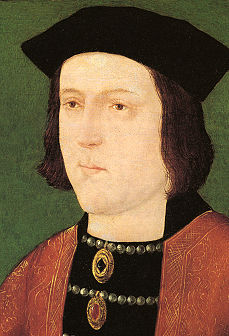
Edward IV

http://www.wars-of-the-roses.com/index.htm

A portrait of Edward IV.

Edward was born on April 28, 1442 at Rouen, France to Richard, Duke of York. While he was too young to fight at St Albans (1455) he later demonstrated his fierce bravery and excellent military skills in numerous other engagements. When his father was slain at Wakefield in 1460, Edward decided to uphold his family’s claim to the throne and was crowned in March 1461 at London. Less than a month later he won the battle of Towton and took control of most of the country.
By the mid 1460s he had alienated his most important ally and the man that put him on the throne Richard Neville, Earl of Warwick, the ‘Kingmaker’, by marrying a commoner and insulting Warwick and his family with other actions and refusals. Warwick could feel his power slipping away and in 1469 he launched a successful rebellion and imprisoned Edward at Warwick Castle. After Edward’s release Warwick’s next rebellion was crushed, but the earl fled to France, invaded England and put Henry VI              back on the throne.
In 1471 it was the exiled Edward’s turn to invade, and march on London where he met the Kingmaker in battle ten miles away from the capital at Barnet. Warwick was killed and a year later Edward crushed the remaining Lancastrians at Tewkesbury, after which he was able to live the rest of his life in relative peace.
The King died on April 9, 1483, allegedly of illness caused by his ‘over-living’ and debauchery, leaving behind him seven children, including the princes in the Tower and Elisabeth of York, future wife to Henry VI.