Translate

Showing posts with label stanley kubrick. Show all posts

Thursday, June 12, 2014

Maximilien Robespierre (1758-1794)


Maximilien RobespierreRobespierre was a French lawyer and politician who became one of the most influential figures of the French Revolution.
Maximilien Marie Isidore de Robespierre was born in Arras on 6 May 1758, the son of a lawyer. He was educated in Paris and entered the same profession as his father. He was elected a deputy of the estates-general (a form of parliament, but without real power) that met in May 1789, and subsequently served in the National Constituent Assembly.
Robespierre became increasingly popular for his attacks on the monarchy and his advocacy of democratic reforms. In April 1790, was elected president of the powerful Jacobin political club. After the downfall of the monarchy in August 1792, Robespierre was elected first deputy for Paris to the National Convention. The convention abolished the monarchy, declared France a republic and put the king on trial for treason, all measures strongly supported by Robespierre. The king was executed in January 1793.
In the period after the king's execution, tensions in the convention resulted in a power struggle between the Jacobins and the more moderate Girondins. The Jacobins used the power of the mob to take control and the Girondin leaders were arrested. Control of the country passed to the Committee of Public Safety, of which Robespierre was a member. He rapidly became the dominant force on the committee.
Against a backdrop of the threat of foreign invasion and increasing disorder in the country, the committee began the 'Reign of Terror', ruthlessly eliminating all those considered enemies of the revolution. These included leading revolutionary figures such as Georges Danton.
In May 1794, Robespierre insisted that the National Convention proclaim a new official religion for France - the cult of the Supreme Being. This was based on the thinking of the philosopher Jean-Jacques Rousseau of whom Robespierre was a passionate advocate.
The intensification of the 'Reign of Terror' and Robespierre's autocracy made him increasingly unpopular. French military successes served to undermine the justification for such ruthlessness and a conspiracy was formed to overthrow Robespierre. On 27 July 1794, he was arrested after a struggle. The following day Robespierre, wounded from a bullet to the jaw, and 21 of his closest supporters were executed at the guillotine.

Saturday, May 17, 2014

NAPOLEON, DIVORCE AND WOMEN’S RIGHTS

HTTP://ARTLARK.ORG/2014/01/10/NAPOLEON-DIVORCE-AND-WOMENS-rights/
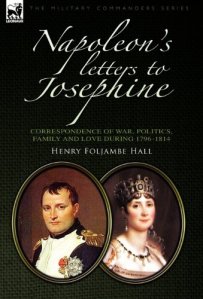
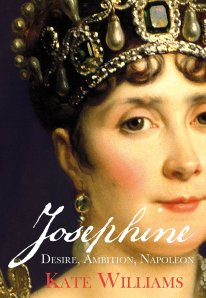
51vKKAg-jALOn the 10th of January 1810, the divorce ceremony of Napoleon Bonaparte and his wife Joséphine was performed as a grand social gathering, with each of the parties reading out a statement of devotion to the each other. A year prior to that, after a tense dinner together, Napoleon had announced to Joséphine that he had his mind set on separation. The emperor had long desired a son who would succeed him and continue the Bonaparte dynasty, but Joséphine, a widow six years his senior and already mother-of-two had been unable to provide him with a heir in their fifteen years together. Although their relationship was an unusual power-struggle with mutual distrust and infidelities, it seemed to have run deep and their separation had a heavy impact on both of them.
Allegedly, upon learning of Napoleon’s decision to divorce, the empress suffered a nervous fit and fainted, and had to be carried back to her chambers by her husband and his aide. The day after the divorce, as she wept at Malmaison, Napoleon went to console her and the couple walked hand-in-hand in the rain. Bonaparte’s  name was on Joséphine’s lips when she died in 1814, aged 51 of pneumonia (but her maid said that she died of grief), and her name was uttered by Napoleon on his deathbed in exile on St Helena seven years later. While in exile on Elba, he read about her death in a journal and is said to have locked himself in his bedroom for two days, refusing to see anyone. He claimed to a friend that “I truly loved my Joséphine, but I did not respect her.”( Felix Markham,  Napoleon, 1992).
81HewPx0abL._SL1417_
Whilst for most of us love equals respect, just as the rights of men equal those of women, Napoleon had a different view. If these were indeed his words, they were rather telling of his generalised view of women. Proof of which were the laws of his Napoleonic Code, or The French Civil Code 1800-1820, which caused quite a setback to aspirations of female equality. In “The Wife is Obliged”, Napoleon reaffirmed the legal right of men to control women. For instance, a woman could demand divorce only in case the husband moved his concubine into their common residence, but she could not remarry until after 10 months from the dissolution of their marriage! The Code dictated that married women in particular owed their husband obedience in all life matters, and were forbidden from selling, giving, mortgaging or buying property. Napoleon allegedly proclaimed: “Women ought to obey us. Nature has made women our slaves!” This backlash to women’s rights had consequences throughout Europe. In military campaigns, Napoleon carried the Code throughout Europe, where it served as a model to legislators in countries from Italy to Poland. Within France itself, the Code survived basically unaltered for more than 150 years. Only in 1965 did French wives get the right to work without their husband’s permission. Only in 1970 did husbands forfeit the rights that came with their status as head of the family. In many ways, the Code was the most enduring legacy of the French Revolution.
41J4S5Z6MVL
Napoleon’s divorce from Joséphine was in reality a double annulment and the climax of more than two years of speculation, gossip and negotiation which kept leading European courts and governments concerned with France’s innermost troubles. Napoleon and Joséphine both came under intense pressure to ensure the succession of the Bonaparte dynasty; therefore their union was first dissolved in the Senate and finally annulled by the Diocesan and Metropolitan tribunals. “The events during this period not only cover some of the major preoccupations of Napoleon and the French state – dynasty durability and stability, France’s relationships, both with the major political powers on the continent and with the Catholic Church – but also touch on more social issues – the legal basis of marriage in the 19th century – and some of the more complicated aspects of Canon Law.” (Fondation Napoléon 2008)

Thursday, April 24, 2014

Stanley Kubrick's Napoleon To Be Adapted By Steven Spielberg

http://www.huffingtonpost.co.uk/mark-hodge/stanley-kubricks-napoleon_b_2807030.html

napoleon


The news that Steven Spielberg is to produce Stanley Kubrick's infamous unrealised Napoleon film, has been met with trepidation.
Of course, the last time Spielberg attempted such a project, the result was the much maligned A.I. Artificial Intelligence (2001).
But, the Jaws director is looking to side-step such criticisms, and obvious comparisons with his former friend, by adapting the subject matter for television.
Film aficionados will view the finished product with great interest, as the original Kubrick project has built up a mythology all of its own. In fact, the story behind it illustrates the frustration that surrounded the latter half of Kubrick's career and proves once again that even the greatest filmmakers are not immune to market pressures.
Kubrick had started work on the Napoleon film soon after 2001: A Space Odyssey (1968). And, when faced with studio resistance the director famously wrote that it would be "the best movie ever made".
Whether this claim was simply bluster, made in retaliation to studio impotence, will of course never be known. While Kubrick obsessively researched the project, a rival Napoleon film, Waterloo, starring Roy Stieger, bombed at the box-office. Waterloo's failure, costing a sizeable $25million in 1970, meant that Kubrick had his budget slashed to around $4million, shelving the film indefinitely.
Kubrick's work was as sporadic as it was brilliant. Indeed, the reason he only made 8-films in the last 40-years of his life was because of his obsessive approach to filmmaking. And, even though his meticulousness meant that his films were often groundbreaking, it ultimately hindered him in the fast moving world of Hollywood.
In 1980, after the critical success of Francis Ford Coppola's subversive Apocalypse Now, Kubrick started preproduction on his own Vietnam film. But, after seven years of painstaking research, he was usurped by a raft of politically charged Vietnam epics, most notably Oliver Stone's semi-autobiographical Platoon which won four Academy Awards.
When Full Metal Jacket was released in 1987, it seemed Kubrick had come too late to the party. But, while the film was commercially underwhelming, it still contained all the technical brilliance that critics had come to expect from one of cinema's great masters.
Throughout the 1980s, Kubrick had developed the idea of a real life Pinocchio film, based on Brian Aldiss's short story Super-Toys Last All Summer Long. This of course was posthumously adapted by Steven Spielberg, resulting in the terribly uneven A.I.
Any chance of a Napoleon reprisal was put to rest after the box-office disasters of two Christopher Columbus films in 1992. Kubrick then turned his attention to a Holocaust film he had been developing since the 1970s, titled The Aryan Papers, however that to was scrapped after Spielberg disclosed his plans for Schindler's List.
Kubrick ended his career with the misunderstood Eyes Wide Shut in 1999, dying suddenly that year at the age of 70.
As for Spielberg's intentions to once again adapt a lost Kubrick masterpiece, the uninitiated may smirk, but there is still no questioning his skill as a director. In fact, while Spielberg could have benefited from his colleague's artistic prudence, his powers as a producer and his ability to get projects made are second to none.
Whatever the outcome, fans will always wonder if Kubrick would have made good on his assertion that his historical epic would be the best film ever made. Although, only a director of his lofty standing could get away with such a remark. There has never been another filmmaker, before or since, with the ability to adapt populist genre material so brilliantly to the screen.
"If it can be written, or thought, it can be filmed." Stanley Kubrick

Monday, September 24, 2012

STANLEY KUBRICK'S NAPOLEON: A LOT OF WORK, VERY LITTLE ACTUAL MOVIE

http://www.vice.com/en_uk/read/stanley-kubricks-napoleon-a-lot-of-work-very-little-actual-movie

By viceuk
picture-104
One night during the pre-production phase on A Clockwork Orange, Malcolm McDowell asked Stanley
Kubrick why he was eating ice cream at the same time as his main course steak. "What's the
difference?" said Kubrick. "It's all food. This is how Napoleon used to eat."
Well that's how McDowell tells it anyway. There are lots of near-mythical stories about Kubrick's comprehensive research. That he was probably the most meticulous of film directors known to man is
not open to debate, and Napoleon, the film he tried and failed to make for decades, is the best example
of his attention to detail. Kubrick believed nobody had ever made a great historical film, and planned to
change this with a three-hour epic, telling the story of the French emperor's entire life.
[caption id="attachment_14599" align="alignnone" width="500" caption="Stanley K."]kubrick-1[/caption]
Kubrick thought Napoleon was the most interesting man to have ever walked the Earth. He called his life "an epic poem of action", thought his relationship with Josephine was "one of the great obsessional passions of all time", and said, "He was one of those rare men who move history and mold the destiny of their own times and of generations to come." Getting to work on the film in the mid-60s, after 2001 was released, he sent an assistant around the world to literally follow in Napoleon's footsteps ("Wherever Napoleon went, I want you to go," he told him), even getting him to bring back samples of earth from Waterloo so he could match them for the screen.
ce_kubrick_napoleon_15
He read hundreds of books on the man and broke the information down into categories "on everything from his food tastes to the weather on the day of a specific battle". He gathered together 15,000 location scouting photos and 17,000 slides of Napoleonic imagery.
10_001-051_image_index_kubrick, napoleon_03844.indd
He would shoot the film in France and Italy, for their grand locations, and Yugoslavia, for their cheap armies. These were pre-CG days, and he arranged to borrow 40,000 Romanian infantry and 10,000 cavalry for the battles. "I wouldn't want to fake it with fewer troops," he said to an interviewer at the time, "because Napoleonic battles were out in the open, a vast tableau where the formations moved in an almost choreographic fashion. I want to capture this reality on film, and to do so it's necessary to recreate all the conditions of the battle with painstaking accuracy."
08_001-192_costumes_kubrick, napoleon_03844.indd
He wanted David Hemmings and Audrey Hepburn for the leads, with Alec Guinness and Laurence Olivier as supporting characters, but it all came crashing down when, partly as a result of another Napoleon film,Waterloo, being released in 1970, studios decided Kubrick's dream was too financially risky. In the early 1980s, he still talked of wanting to make the film, but it wasn't to be. Although he died in 1999, there's a chance his vision may see the light of day; it's been offered to the likes of Ridley Scott and Ang Lee.
ce_kubrick_napoleon_19
You could make it yourself if you want, as every single bit of information pertaining to the project has recently been published in the form of a book called Stanley Kubrick's Napoleon: The Greatest Movie Never Made. It's ten books in one (literally, with nine books sitting inside one enormous carved out fake book), limited to 1,000 copies, and costs £450. All the location scouting photos, all the research pictures, costume tests, correspondence with historical experts, Kubrick's script – everything's in there. It's amazing. I went to the HQ of the publisher Taschen; they let me touch it. They wouldn't give me one for free for some reason.
ce_kubrick_napoleon_07
ce_kubrick_napoleon_08
Tony Frewin was Kubrick's assistant from 1965 until the director died (and beyond). I called him up for a first-hand account of what it was like to be in Kubrick's Napoleonic vortex.
Vice: So tell me how your life with Stanley began. You were an office boy for him, right?
Tony Frewin: Well, a runner. Office boy I think rather glorifies it.
How did you come across him in the first place?
I grew up in Borehamwood and he'd just moved in to MGM Studios down the road on the pre-production of2001. My father had just quit the management at MGM but he'd gone to work for Stanley, and he just kept on at me, saying, "Come down, we need a runner on this." I think I said something crass – in those days, in the mid-60s, we only ever went to see foreign language films, French films: Antonioni, Fellini, Bergman, Bunuel. Terribly snobbish. And I think I said something crass like, "Well if it was Jean-Luc Godard I might be interested." Ah God. What a prick.
The pretentiousness of youth.
Oh absolutely. You squirm when you think of it. Oh God. Anyway, I went down one Sunday afternoon and my dad showed me into this office, which was absolutely full of books on fantastic art, surrealism, Dadaism, cosmology, flying saucers, and I thought, "Fuck, I wouldn't mind working here just to have access to these books." And then Stanley came in, who I thought was an office cleaner, with a baggy pair of trousers and a sports jacket with ink stains all over it. And we got chatting, for about two hours, and he said, "When can you start?" and I said, "When do you want me to?" and he said, "Seven o'clock tomorrow morning." I said, "You've got a deal." That was a week after my 17th birthday.
[caption id="attachment_14603" align="alignnone" width="450" caption="Mr Kubrick"]kubrick-4[/caption]
What sort of running work was it? Anything that was required?
Yeah, and it was always like that. People used to say, "What's the management structure like there?" at Hawk Films, or whatever we called ourselves, and I'd say, "Well, there's Stanley at the top, and then everybody else." There were no tiers of middle management, there was Stanley at the apex and all the rest of us on the bottom line. But it was a tremendous education working for Stanley; he was an intellectual Catherine Wheel of ideas and projects and ideas and enthusiasm. You really earnt your nickel working for Stanley, but as [Full Metal Jacket writer] Michael Herr says in that lovely little book [Kubrick]: nobody earnt their nickel more than Stanley himself. He lived by example, not by dictat.
When do you remember him first talking about Napoleon?
I remember when we were working on 2001, he had a sort of fascination with military figures, he was always very interested in Julius Caesar, particularly the invasion of Britain, but this ability to be a man of action, an intellectual, a strategist, with political objectives, and how you balanced all this and did what was right, I guessNapoleon grew out of that.
Did he relate to these types of people?
I don't think he related to them, but he found them tremendously fascinating. How, ultimately, flaws in their character, particularly Napoleon, would bring them down. You see this in people in positions of public trust or power anyway; you know, Harriet Harman getting out after that car crash and imperiously saying, "I'm Harriet Harman. You know where to contact me." You know. I mean, what a cunt.
The research and planning he did for Napoleon is near legendary.
Yeah. He did a lot on all his films, not least of which was on the abandoned project, Wartime Lies, about the Holocaust. We spent nearly two years, day in day out, researching that. And in that same period Spielberg got the idea for Schindler's List, did the pre-production, made the film, released it, and we were still shuffling index cards.
06-001-032_notes_kubrick, napoleon_03844_fpp.indd
So Schindler's List just killed it for him?
Well, he'd always wanted to do a film about the Holocaust, but it presented certain problems. As Stanley said, if you really want to make an accurate film about the Holocaust, it's got to be unwatchable. But he thoughtSchindler's List was a hard act to follow, and it wasn't the right time to do Wartime Lies. You know what [historian] Raul Hilberg said about Schindler's List? He wrote this massive three-volume study of the destruction of the European Jews, quite witty and funny too, but he said Schindler's List was a success story. A feelgood picture.
That's one way of looking at it. In terms of Stanley's fascination with Napoleon, what do you know of Malcolm McDowell's story about him eating dessert and steak at the same time, because that's how Napoleon used to eat?
I'd take that with a pinch of Bolivian marching powder.
Do you think the levels of research he carried out and his attention to the smallest detail was all part of the fun?
Well, it was a means to an end. He said, "God is in the detail." But he knew when to cut his research, when to stop it. Barry Lyndon is a wonderful example of a historical film correctly done, right down to the lighting. Unlike all this crap you see on the BBC now. What he aimed for was for that it actually looked like at the time. It's a wonderful film.
Do you think if he was making films today he would have utilised CGI?
Oh absolutely.
What about for extras? He'd hired 40,000 or so troops for Napoleon; do you think now he would have done that with CGI, or would he still have hired all those people for authenticity's sake?
I think it would depend very much on the shot. Some shots you might need a couple of thousand, and then some CGI. Although I don't think he would have automatically thought, Let's CGI everything.
Was he enthusiastic about new technology in that area?
Oh absolutely, from the word go. He used to say anything that saved time was worth its weight in gold. The rest of us were sort of luddites, but he wasn't. In 1980 he bought us all IBM green screens. These were the first PCs that were generally available, little 12" screens. You didn't even have a hard drive, you had two floppies. And Stanley said, "This is the future, this is what we'll be using." And I told him, "No, I like to type something and take out the piece of paper and see what's on it," and he said, "No, listen, you've got to get rid of that, this is the future, it's arrived now." He wasn't at all conservative in that way; we had fax machines before anybody else did. People would say, "What the fuck do you want a fax machine for?" But he'd grab anything that saved time and made things look better.
ce_kubrick_napoleon_20
How would you feel about Ridley Scott making the film?
Well, he's a very competent director, but it would be a very different film from Stanley's. There's only one Stanley who could make a Stanley Kubrick film.
ALEX GODFREY