Showing posts with label napoleon I. Show all posts
Showing posts with label napoleon I. Show all posts
Sunday, October 28, 2012

Friday, October 12, 2012
Desiree - audiobook press release

Annemarie Selinko’s ‘Désirée’ Brought to Life in Captivating New Audiobook.
A global best-seller of Napoleon’s first love, Désirée has captured the hearts of millions. Now, for the first time, the book has been brought to life in audiobook form, featuring the voice of Nicole Quinn.
For Immediate Release
Accord, NY – Having delighted millions of readers around the world, Annemarie Selinko’s ‘Désirée’ has become a timeless classic. Bringing this literary staple to the modern world, BlueBarnProductions announces a new audiobook release, narrated by Nicole Quinn.
Story synopsis:
To be young, in France, and in love: fourteen year old Desiree can't believe her good fortune. Her fiance, a dashing and ambitious Napoleon Bonaparte, is poised for battlefield success, and no longer will she be just a French merchant's daughter. She could not have known the twisting path her role in history would take, nearly breaking her vibrant heart, but sweeping her to a life rich in passion and desire.
A love story, but so much more, Désirée explores the landscape of a young heart torn in two, giving readers a compelling true story of an ordinary girl whose unlikely brush with history leads to a throne no one would have expected.
An epic bestseller that has earned both critical acclaim and mass adoration, Désirée is at once a novel of the rise and fall of empires, the blush and fade of love, and the heart and soul of a woman.
As the narrator explains, Désirée plays an important role in her own life.
“It’s the first book I checked out of the adult section of my convent boarding school library when I was 12. An unwitting heroine, she’s someone who never sought the limelight, but who dazzled in it just the same,” says Nicole Quinn.
Continuing, “So many have been affected by the story of Desiree Clary, the daughter of a silk merchant from Marseilles, who finds herself Queen Desideria of Sweden, co-foundress of a dynasty -- as evidenced by the customer reviews on Good Reads, Amazon, and blogs. Not just women respond to this title.”
As it’s now available in modern-day audiobook format, Quinn expects a new and fresh audience for a story that is a cornerstone of literary history.
“The book tells of a critical moment in history. It’s one thing to revolt in the new world. It was quite another to rattle the antique dynasties of Europe off their thrones. Both women and men can now re-capture the spirit of Selinko’s legendary text, in a format that suits the modern day media consumer,” she concludes.
The audiobook, produced by BlueBarnProductions, is available now from Audible, Amazon and iTunes.
For more information, please visit: http://nicolequinnnarrates.blogspot.com/
The audiobook can also be found on Facebook: https://www.facebook.com/DesireeTheBestsellingStoryOfNapoleonsFirstLove
About Nicole Quinn
Nicole Quinn won the Harper Audio Contest to read on Neil Gaiman’s 10th anniversary full cast audiobook of American Gods. Quinn has created character voices for computer games -- Space Colony and Stronghold II. She has written for HBO, Showtime, and network television. Her award winning feature film Racing Daylight, starring Academy Award winner Melissa Leo and Academy Award nominee David Strathairn, is currently cycling on Showtime. Her short plays are published by Playscripts, Inc., Viking Vintage, and Smith & Kraus. At the moment she’s a million years in the future building the Nightmare’s world for The Gold Stone Girl series.
TIMELINE OF NAPOLEON'S EMPIRE (1798-1821)

1798
19 May: Napoleon begins his Egyptian Campaign
2 July: Fall of Alexandria
21 July: The French defeat the Mamelukes at the Battle of the Pyramids in Egypt
24 July: Fall of Cairo
1 August: Under the command of the Admiral Nelson, the British fleet destroys the French navy Battle of Aboukir. 29 December: Second Coalition formed against France. The Second Coalition included Austria, Russia, and Britain, but not Prussia.
2 July: Fall of Alexandria
21 July: The French defeat the Mamelukes at the Battle of the Pyramids in Egypt
24 July: Fall of Cairo
1 August: Under the command of the Admiral Nelson, the British fleet destroys the French navy Battle of Aboukir. 29 December: Second Coalition formed against France. The Second Coalition included Austria, Russia, and Britain, but not Prussia.
1799
20 February: Napoleon invades Syria towards the end of his Egyptian Campaign
18 June: Purge of Directory; Napoleon's ally, Paul Barras, consolidates his power.
July: The Rosetta Stone is discovered by Napoleon's troops.
24 August: Receiving news of turmoil in France, Napoleon leaves Egypt and sets sail for France.
16 October: Napoleon arrives in Paris.
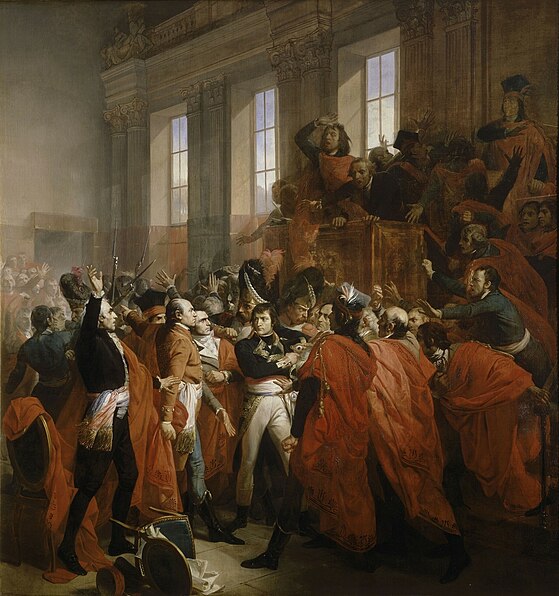
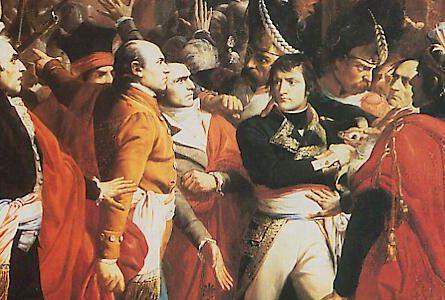
9-10 November: Coup de Brumaire. Napoleon and Sieyes overthrow the Directory, and form the three-person consulate. Sieyes and Ducos are appointed as the other two consuls.
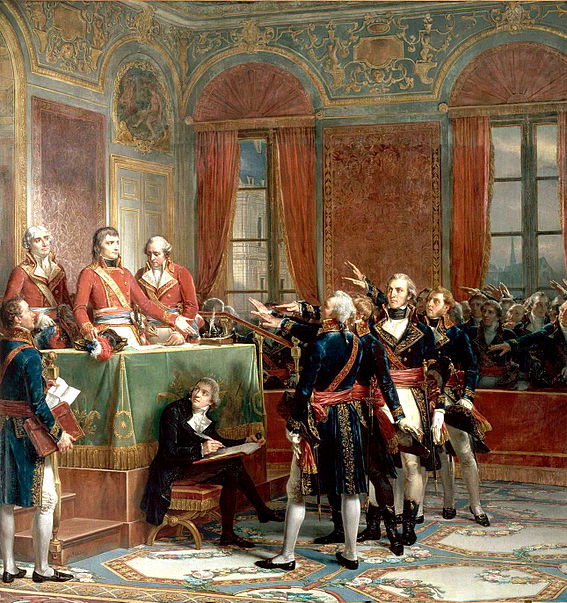
12 December: Constitution of Year VIII. Napoleon is appointed First Consul.
18 June: Purge of Directory; Napoleon's ally, Paul Barras, consolidates his power.
July: The Rosetta Stone is discovered by Napoleon's troops.
24 August: Receiving news of turmoil in France, Napoleon leaves Egypt and sets sail for France.
16 October: Napoleon arrives in Paris.
9-10 November: Coup de Brumaire. Napoleon and Sieyes overthrow the Directory, and form the three-person consulate. Sieyes and Ducos are appointed as the other two consuls.
12 December: Constitution of Year VIII. Napoleon is appointed First Consul.
1800
7 February: New Constitution approved by the French through a plebiscite.
19 February: Napoleon establishes his residence in the Tuileries Palace, the location where Louis XVI was held under house-arrest between the period of his attempted escape from Paris and his execution.
15-23 May: Napoleon leads his army across the Alps in the Second Italian Campaign.
14 June: Napoleon's army handily defeats the Austrian army, for Russia by 1799 had removed itself from the Second Coalition, at Marengo. End of Second Italian Campaign.
5 November: Negotiations for Concordat open with the Papacy.
24 December: "Opera Plot" attempt to assassinate Napoleon, organized by Cadoudal, a French royalist who also took part in the counter-revolutionary Vendee peasant rebellion in 1793.
19 February: Napoleon establishes his residence in the Tuileries Palace, the location where Louis XVI was held under house-arrest between the period of his attempted escape from Paris and his execution.
15-23 May: Napoleon leads his army across the Alps in the Second Italian Campaign.
14 June: Napoleon's army handily defeats the Austrian army, for Russia by 1799 had removed itself from the Second Coalition, at Marengo. End of Second Italian Campaign.
5 November: Negotiations for Concordat open with the Papacy.
24 December: "Opera Plot" attempt to assassinate Napoleon, organized by Cadoudal, a French royalist who also took part in the counter-revolutionary Vendee peasant rebellion in 1793.
1801
9 February: Treaty of Luneville signed with Austria. This Treaty was a renewal of the earlier, Treaty of Campo Formio, which secured France's defeat of Austria and right to administer Italian lands independent of Austria's will. This treaty also ends the Second Coalition.
15 July: Napoleon signs the Concordat with Pope Pius VII. The Concordat ends the schism between the French government and the Catholic Church, by returning lands to the clergy that were confiscated from the Church during the anti-clerical periods of the French Revolution, and by assuring the Pope that France would remain a Catholic country.
30 August: French army still in Egypt surrenders to the British.
15 July: Napoleon signs the Concordat with Pope Pius VII. The Concordat ends the schism between the French government and the Catholic Church, by returning lands to the clergy that were confiscated from the Church during the anti-clerical periods of the French Revolution, and by assuring the Pope that France would remain a Catholic country.
30 August: French army still in Egypt surrenders to the British.
1802
26 January: Napoleon becomes president of the Republic of Italy.
25 March: Treaty of Amiens signed with the British. This treaty was essentially a pact in which British and French forces agreed not to fight, and had no significant territorial provisions. With Austria defeated, a peace signed with the British, and Russia's withdrawal from the Second Coalition, for the first time in 10 years, Europe was at peace.
1 May: Napoleon begins his administrative and social reforms by instituting a new educational system in France with the creation of the lycees, the Ecole Normale Superieur, and the Polytechnique.
19 May: Napoleon establishes the Legion of Honor as a reward for loyal service to the nation under the consulate of 1802. The creation of such an institution was in line with Napoleon's emphasis on the creation of a meritocracy that awards those who serve the nation most courageously and loyally.
2 August: Napoleon named Consul for Life through a plebiscite.
4 August: Constitution of Year X is also approved through a plebiscite.
25 March: Treaty of Amiens signed with the British. This treaty was essentially a pact in which British and French forces agreed not to fight, and had no significant territorial provisions. With Austria defeated, a peace signed with the British, and Russia's withdrawal from the Second Coalition, for the first time in 10 years, Europe was at peace.
1 May: Napoleon begins his administrative and social reforms by instituting a new educational system in France with the creation of the lycees, the Ecole Normale Superieur, and the Polytechnique.
19 May: Napoleon establishes the Legion of Honor as a reward for loyal service to the nation under the consulate of 1802. The creation of such an institution was in line with Napoleon's emphasis on the creation of a meritocracy that awards those who serve the nation most courageously and loyally.
2 August: Napoleon named Consul for Life through a plebiscite.
4 August: Constitution of Year X is also approved through a plebiscite.
1803
11 March: Camps established at Boulogne to train army for invasion of England.
3 May: Napoleon sells Louisiana territory to the U.S.
18 May: Rupture of Treaty of Amiens due to England's breach of the treaty leads to resumption of war between France and Britain.
3 May: Napoleon sells Louisiana territory to the U.S.
18 May: Rupture of Treaty of Amiens due to England's breach of the treaty leads to resumption of war between France and Britain.
1804
February-March: Royalist plot to kidnap Napoleon leads to arrest of Generals Moreau and Pichegru and Georges Cadoudal.
21 March: Civil Code, also known as the Napoleonic Code, is promulgated. The Civil Code sought to abolish the privileges and inequalities embodied in the customs of the Ancien Regime. The principles of personal liberty, freedom of conscience, and equality before the law were consecrated by the Code. It protected property, but made women into second-class citizens.
18 May: Proclamation of the French Empire, and the declaration of Napoleon as the Emperor.
19 May: Marshals of the empire created.
2 December: Napoleon crowns himself Emperor of the French Empire in Notre Dame Cathedral, Paris.
21 March: Civil Code, also known as the Napoleonic Code, is promulgated. The Civil Code sought to abolish the privileges and inequalities embodied in the customs of the Ancien Regime. The principles of personal liberty, freedom of conscience, and equality before the law were consecrated by the Code. It protected property, but made women into second-class citizens.
18 May: Proclamation of the French Empire, and the declaration of Napoleon as the Emperor.
19 May: Marshals of the empire created.
2 December: Napoleon crowns himself Emperor of the French Empire in Notre Dame Cathedral, Paris.
1805
26 May: Napoleon is crowned king of Italy in Milan.
7 June: Eugene de Beauharnais, relative to Josephine, Napoleon's wife, is named viceroy of Italy.
9 August: Third Coalition is formed. Austria joins British and Russian Alliance to fight France.
25 August: The Grande Armee, Napoleon's International Army comprised mostly of French and Italians, leaves Boulogne for Germany.
21 October: Battle of Trafalgar marks another French naval defeat at the hands of the British under the command of Admiral Nelson.
14 November: Napoleon enters Vienna.
2 December: Napoleon defeats Russian and Austrian forces at the Battle of Austerlitz.
26 December: Napoleon signs the Treaty of Pressburg with Austria. In this treaty the defeated Austrians surrender their Italian territory of the region of Veneto in Northern Italy to the French.
7 June: Eugene de Beauharnais, relative to Josephine, Napoleon's wife, is named viceroy of Italy.
9 August: Third Coalition is formed. Austria joins British and Russian Alliance to fight France.
25 August: The Grande Armee, Napoleon's International Army comprised mostly of French and Italians, leaves Boulogne for Germany.
21 October: Battle of Trafalgar marks another French naval defeat at the hands of the British under the command of Admiral Nelson.
14 November: Napoleon enters Vienna.
2 December: Napoleon defeats Russian and Austrian forces at the Battle of Austerlitz.
26 December: Napoleon signs the Treaty of Pressburg with Austria. In this treaty the defeated Austrians surrender their Italian territory of the region of Veneto in Northern Italy to the French.
1806
30 March: Napoleon appoints his brother, Joseph Bonaparte, king of Naples. Napoleon also appoints other members of his family to rule conquered lands such as Spain.
May-June: Creation of Kingdom of Holland with Louis Bonaparte as king.
12 July: Napoleon establishes the Confederation of the Rhine, effectively ending the Holy Roman Empire which was established by Charlemagne in 800.
July: Formation of Fourth Coalition led by Prussia, Russia, and Britain.
25 September: Prussian army invades the Confederation of the Rhine.
14 October: Napoleon, after having taken command of the Grande Armee in Germany, defeats Prussia at the Battles of Jena-Auerstadt.
27 October: Napoleon enters Berlin.
21 November: Continental System inaugurated by Berlin Decrees. The Continental System was Napoleon's plan to stop all shipping of British goods into Europe. The Continental System resulted in a British blockade of all European shipping, and ended up hurting France more than Britain. By trying to spread the Continental System into Spain, Napoleon and France had to endure the constant harassment of the disastrous Peninsular War.
18 December: Napoleon enters Warsaw, setting the stage for the establishment of the Grand Duchy of Warsaw.
May-June: Creation of Kingdom of Holland with Louis Bonaparte as king.
12 July: Napoleon establishes the Confederation of the Rhine, effectively ending the Holy Roman Empire which was established by Charlemagne in 800.
July: Formation of Fourth Coalition led by Prussia, Russia, and Britain.
25 September: Prussian army invades the Confederation of the Rhine.
14 October: Napoleon, after having taken command of the Grande Armee in Germany, defeats Prussia at the Battles of Jena-Auerstadt.
27 October: Napoleon enters Berlin.
21 November: Continental System inaugurated by Berlin Decrees. The Continental System was Napoleon's plan to stop all shipping of British goods into Europe. The Continental System resulted in a British blockade of all European shipping, and ended up hurting France more than Britain. By trying to spread the Continental System into Spain, Napoleon and France had to endure the constant harassment of the disastrous Peninsular War.
18 December: Napoleon enters Warsaw, setting the stage for the establishment of the Grand Duchy of Warsaw.
1807
14 June: Napoleon defeats the Russians at the Battle of Friedland.
7-9 July: Treaty of Tilsit between France, Russia, and Prussia. The Treaty required Russia and Prussia to abide by the Continental System.
22 July: Napoleon creates the Grand Duchy of Warsaw (Poland), to be overseen by France. The creation of this state angers Tsar Alexander I, who saw this land as part of Greater Russia.
30 November: With the help of Spain, Napoleon begins the French occupation of Portugal under the command of General Junot, which marks the beginning of the Peninular War.
7-9 July: Treaty of Tilsit between France, Russia, and Prussia. The Treaty required Russia and Prussia to abide by the Continental System.
22 July: Napoleon creates the Grand Duchy of Warsaw (Poland), to be overseen by France. The creation of this state angers Tsar Alexander I, who saw this land as part of Greater Russia.
30 November: With the help of Spain, Napoleon begins the French occupation of Portugal under the command of General Junot, which marks the beginning of the Peninular War.
1808
February: J.G. Fichte, a German Romantic philosopher and nationalist, delivers 'Address to the German Nation' in Berlin hoping to inspire anti-Napoleonic and pro-German Nationalistic movements.
1 March: Organization of the imperial nobility.
18 March: Ferdinand VII proclaimed king of Spain.
2 May: Revolt in Madrid against Murat's troops marks beginning of Spanish revolt against French rule, which were immortalized in Goya's set of paintings 'The Disasters of War.'
7 July: Joseph Bonaparte crowned king of Spain; Murat and Caroline Bonaparte become king and queen of Naples.
30 July: Joseph evacuates Madrid after growing resistance to France's occupation.
8 October: Napoleon's allies, including Alexander I of Russia, meet at Erfurt, Saxony.
5 November: Napoleon assumes command of the army of Spain.
13 December: Napoleon recaptures Madrid.
1 March: Organization of the imperial nobility.
18 March: Ferdinand VII proclaimed king of Spain.
2 May: Revolt in Madrid against Murat's troops marks beginning of Spanish revolt against French rule, which were immortalized in Goya's set of paintings 'The Disasters of War.'
7 July: Joseph Bonaparte crowned king of Spain; Murat and Caroline Bonaparte become king and queen of Naples.
30 July: Joseph evacuates Madrid after growing resistance to France's occupation.
8 October: Napoleon's allies, including Alexander I of Russia, meet at Erfurt, Saxony.
5 November: Napoleon assumes command of the army of Spain.
13 December: Napoleon recaptures Madrid.
1809
16 January: Battle of Corunna; Napoleon leaves Spain.
6 April: Fifth Coalition formed by Britain, Austria, and rebel Spain, after Austria declares a 'War of Liberation' against the Napoleonic Empire.
26 April: British army under Arthur Wellesley (later duke of Wellington) lands at Lisbon.
17 May: France annexes the Papal States.
5-6 July: Napoleon defeats the Austrians at the Battle of Wagram.
14 October: Treaty of Schonbrunn between France and Austria, in which Austria lost some of its northern land, which was added to the Grand Duchy of Warsaw.
15 December: Napoleon divorces Josephine because she does not beget him a male heir.
6 April: Fifth Coalition formed by Britain, Austria, and rebel Spain, after Austria declares a 'War of Liberation' against the Napoleonic Empire.
26 April: British army under Arthur Wellesley (later duke of Wellington) lands at Lisbon.
17 May: France annexes the Papal States.
5-6 July: Napoleon defeats the Austrians at the Battle of Wagram.
14 October: Treaty of Schonbrunn between France and Austria, in which Austria lost some of its northern land, which was added to the Grand Duchy of Warsaw.
15 December: Napoleon divorces Josephine because she does not beget him a male heir.
1810
17 February: Rome annexed to French Empire
1 April: Napoleon marries Marie-Louise of Austria.
1 July: Holland annexed to France; Louis abdicates as king.
13 December: North German territories annexed to French Empire.
31 December: Tsar Alexander I breaks with Continental System because Britain was a major importer of Russian grain.
1 April: Napoleon marries Marie-Louise of Austria.
1 July: Holland annexed to France; Louis abdicates as king.
13 December: North German territories annexed to French Empire.
31 December: Tsar Alexander I breaks with Continental System because Britain was a major importer of Russian grain.
1811
January-December: Preparations for Russian Campaign
20 March: Birth of Napoleon II, referred to as the king of Rome.
20 March: Birth of Napoleon II, referred to as the king of Rome.
1812
30 May: Sixth Coalition formed by Russia and Sweden with support from Britain and rebel Spain; Napoleon takes command of the Grande Armee in East Prussia and Poland.
24-25 June: The Grande Armee crosses the Niemen river, beginning the Russian campaign.
22 July: Battle of Salamanca in Spain
7 September: Battle of Borodino in Russia. Napoleon defeated the Russians making important territorial gains, but suffered significant losses.
14 September: Napoleon's Grand Armee enters Moscow to find the city abandoned and set aflame by the inhabitants; retreating in the midst of a frigid winter, the army suffers devastating losses.
October: Duke of Wellington made allied commander in Spain.
19 October: French begin retreat from Moscow.
19 December: Napoleon, after leaving his army under the command of Murat in early December, reaches Paris.
24-25 June: The Grande Armee crosses the Niemen river, beginning the Russian campaign.
22 July: Battle of Salamanca in Spain
7 September: Battle of Borodino in Russia. Napoleon defeated the Russians making important territorial gains, but suffered significant losses.
14 September: Napoleon's Grand Armee enters Moscow to find the city abandoned and set aflame by the inhabitants; retreating in the midst of a frigid winter, the army suffers devastating losses.
October: Duke of Wellington made allied commander in Spain.
19 October: French begin retreat from Moscow.
19 December: Napoleon, after leaving his army under the command of Murat in early December, reaches Paris.
1813
26 February: Treaty of Kalisch between Prussia and Russia in which Russia commits to assist Prussia regain the territory lost in the Treaty of Tilsit (1806).
16 March: Prussia declares war on France, leading to two battles of Prusso-Russian forces against French forces, namely the Battle of Lutzen and Bautzen, both in May of 1813.
21 June: Wellington, leader of Spanish forces, defeats French forces under the command of Joseph Bonaparte at Vitoria.
16-19 October: Battle of Leipzig: also known as the 'Battle of the Nations;' Austrian, Prussian, Russian, Swedish, and Bohemian forces defeat Napoleon's Grande Armee in this town in Saxony. One of the many civilian casualties in this battle was that of Friedrich Wagner, survived by his wife and six-year old son Richard.
October-November: Collapse of the Confederation of the Rhine and Napoleon's power in Germany.
November: Metternich offers Napoleon the 'Frankfurt Proposals,' a provision which gave Napoleon the opportunity to surrender and remain 'Emperor of France.' Napoleon soon refuses this deal.
16 March: Prussia declares war on France, leading to two battles of Prusso-Russian forces against French forces, namely the Battle of Lutzen and Bautzen, both in May of 1813.
21 June: Wellington, leader of Spanish forces, defeats French forces under the command of Joseph Bonaparte at Vitoria.
16-19 October: Battle of Leipzig: also known as the 'Battle of the Nations;' Austrian, Prussian, Russian, Swedish, and Bohemian forces defeat Napoleon's Grande Armee in this town in Saxony. One of the many civilian casualties in this battle was that of Friedrich Wagner, survived by his wife and six-year old son Richard.
October-November: Collapse of the Confederation of the Rhine and Napoleon's power in Germany.
November: Metternich offers Napoleon the 'Frankfurt Proposals,' a provision which gave Napoleon the opportunity to surrender and remain 'Emperor of France.' Napoleon soon refuses this deal.
1814
January: Castlereagh, British diplomat, goes to Europe to negotiate the post-Napoleonic peace.
January-March: Campaign of France. Allied army enters France.
11 January: Murat defects to the Allied forces.
9 March: Treaty of Chaumont-the four powers that defeated Napoleon (Britain, Austria, Prussia, Russia) all agreed to ally for 20 years, promising to fight together to stop France if it ever got too powerful again.
12 March: Wellington's Allied Army enters Bordeaux.
31 March: French Marshals Marmont and Mortier surrender Paris to the Allies.
2-3 April: The Senate and the Legislative Body proclaim the deposition of Napoleon.
6 April: Napoleon abdicates in favor of his son, and, according to the Treaty of Fontainebleau, agrees to go into exile on the island of Elba, where he will receive a stipend of 2 million francs a year (which was never paid) and he could keep the title Emperor.
11 April: Napoleon abdicates unconditionally.
1 May: Treaty of Paris-Louis XVIII proclaimed king of France, and France reverts to her 1792 borders.
4 May: Napoleon begins his exile on Elba, his wife and son take refuge in Vienna.
September: Congress of Vienna begins.
January-March: Campaign of France. Allied army enters France.
11 January: Murat defects to the Allied forces.
9 March: Treaty of Chaumont-the four powers that defeated Napoleon (Britain, Austria, Prussia, Russia) all agreed to ally for 20 years, promising to fight together to stop France if it ever got too powerful again.
12 March: Wellington's Allied Army enters Bordeaux.
31 March: French Marshals Marmont and Mortier surrender Paris to the Allies.
2-3 April: The Senate and the Legislative Body proclaim the deposition of Napoleon.
6 April: Napoleon abdicates in favor of his son, and, according to the Treaty of Fontainebleau, agrees to go into exile on the island of Elba, where he will receive a stipend of 2 million francs a year (which was never paid) and he could keep the title Emperor.
11 April: Napoleon abdicates unconditionally.
1 May: Treaty of Paris-Louis XVIII proclaimed king of France, and France reverts to her 1792 borders.
4 May: Napoleon begins his exile on Elba, his wife and son take refuge in Vienna.
September: Congress of Vienna begins.
1815
1 March: Napoleon lands in Southern France, near Cannes, after setting sail from Elba a few days earlier.
20 March: Napoleon arrives in Paris and takes control, Louis XVIII flees, marking the beginning of the Hundred Days campaign.
18 June: Napoleon is defeated at the Battle of Waterloo by British and Prussians, led by Wellington.
22 June: Napoleon's second abdication.
7 July: Allies enter Paris
16 October: Napoleon is exiled to St. Helena, an island in the remote South Atlantic, in which escape would be virtually impossible.
20 November: Second Treaty of Paris signed, whose provisions are essentially the same as the first.
20 March: Napoleon arrives in Paris and takes control, Louis XVIII flees, marking the beginning of the Hundred Days campaign.
18 June: Napoleon is defeated at the Battle of Waterloo by British and Prussians, led by Wellington.
22 June: Napoleon's second abdication.
7 July: Allies enter Paris
16 October: Napoleon is exiled to St. Helena, an island in the remote South Atlantic, in which escape would be virtually impossible.
20 November: Second Treaty of Paris signed, whose provisions are essentially the same as the first.
1821
5 May: Napoleon dies on St. Helena
Thursday, October 11, 2012
Napoleonic Wars


Napoleon's Empire at it's greatest extent- controlled by France (blue)
allied to France (pink)


Madame Mere


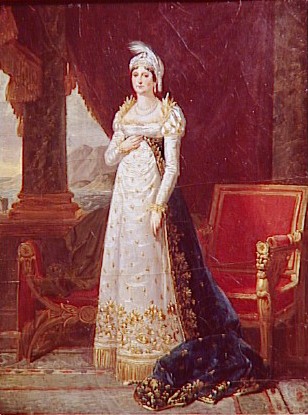


Robert Lefèvre, after several attempts at historical painting, from the last years of the XVIII century, successfully dedicated himself to portraiture. Through the patronage of Vivant Denon (nominated Director General of the Museums in 1802), he obtained many imperial commissions. He continued on this path under Louis XVIII, becoming the king’s foremost painter. The verisimilitude of his portraits is particularly noted, despite the flattering style of all Napoleonic portraits. Even in this portrait of the emperor’s mother, despite the sumptuous clothes and elegant furnishings, he catches a certain hardness in the lines of the woman’s body and her dour expression. This brings out Letizia Ramolino’s firm and somewhat coarse character. The daughter of an Inspector General of the Civil Engineers of Corsica, she married Carlo Maria Bonaparte at an extremely young age and was a widow by the time she was thirty-four. She seems to have retained a sense of the hardship and unpredictability of life, even during the years of Napoleon’s greatest glory.
Napoleon on Elba
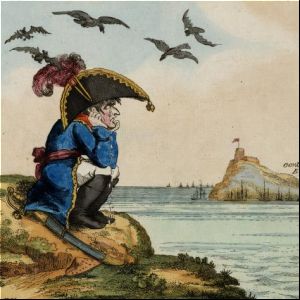
http://forums.canadiancontent.net/history/62334-napoleon-lived-like-emperor-elba.html
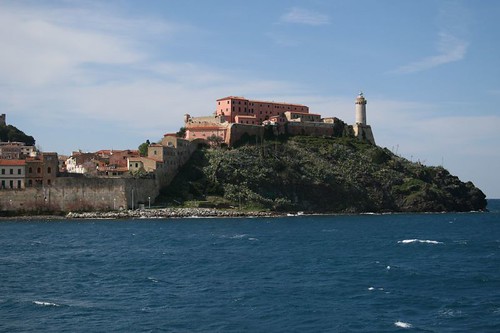


Photo Napoleon house
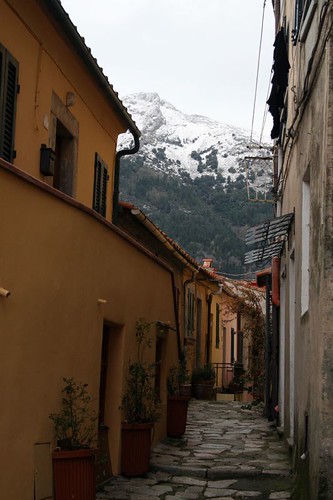
The island of Elba, off the west coast of Italy, is a part of Tuscany
Napoleon's will to succeed even in exile and defeat has been revealed with the first full restoration of his two villas on the island of Elba.
The bedroom of one of Napoleon's restored villas on ElbaNapoleon's will to succeed even in exile and defeat has been revealed with the first full restoration of his two villas on the island of Elba.

Napoleon's quotes
 Character
Wealth is a misfortune, primogeniture a relic of barbarism, celibacy a reprehensible practice.Destiny
We must grow greater in spite of ourselves. It is prudent and politic to obey the commands of Destiny and follow the irresistible march of events.I am conquered less by fortune than by the egotism and ingratitude of my companions in arms.
I walk with the goddess of fortune, accompanied by the god of war.
Fortune and Wealth
Wealth is a misfortune, primogeniture a relic of barbarism, celibacy a reprehensible practice.A disordered imagination! There lies the cause and source of human misfortune. It sends us wandering from sea to sea, from fancy to fancy, and when at last it grows calm, opportunity has passed, the hour strikes, and its possessor dies abhorring life.
Government and Empire
In a conquered country benevolence is not humanitarianism. It is a general political axiom that a conqueror must not inspire a good opinion of his benevolence until he has demonstrated that he can be severe with malefactors.Great events ever depend but upon a single hair. The adroit man profits by everything, neglects nothing which can increase his chances; the less adroit, by sometimes disregarding a single chance, fails in everything.
The career open to talents without distinction of birth or fortune.
In our day no one has concieved anything great; it falls to me to give the example.
I wanted to conquer the world...who wouldn't have in my place?
Friends must always be treated as if one day they might be enemies.
Law is like those statues of some of the gods which are veiled under certain circumstances.
A King who is unable to exact obedience at home is not a King.
Greatness
I have never found the limit of my capacity for work.I may find in Spain the Pillars of Hercules, but not the limits of my power.
My master has no bowels, and that master is the nature of things.
Human greed, passion, vanity are the motive forces by which kings rule.
Man and His Ways
A man must be a good deal of a fool if he thinks there is nothing superior to his own ideas but miracles, and the mind of God!Human greed, passion, vanity are the motive forces by which kings rule.
War
In war, the moral element and public opinion are half the battle.Great events ever depend but upon a single hair. The adroit man profits by everything, neglects nothing which can increase his chances; the less adroit, by sometimes disregarding a single chance, fails in everything.
Unity of command is essential to the economy of time.
Warfare in the field was like a siege: by directing all one's force to a single point a breach might be made, and the equilibrium of opposition destroyed.
War must be made as intense and awful as possible in order to make it short, and thus to diminish its horrors.
I believe one bad general to be worth two good ones.
War is like government, a matter to tact.
Expansion is a given territory for sustenance.
The art of war is to gain time when your strength is inferior.
An army which cannot be regularly recruited is a doomed army.
A soldier will fight long and hard for a bit of colored ribbon.
Generals who save troops for the next day are always beaten.
A man like me troubles himself little about a million men.
Enemy's lands make enemy's goods.
Gathered to strike; seperated to live.
Great battles are won with artillery.
The worse the troops the greater the need of artillery.
I have destroyed the enemy merely by marches.
In war you see your own troubles; those of the enemy you cannot see. You must show confidence.
My enemies make appointments at my tomb.
For a flying enemy you must make a bridge of gold, or oppose him a wall of steel.
Napoleon's timeline

August 5, 1769: Napoleon Bonaparte is born on Corsica.
January 1, 1779: Napoleon and Joseph go to the college d'Autun.
May 15, 1779: Napoleon enters the Brienne military school.
October 1784: Napoleon leaves Brienne and goes to the Royal Military School in Paris.
October 28, 1785: Napoleon graduates.
September 15, 1786: Napoleon receives a leave of absence from the military and returns to Corsica.
September 12, 1787: Napoleon returns from Corsica, knowing he overstayed his leave of absence for five and a half months.
November 9, 1787: Napoleon reaches Paris.
January 1, 1788: Napoleon returns to Corsica again.
June 1788: Bonaparte meets with his regiment in Auxonne.
September 1789: Napoleon has his third visit to Corsica.
February 12, 1791: Finally returns to Auxonne.
September 1791: Napoleon's fourth stay in Corsica.
May 1792: Napoleon returns to Paris from Corsica.
October 1792: Goes to Corsica for the fifth time.
June 11, 1793: A quarrel with Paoli, the mayor of Corsica, starts and the Bonapartes are forced to leave the island.
June 13, 1793: The Bonapartes successfully arrive in Toulon.
December 1793: Napoleon successfully defeats the British ships at Toulon and is promoted to the rank of Brigadier General.
July 29, 1794: Fall of Robespierre during the Thermidorian Reaction.
August 9, 1794: Bonaparte is arrested.
August 20, 1794: He is cleared on all counts.
June 13, 1795: Napoleon is promoted to General of the army de l'Ouest and immediately goes on leave.
September 15, 1795: Napoleon is struck off the list of generals employed by the Comity de Salut public. Period of financial difficulty.
October 5, 1795: After being asked by Barras, he plays a part in the suppression of the Royalist insurrection against the Convention.
October 15, 1795: Napoleon meets Josephine.
October 26, 1795: Bonaparte becomes commander in chief.
March 9, 1796: Napoleon and Josephine get married.
March 11, 1796: Bonaparte leaves for the Italian Campaign.
April 1796: Napoleon scores victories at Montenotte and Mondovi, and an armistice of Cherasco.
May 1796: Napoleon scores another victory at Lodi and enters Milan.
August 1796: Yet another victory at Castiglione.
September 1796: Napoleon seems unstoppable as he scores another victory at Bassano.
November 1796: Napoleon scores another victory at Arcole.
January 1797: Victory at Rivoli.
February 1797: Capitulation of Mantua.
April 1797: Italy had enough, and the preliminary Peace of Leoben is signed.
October 17, 1797: The Treaty of Campo-Formio is signed between France and Italy.
December 5, 1797: Bonaparte returns to Paris as a hero.
May 19, 1798: Bonaparte sets sail for Egypt.
June 11, 1798: Napoleon captures Malta.
July 1798: Bonaparte takes Alexandria, wins the Battle of the Pyramids, and enters Cairo.
August 1, 1798: Nelson destroys the French fleet at Aboukir, the Battle of the Nile. Napoleon is stranded.
March 7, 1799: Napoleon takes Jaffa.
March 1799: The siege of Saint John d'Acre begins.
May 1799: After eighth unsuccessful attacks on Saint John d'Acre, Bonaparte decides to lift the siege.
June 14, 1799: Bonaparte is once again in Cairo.
July 25, 1799: Bonaparte is victorious at Aboukir.
August 1799: Napoleon leaves Egypt for Paris.
October 16, 1799: Bonaparte arrives in Paris.
November 9-10, 1799: Napoleon participates in a coup d'Etat that overthrows the government.
February 13, 1800: The Bank of France is created by Napoleon.
May 20, 1800: Napoleon Bonaparte crosses the Saint Bernard pass.
June 14, 1800: Napoleon scores a victory at Marengo.
February 9, 1801: Treaty of Lunéville signed.
July 15, 1801: The Concordat is signed with the Pope.
March 25, 1802: Treaty of Amiens is signed with England. The only year of peace during Napoleon's reign.
May 3, 1803: Louisiana is sold to the United States.
May 18, 1804: Napoleon Bonaparte is proclaimed the French Emperor.
December 2, 1804: Napoleon's coronation takes place.
September 10, 1805: Austria attacks Bavaria.
October 19, 1805: Victory at Ulm.
October 21, 1805: The Franco-Spanish invasion fleet is destroyed at Trafalgar.
December 2, 1805: Victory at Austerlitz.
December 26, 1805: Treaty of Presbourg is signed.
March 30, 1806: Joseph is made king of Naples.
June 5, 1806: Louis is made king of Holland.
July 12, 1806: Confederation of the Rhine is established under French protection.
August 26, 1806: Prussian ultimatum is rejected.
October 27, 1806: Napoleon enters Berlin.
November 21, 1806: Napoleon declares the Continental Blockade.
June 1807: Victory at Friedland and meeting of Napoleon and Tsar Alexander I on the Niemen.
July 7, 1807: The Treaty of Tilsit is signed between Napoleon and Alexander I in a boat in the middle of a lake. The king of Prussia waits for them on the shore.
July 1807: The Grand Duchy of Warsaw is created.
August 16, 1807: Jerome is made king of Westphalia.
February 1808: Murat is appointed as Napoleon's lieutenant-general in Spain.
May 1808: An uprising in Madrid against the French presence occurs. Charles IV of Spain abdicates.
June 1808: Joseph is made king of Spain and Murat replaced him as king of Naples.
June 20, 1808: Joseph enters Madrid.
December 4, 1808: Madrid surrenders before Napoleon.
April 8, 1809: Austria attacks Bavaria.
April 22, 1809: Victory at Eckmehl.
May 22, 1809: Victory at Essling.
July 6, 1809: Victory at Wagram.
October 14, 1809: Treaty of Schonbrunn is signed.
December 15, 1809: Napoleon divorces Josephine due to her inability to produce a son.
April 2, 1810: Napoleon and Marie-Louise get married.
1810 - 1812: After beginning his attack of Russia, Napoleon enters Moscow. The Russian just keep on retreating, denying Napoleon any decisive victories.
October 1812: Napoleon decides to leave Moscow.
December 5, 1812: Napoleon leaves the retreating army so he could get to Paris faster.
March 1813: Encouraged by Napoleon's recent disaster, Prussia declares war on France.
May 1813: Victories at Lutzen and Bautzen.
June 21, 1813: Wellington wins at Vitoria. As a result, Napoleon loses Spain.
July 29, 1813: Congress of Prague takes place.
August 1813: Austria declares war on France.
October 19, 1813: French armies lose the Battle of the Nations at Leipzig and Germany is lost by the Empire.
October 1813: Victory at Hanau.
November 1813: Holland is occupied by the Fourth Coalition and is lost ot the French Empire.
December 1813: The Austrians occupy French Switzerland.
January 1814: Because French General Murat disserted, Italy is compromised.
January 29, 1814: Victory of Napoleon at Brienne.
February 1814: Things seem to be looking up as victories are scored at Champaubert, Montmirail, and Montereau.
March 13, 1814: Victory at Rheims.
March 30-31, 1814: Paris falls as Napoleon goes for a desperate gamble.
April 4, 1814: Napoleon abdicates.
April 6, 1814: Napoleon's unconditional abdication takes place.
May 1814: Napoleon sets sail for the island of Elba.
June 30, 1814: Treaty of Paris is signed between France and the Coalition.
November 1, 1814: Congress of Vienna assembles to redraw the map of Europe.
February 26, 1815: Napoleon succeeds in a daring escape from Elba.
March 20, 1815: Ready to start another empire, Napoleon arrives in Paris.
June 16, 1815: Victory at Ligny.
June 18, 1815: Napoleon loses at the Battle of Waterloo.
June 22, 1815: Napoleon abdicates for the second time.
October 16, 1815: Napoleon arrives on the island of Saint Helena.
November 20, 1815: A second Treaty of Paris is signed between France and the Coalition.
May 5, 1821: Napoleon dies.
Wednesday, October 10, 2012
A Second Attempt

http://library.thinkquest.org/C0110901/standard/gallery.html

During Napoleon’s stayed on Elba in 1814, he was not content. His thoughts kept wandering back to his ambitions of a grand empire.
In February 1815, Napoleon escaped from the island with 1,000 or so followers. He landed on March 1 and marched toward Paris, gathering supporters along the way. The French army sent to stop him, joined him instead. The Bourbons fled as Napoleon entered Paris on March 20, beginning the Hundred Days. The people welcomed back their hero, but not his dictatorship. Napoleon proclaimed a new constitution that limited his power. Napoleon was determined to change that constitution later as he prepared to engage the allies.
After a few victories, Napoleon lost at the Battle of Waterloo. Napoleon fled to Paris and abdicated again on June 22, ending the Hundred Days.
This time, the allies weren’t so generous toward him. In August, they imprisoned Napoleon on the island of St. Helena, off the southern coast of Africa. On the island, there was nothing for Napoleon to do but write his memoirs.
Napoleon died on May 5, 1821.
The Downfall of Napoleon's Empire 1810-1814

The Continental System backfired. Great Britain was able to produce goods cheaper and better than any country. The ban on British goods only resulted in economic instability in Europe.
Napoleon blamed Russia and raised an army of 600,000 men to attack.
Napoleon marched into Moscow and watched it burn. After awhile, Napoleon decided to retreat from Russia.
The retreat was devastating. The bitter winter and Cossacks reduced Napoleon's army of 600,000 men to only 30,000. Napoleon deserted his army to come back and raise another one. Seeing their opportunity, Austria, Britain, Russia, Prussia, and Sweden formed an alliance against France.
After the Allies took Paris, Napoleon abdicated at Fontainebleau on April 11, 1814.
The allies restored the Bourbon dynasty to the French throne. They gave Napoleon the island of Elba to rule. He was even allowed to keep his imperial title and was given a yearly income of 2 million francs.
Napoleon never saw his son or wife again. However, once on Elba, Napoleon planned his return to France.

Tuesday, October 9, 2012
The Battle of Waterloo June 18, 1815

A very nice plan of the Battle of Waterloo. During the battle, the French had managed to push the British back. However, the Prussians arrived on the side of the French to reinforce the British.
Russian Invasion 1812

The map shows the disastrous invasion of Russia. The tan line is the invasion route; the black line is the retreat route. The thicker the line, the more troops it represents. There is also a chart of the temperature during the invasion.
Monday, October 8, 2012
Peninsular War 1812 - 1814

After being on the defensive, Wellington went on the offensive. He continued to push into Spain until he reached the French border, where he met heavy resistance until Napoleon abdicated in 1814 ending the Peninsular War.
Peninsular War 1808 - 1811

After Napoleon replaced the Spanish King with his brother Joseph in 1808, he had to send troops into Spain and Portugal to suppress the rebellions. However, British forces (red) landed near Lisbon and defeated the French forces there. The defeat caused the French (green) to retreat back into Spain. Although there were several attempts, the French never conquered Portugal again.


Sunday, October 7, 2012
Saturday, October 6, 2012
The March on Versailles was an event in the French Revolution. It was also called the Bread March of Women.

Although the National Assembly had taken the Tennis Court Oath and the Bastille had fallen at the hands of the crowd, the poor women of Paris still found that there was a considerable bread shortage and the prices were very high. A crowd had once killed a baker for overpricing his bread. On October 5, 1789, rumours spread in Paris that the royals were hoarding all the grain. Becoming increasingly angry and incited by revolutionaries, a hungry mob of 6,000 burly, knife-wielding fishwives and their husbands decided to march on the Palace of Versailles.
Many in the crowd unjustly blamed Queen Marie Antoinette for the lack of bread and gleefully sang songs about killing her. Fortunately, one of the king's courtiers, the young Duc de Fronsac, was in the city at the time and ran on foot through the woods to the palace to warn the queen of the rowdy crowd's deadly intentions. An emergency meeting was held to determine the king's response with Marie Antoinette once again repeating a plea that the royal family flee. Her husband, King Louis XVI, refused.
Since she was aware that she was the primary target of the mob's anger, Marie Antoinette chose to sleep on her own that evening. She left strict instructions with the governess of the royal children, the Marquise de Tourzel, that she was to take the children straight to the king if there were any disturbances.
In the early hours of the morning, the mob broke into the palace. Two of the Royal bodyguard were massacred, their heads severed and stuck high on pikes. The queen and her two ladies-in-waiting only narrowly escaped with their lives through a secret passage way before the crowd burst in and ransacked her chambers. Taking the Duc de Fronsac's advice, the three ladies ran to the king's bedchamber. The king's younger sister, Madame Elisabeth, was already there. The royal couple's two children, Marie-Thérèse and her younger brother Louis-Charles, soon arrived, and the doors were locked.
A large crowd had gathered in the palace's courtyard and were demanding that the queen come to the balcony. She appeared in her night-robe, accompanied by her two children.
The crowd demanded that the two children be sent back inside. So the queen stood alone for almost ten minutes, whilst many in the crowd pointed muskets at her. She then bowed her head and returned inside. Some in the mob were so impressed by her bravery that they cried "Vive la Reine!" ("Long live the Queen!")
The stoic behaviour of the queen had greatly calmed the crowd, but the women still demanded bread and food. As well as this, they asked that the royal family leave Versailles and return to Paris to lead the people. WILL XVI reluctantly agreed, and the royal family moved to the Tuileries Palace, the dilapidated royal residence in Paris. Amid great confusion, the entire court and the National Constituent Assembly accompanied the royal family on its journey back to Paris. There was a triumphant entrance into the city. Louis XVI, however, had made a fatal mistake and was to never see Versailles again.
The Women's March to Versailles was one of the turning points of the French Revolution; it showed that the peasants of the Third Estate were a force to be reckoned with.
This march, mostly composed of women at the outset, also showed that women could be a driving force in history. These women of the Third Estate, however, were from the Parisian underclass, and are depicted as such (often crudely) in art from the Revolution. Since many of the women worked in the city's fish market, artists frequently display them naked with fish heads replacing their real heads
Source: encyclopedia.thefreedictionary.com
Subscribe to:
Posts (Atom)