Translate

Showing posts with label bonaparte. Show all posts

Sunday, September 16, 2012

Napoleon and Love - The Series

Napoleon and Love: The Complete SeriesNapoleon and Love: The Complete Series


From Gance's masterpiece, Napoléon (1927) to Bondarchuk's overblown Waterloo (1970), attempts to bring Napoleon to the screen have tended towards the grandiose. Instead, this nine-part 1974 Thames Television mini-series focusses on The Little Corporal's personal life, telling the story of Napoleon's rise through his relationships with women.

Whether in love or war, Ian Holm plays the diminutive general as virile and intense, and his small-talk with Joséphine (Billie Whitelaw) over the fine points of artillery positions still manages to smoulder.

We first encounter Napoleon as an unemployed general, 25 years young but already put out to pasture in Marseilles. Desperate to return to Paris, he courts Désirée Clary (Karen Dotrice) the daughter of a wealthy merchant, a union which he hopes will fund his return to politics. Clary's father has other ideas, but Napoleon's defence of the Palais des Tuileries earns him favour with political leader Paul Barras (T.P. McKenna), not to mention Barras' former mistress, a certain Joséphine de Beauharnais (Whitelaw).

With a great cast, a clever script and an outstanding central performance from Ian Holm, this is a quality TV series which is long overdue a release.

MovieMail on 29th May 2009 

Saturday, September 15, 2012

Old Fench Cookbooks


  • http://www.enjoyfoiegras.com/info/cookbooks2.html


    If you are a fan of early French cuisine, you might appreciate this list of Thirteenth to 
    Nineteenth Century French cookbooks. All of the books listed are in French. The early ones 
    are in very old French, which is not always easy to read, even if French is your native language.
    Many of these books have recipes for foie gras. The preparations are generally less complex than 
    what is often seen in contemporary American cookbooks.
    Some of the books on this list are quite valuable, in the range of $1,000 – $5,000. Others can 
    be obtained for as little as $20. Our best source for old French cookbooks is ebay. www.ebay.com
    • 1290 - Traite ou l'on Enseigne a Faire et Appereiller
    • 13?? - Le Viandier by Taillevent
    • 1392 - Le Menagier de Paris
    • 1505 - Platine by Barthelemy de Sacchi
    • 154? - Le Grand Cuisinier de Toute Cuisine by Taillevent
    • 1552 - Le Confiturier Francais by Nostradamus
    • 1564 - L'Agriculture et Maison Rustique by Estienne
    • 1604 - Ouverture de Cuisine by Lancelot De Casteau
    • 1606 - Le Pourtraict de la Sante by Joseph Du Chesne
    • 1607 - Thresor de Sante ou Mesnage de la Vie Humaine
    • 1651 - Le Cuisinier Francois, first edition by Francois - Pierre de la Varenne
    • 1654 - Les Delices de la Campagne by Pierre de Hayes
    • 1656 - Le Cuisinier by Pierre de Lune
    • 16?? - Le Cuisinier a l'Espagnole by Pierre de Lune
    • 1662 - L'Escole Parfaite des Officiers de Bouche
    • 1665 - Le Jardinier Francois, a gardener's guide with preserves recipes
    • 1674 - L'Art de Bien Traiter by L.S.R
    • 1691 - Le Cuisinier Roial et Bourgeois by Massaliot
    • 1692 - Nouvelle Instruction pour les confitures by Massaliot
      (Both "Le Cuisinier Royal et Bourgeois" and "Nouvelles Instructions pour les Confitures" were translated into one volume, in English in 1702 and titled The Court and Country Cook)
    • 1692 - La Maison Reglee, et l'Art de Diriger
    • 1700 - Oeconomie Generale de la Campagne
    • 1705 - Le Parfait Limonadier by Masson (tea, chocolate, coffee, liquors)
    • 1734 - Le Nouveau Cuisinier Royal et Bourgeois by Massaliot
    • 1735 - Le Cuisinier Moderne by Vincent de la Chapelle , also printed in English in 1733 as "The Modern Cook"
    • 1739 - Les Dons de Comus ou les Delices de la Table by Francois Marin
    • 1740 - Le Cuisinier Gascon by Prince de Dombes
    • 1739 - Nouveau Traite de la Cuisine by Menon
    • 1739 - Le Ménage des Champs et de la Ville ou Nouveau Cuisinier Francois
    • 17?? - Science du Maitre d'Hotel Cuisinier by Menon
    • 1746 - La Cuisiniere Bourgeoise
    • 1750 - La Science du Maitre d'Hotel Confiseur by Menon
    • 1750 - Dictionaire des aliments by MCD
    • 1755 - Les Soupers de la Cour by Menon in four volumes
    • 1765 - Le Confiturier Royal, 4th edition
    • 1765 - Le Dictionnaire Portative de Cuisine et de Distillation
    • 1770 - Le Guide du Fermier, a farmer's guide that includes some cheese recipes
    • 1774 - La Chymie du Gout et de l'Odorat by Poncelet, recipes for liquors
    • 1775 - La Nouvelle Maison Rustique by Estienne
    • 1780 - Elements de Pharmacie, some dessert recipes
    • 17?? - Manuel Alimentaire des Plantes by Pierre - Joseph Buc'hoz, some dessert recipes
    • 1795 - La Cuisiniere Republicaine by Madame Merigot
    • 1796 - La Cuisiniere Economique
    • 1803 - 1806 Almanach des Gourmands by Grimod De La Reyniere, in six volumes
    • 1804 - Recueil Pratique d'Economie Rurale et Domestique by Gacon - Dufour
    • 1806 - Le Cuisinier Imperial by Viard, retitled 'Le Cuisinier Royal" in 1817 then in 1820, a new edition appears with 850 new recipes
    • 1814 - L'Art du Cuisinier by Beauvilliers
    • 1815 - Le Patissier Royal by Antonin Careme
    • 1815 - Le Maitre d'Hotel Francais by Careme
    • 1818 - Le Confiseur Royal, 5th edition
    • 1818 - Essai sur la Preparation, Conservation, Desinfection des Substances Alimentaires by Fournier
    • 1820 - La Cuisiniere de Campagne
    • 1825 - Le Cuisinier des Cuisiniers, by Lecointe, first edition
    • 1826 - La Physiologie du gout by Brillat - Savarin, first edition, only 500 printed, worth about $ 5000.00
    • 1830 - La Maison de Campagne: Tome I on cooking, Tome II on gardening
    • 1827 - Le Nouveau Confiseur Francais ou l'Art du Confiseur Moderne
    • 1828 - Le Cuisinier Parisien by Careme
    • 1829 - L'Art de Preparer, Conserver et Desinfecter les Substances Alimentaires
    • 1830 - Le Cuisinier Durant by Durant
    • 1831 - Le Livre de tous les Ménages, l'Art de Conserver
    • 1833 - L'Art de la Cuisine au XIX siecle by Careme
    • 1841 - La Cuisiniere de la Campagne et de la Ville
    • 184? - Traite d'Office by Etienne
    • 185? - Manuel Complet du Cuisinier et de la Cuisiniere
    • 1853 - Dictionnaire General de la Cuisine Francaise
    • 1856 - La Cuisine Classique, by Dubois & Bernard
    • 1857 - Manuel Complet de la Cuisiniere Bourgeoise by Mrs Catherine
    • 1859 - La Cuisine Francaise by Gogue
    • 1861 - La Cuisiniere by Audot
    • 1861 - Le Tresor des Ménages by L'Abbe PetitPoisson
    • 1862 - Maison Rustique des Dames, contains some recipes
    • 186? - Le Breviaire du Gastronome
    • 1866 - L'Art d'Accomoder les Restes
    • 1867 - Le Livre de Cuisine by Jules Gouffe
    • 1868 - La Cuisine Classique, by Dubois & Bernard
    • 1869 - Le Livre des Conserves by Jules Gouffe
    • 1870 - Manuel Domestique Concernant la Cuisine Economique
    • 1870 - Les 366 Menus du Baron Brisse
    • 1870 - La Petite Cuisine du Baron Brisse
    • 1873 - Grand Dictionnaire de Cuisine by Dumas
    • 1873 - Le Livre de Patisserie by Jules Gouffe
    • 1873 - La Gastronomie by Desvernay
    • 1876 - La Cuisine Classique, in two volumes, reprinted in 1980
    • 1886 - Le Petit Livre de Cuisine by Marie G.V.
    • 1887 - 89 - Le Cuisinier Moderne by Garlin,
    • 1887 - Guide de la Bonne Cuisiniere by Durandeau
    • 1887 - L'Art de Faire Maigre by P. Ollendorff
    • 1888 - L'Economie Culinaire by Cauderlier
    • 1889 - Le Patissier Moderne by Garlin,
    • 1889 - La Bonne Cuisine Francaise by Dumont
    • 1890 - Le Nouveau Cuisinier Europeen by Jules Breteuil
    • 1890 - Le Nouveau Livre de Cuisine by E. Raymond
    • 1891 - Les Sauces by Driessens
    • 1891 - Le Cuisinier Bourguignon by A. Contour
    • 1892 - La Table au Pays de Brillat - Savarin by Tendret
    • 1895 - Dictionaire Universel de Cuisine Pratique by Joseph Favre
    • 1897 - Manuel Pratique de la Cuisine des Gourmets by Maurice
    • 1895 - Le Memorial Historique et Geographique de la Patisserie by Lacam
    • 1896 - Les Recettes du Siecle, guide pratique d'economie domestique
    • 1897 - Le Cordon Bleu, a weekly publication probably started around January 1895
    • 18?? - La Cuisiniere Moderne by De Bresseville
    • 18?? - L'Educateur de la Bonne Menagere
    • 18?? - La Nouvelle Cuisine Bourgeoise by Urbain Dubois
    • 18?? - Le Cuisinier Francais by Destaminil
    • 18?? - La Cuisiniere Modele by E.H. Gabrielle
    • 18?? - L'Art Culinaire by Besset
    • 18?? - La Patisserie et la Confiserie pour Tous by De Margal
    • 1913 - L'Art du Bien Manger, French Cuisine from the XIVth to the XIXth by Richardin

Friday, September 14, 2012

Marie LaChapelle Biography


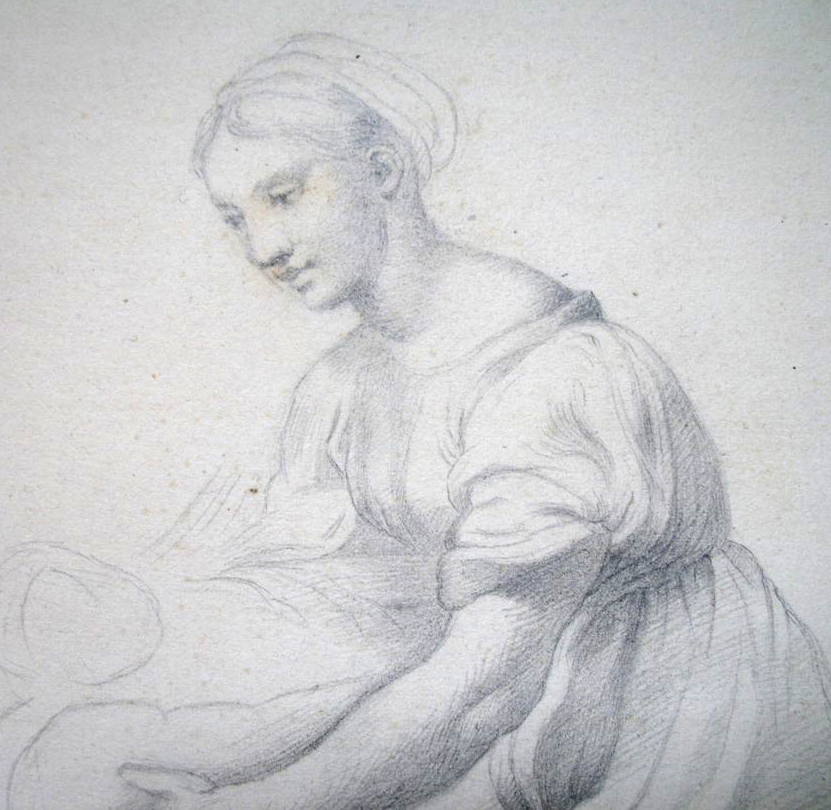
This mid 19th Century drawing, circa 1860, signed by a French woman artist: Louise Sellerier


French obstetrician Marie Louise LaChapelle (1769-1821) introduced many innovations to the management of childbirth, especially in the cases of difficult labor. She attended thousands of births and produced a massive three-volume book describing her observations and recommendations. Her book went through several editions and was an important resource for teaching the art of delivering a baby with minimal interference by the attendant.
For what little has been written in English about the life of Marie LaChapelle, history is mainly indebted to Kate Campbell Hurd-Mead, M.D., whose 1938 work, A History of Women in Medicine, devoted portions of seven pages to describing LaChapelle's life and accomplishments.

Born in Troubled Times

Marie Louise LaChapelle was born in Paris in 1769. The eighteenth century was a tumultuous time in French history. The country was engaged in wars throughout much of it, culminating in the huge upheaval of the French Revolution (1789-99). Revolutionary activities centered on Paris, where people had endured years of high taxes and recurrent food shortages.
The practice of medicine at the time was very primitive, ranging from outright neglect of poor patients to frequent bloodletting in the case of the wealthy. (Bloodletting, the treatment of choice for nearly every condition, including pregnancy, was the removal of an arbitrary quantity of blood using instruments, leeches, or both.) Midwives attended most births. Their talents and training varied widely. Convinced that France's infant mortality rate was too high, King Louis XV initiated measures to try to lower it in the mid-eighteenth century. Midwives were sent into the countryside to instruct peasant women in the art of childbirth. Laws were gradually passed to regulate health care practitioners. The laws excluded women from the practice of every kind of medicine except obstetrics. However, women were not allowed to receive a degree designating them as doctors of obstetrics. Instead, the laws prescribed a rigorous and expensive three-year apprenticeship for aspiring midwives who chose to apply for the training. Nina Rattner Gelbart described the eighteenth-century French midwife's qualifying exam as "a hair-raising test administered by a panel composed of the king's first surgeon or his lieutenant, a number of Paris surgeons, various deans of the medical faculty and royal surgical school, four sworn midwives of Paris and receivers, provosts, class masters, and council members. An intimidating ordeal, an awesome rite of passage" and one that was ignored by the vast majority of practicing midwives of the time.
LaChapelle's mother was a licensed midwife. Apparently known to history only as Madame Duges, she had learned the craft from her own mother and also received instruction from her husband (LaChapelle's father), a French health officer who had some knowledge of obstetrics. Madame Duges then finished her training at La Maternite. According to Hurd-Mead, Madame Duges was appointed "medico-legal midwife" to the local courts and prison. (In addition to assisting at births, midwives were often called upon to testify in court, settling such questions as whether a girl was still a virgin, or whether a dead baby died in the womb or was killed after birth.) From that position Madame Duges went to the Hotel Dieu, a famous hospital of Paris devoted to the care of the poorest of the poor. Hospital conditions of that time were generally very bad, but the conditions at Hotel Dieu were reportedly among the worst. Its maternity ward lodged four or more girls or women in each soiled bed, delivery rooms were open to any and all passersby, and germs were freely passed from patient to patient. Puerperal (childbed) fever was common. Puerperal fever is an infection of the birth canal that occurs following delivery of a baby; symptoms include headache, muscle aches, appetite loss, rapid heartbeat, and abdominal pain. By some estimates, as many as ten percent of mothers who delivered babies in eighteenth-century Parisian hospitals died of the fever.
Madame Duges cleaned up and reorganized the maternity ward at the Hotel Dieu. She taught her craft to other aspiring midwives and probably to some male doctors of obstetrics as well. Madame Duges also wrote several instructive books on the topic of delivering babies, and she was instrumental in making the Hotel Dieu a major center for the teaching of labor and delivery methods.

Intensive Training as Midwife

As a girl, LaChapelle was her mother's frequent companion and learned from her the trade of midwifery. In 1792 she married a surgeon by the name of LaChapelle, but he died only three years later. Thereafter, she devoted herself full-time to her profession. Upon her mother's death in 1797, LaChapelle took over as head of the maternity department at the Hotel Dieu. When she tried to introduce reforms to the practice of obstetrics and gynecology, LaChapelle ran afoul of the renowned Dr. Baudelocque, who taught obstetrics at the hospital. Although he admired her work, Baudelocque did not agree with some of her methods and ideas. Over LaChapelle's protests, he favored the frequent use of instruments to hasten labor, especially forceps, which were used to extract the baby from the womb. Baudelocque did not believe that puerperal fever was contagious and that unnecessary onlookers at a birth frequently carried the disease from patient to patient. (In fact, the contagiousness of puerperal fever was debated well into the nineteenth century. Today, doctors agree that a risk factor for the development of puerperal fever is repeated vaginal examinations with unsterilized equipment during labor. The custom of allowing large numbers of unnecessary people in the delivery area has been abandoned since LaChapelle's day.)
Despite the obstacles LaChapelle faced in implementing her obstetric innovations, France and especially Germany were considered fairly enlightened when it came to women practicing in certain areas of medicine. And according to Eric v. d. Luft, "Female students of midwifery in the mid-nineteenth century in Germany received a level of medical education superior to that which was offered to female medical students in the same era in America." At some point LaChapelle went to Heidelberg, Germany, to study under the great obstetrician, Franz Naegele, for whom Naegele's Rule is named (still in use today, it is a way of calculating a pregnant woman's expected date of delivery). Upon her return to Paris, LaChapelle set about organizing a maternity and children's hospital at Port-Royal de Paris, the Hopital de la Maternite (formerly a prison). There she continued to introduce new techniques in patient care and attempted to modernize the training of midwives.
But old customs die hard, and LaChapelle had little success in convincing other birth attendants to change the practices she opposed. According to Hurd-Mead, she was more successful in introducing new labor management techniques, including "the immediate repair of a torn perineum [the area between the anus and the posterior part of the external genitalia], and in cases of placenta praevia [an abnormal positioning of the placenta that causes it to precede the child at birth, usually causing severe maternal bleeding] she insisted upon quick dilation of the os uteri [mouth of the uterus] with tampons and the extraction of the infant by version [turning], thus saving the lives of both mother and child." She invented a technique for repositioning a fetus that eliminated the need for forceps. She also compiled statistical tables based on her observations that were helpful in settling questions about pregnancy and labor.

Master Work Published After Her Death

LaChapelle died of stomach cancer in 1821. She left behind one daughter (a Roman Catholic nun) and a portrait of herself. According to Hurd-Mead, the portrait showed "an attractive woman in a Gainsborough hat trimmed with ostrich plumes. She wears a ruffled collar, immense puffed sleeves, an absurdly small waist, and an elaborate gown with beautiful laces."
LaChapelle's master work was published in three volumes over a four-year period beginning in 1821. It was called Pratique des Accouchemens, ou Memoirs et Observations choisies, sur les points les plus importans de l'Art; Par Mme. Lachapelle, sage-femme en chef de la maison d'Accouchement de Paris (Childbirth Practices, or memories and choice observations on the most important points of the art, by Madame Lachapelle, midwife and head of the Paris childbed house). According to Hurd-Mead, the book opposed and annoyed the great Baudelocque in several respects. In volume one, LaChapelle "classified the positions of the fetus better than he did, reducing his 94 positions to 22. She insisted that instruments should be used as little as possible, and never for the mere sake of shortening labor. She showed how to insert forceps deftly. In all her 40,000 cases she interfered with nature in only 1.73%, using forceps only 93 times, version 155 times, symphisiotomy twice, and Caesarian section but once." Volume two described her most unusual cases and the treatment she had employed, and volume three dealt with the then-new operation of symphisiotomy, a surgical procedure to bring about an immediate dramatic increase in the size of the pelvic outlet to permit delivery of a baby. LaChapelle's book became an important resource in the training of midwives throughout Europe.

Books

Gelbart, Nina Rattner, The King's Midwife: A History and Mystery of Madame du Coudray, University of California Press, 1998.
Ogilvie, Marilyn Bailey, Women in Science: Antiquity Through the Nineteenth Century: A Biographical Dictionary With Annotated Bibliography, MIT Press, 1986.
Hurd-Mead, Kate Campbell, Women in Medicine: From the Earliest Times to the Beginning of the Nineteenth Century, Haddam Press, 1938.

Online

Luft, Eric v.d., Ph.D., M.L.S., "Mid-Nineteenth Century Attitudes Toward Women Physicians: Reflections on Elizabeth Blackwell and the 150th Anniversary of Women in Medicine," http://www.upstate.edu/library/history/cppblackwell.html (January 15, 2001).
"Modern History Sourcebook: Oliver Wendell Holmes (1809-1894): Contagiousness Of Puerperal Fever, 1843," http://www.fordham.edu/halsall/mod/1843holmes-fever.html (January 14, 2001). □

Marie la Chapelle


b. 1769, Paris; d. 1821, Paris
Daughter of the renowned midwife Marie Dugés, Marie la Chapelle became director of the maternity ward at the Hôtel-Dieu, a hospital for the poor in Paris, after her mother's death in 1797. La Chapelle delivered thousands of babies, recording her clinical observations and recommending improvements in the methods of childbirth. These were compiled in the three-volume, posthumously published Pratique des accouchemens, ou, Memoirs et observations choises, sur les points les plus importans de l'art; par Mme. Lachapelle, sagefemme en chef de la maison d'accouchement de Paris (Childbirth Practices, or memories and choice observations on the most important points of the art, by Madame Chapelle, midwife and head of the Paris childbed house).

Thursday, September 13, 2012

Elizabeth Vigeé-Lebrun


Elizabeth Vigeé-Lebrun 
b. 1755, Paris; d. 1842, Paris
The most famous female painter of the eighteenth century, Elisabeth Vigée-Lebrun studied with her father, Louis Vigée, but was equally influenced by her contemporaries. A prolific artist with more than 800 works attributed to her, she began painting portraits professionally in her teens and at nineteen gained entrance to the Académie de Saint-Luc. In 1776, she married the art dealer Jacques Lebrun. Summoned to Versailles in 1779 to paint Marie Antoinette, she became painter and friend to the queen. In 1783, backed by an official order from Louis XVI, Vigée-Lebrun was accepted as a member of France's Académie Royale de Peinture et de Sculpture as a painter of historical allegory, a category typically dominated by men. At the outbreak of the French Revolution, Vigée-Lebrun fled to Italy and then traveled to Vienna, Berlin, Saint Petersburg, Dresden, and London, finding critical acclaim and aristocratic clientele in nearly every city. She returned to Paris in 1805.

Tuesday, September 11, 2012

The King's Midwife


A History and Mystery of Madame du Coudray

Cover Image

Nina Rattner Gelbart (Author)

Available worldwide


This unorthodox biography explores the life of an extraordinary Enlightenment woman who, by sheer force of character, parlayed a skill in midwifery into a national institution. In 1759, in an effort to end infant mortality, Louis XV commissioned Madame Angélique Marguerite Le Boursier du Coudray to travel throughout France teaching the art of childbirth to illiterate peasant women. For the next thirty years, this royal emissary taught in nearly forty cities and reached an estimated ten thousand students. She wrote a textbook and invented a life-sized obstetrical mannequin for her demonstrations. She contributed significantly to France's demographic upswing after 1760.

Who was the woman, both the private self and the pseudonymous public celebrity? Nina Rattner Gelbart reconstructs Madame du Coudray's astonishing mission through extensive research in the hundreds of letters by, to, and about her in provincial archives throughout France. Tracing her subject's footsteps around the country, Gelbart chronicles du Coudray's battles with finance ministers, village matrons, local administrators, and recalcitrant physicians, her rises in power and falls from grace, and her death at the height of the Reign of Terror. At a deeper level, Gelbart recaptures du Coudray's interior journey as well, by questioning and dismantling the neat paper trail that the great midwife so carefully left behind. Delightfully written, this tale of a fascinating life at the end of the French Old Regime sheds new light on the histories of medicine, gender, society, politics, and culture.

Historical Background of Midwifery


Contributions by the
Midwives of Antiquity
to the Art and Science
of Modern Medicine

"The practice of midwifery is as old as the human race. Its history runs parallel with the history of the people and its functions antedate any record we have of medicine as an applied science. Midwives, as a class, were recognized in history from early Egyptian times. The practice of midwifery is closely bound by many ties to social customs and prejudices." [1925-A; Hardin, MD p. 347] ^104
 "As a class midwives were recognized in history from early Egyptian times. In the history of European continent the practice of midwifery by the medical profession did not begin until the middle of the 16th century. [1911-E; PriceMD, p.221] ^103
 "That Socrates' mother was a midwife bears testimony to the honorable nature of such a profession at a time when civilization in one of its highest forms was at its summit." [1911-G; BakerMD, p. 232] ^108
"The practice of midwifery dates back to the beginning of human life in this world. At this supreme moment of motherhood it is probable that some assistance has always been required and given. Its history runs parallel with the history of the people, and its functions antedate any record we have of medicine as an applied process. To deny its right to exist as a calling is to take issue with the eternal verities of life. [1911-G; BakerMD, p. 232]

Midwives of Great Antiquity
and Historical Influence
The mother of Socrates and the wife of Pericles were both midwives. Aristotle speaks of the wisdom and intelligence of the midwives of Greece.
Midwives had positions of authority and influence in Germany, France, and England, writing well-known treatises on midwifery (the art of normal childbearing) and obstetrics (management of the complications of childbearing).

France’s most famous midwife was Louise Bourgeois, born in 1553, who enjoyed great distinction as a teacher, author and midwife to the Royal Court for 27 years. She delivered the future Louis XIII and 6 children of King Henry IV. Another notable French midwife was Madame Le Boursier Du Courdray. Louis XVI gave her permission to go into the providences and give free instruction to the midwives. She invented a life-size mannequin for teaching purposes, permitting her to demonstrate the position of the baby and techniques of delivery.

According to Herbert Thomas, MD, Professor Emeritus of Obstetrics and Gynecology, Yale University and author of Our Obstetrical Heritage -- The Story of Safe Childbirth (1960), “The French midwives as a group were highly influential in advancing obstetrics.” Other French midwives of note were Marie Duges, chief midwife at the time of the French revolution and mother of the famous midwife Louis La Chapelle, born 1769.

The celebrated German midwife Justine Siegemundin (“Pious Justine”) who was Court Midwife to the Electorate of Brandenburg wrote an early midwifery text published in 1776. It was subsequently translated into Dutch and used in the universities of Germany. She was called a “lantern-bearer in the darkness of ignorance and superstition”.

Alice Dennis was a Danish royal midwife who attended Anne of Denmark.

Jane Sharp was the first English midwife to write a book on midwifery called "The Midwives Book or the Whole art of Midwifery Discovered; directing childbearing women in how to behave themselves (1671). Mrs. Margaret Stevens who delivered Queen Charlotte, wrote a “commendable treatise” call “The Domestic Midwife” giving instructions to midwives in the use of obstetrical forceps.

During the 1800s, Florence Nightingale, usually only remembered for her association with nursing, and was especially interested in midwifery and wrote a book on the subject. One of her nurses-- Dame Rosalind (Padget) was the leading spirit in founding the English Midwives Institute in 1881.

The literary works by these exceptionally gifted midwives did much to contribute to the understanding of normal labor and birth by “medical men” of the day. These midwifery textbooks, along with the work of the vivisectionists, laid the foundation for the classical obstetrical texts written during the renaissance period. The body of knowledge which has became the modern-day surgical discipline of obstetrics is directly traceable to these early midwives.

Sunday, September 2, 2012

Napoleon and Josephine


ORIGINAL AIR DATE:
November 10, 1987

Malmaison and the French Influence


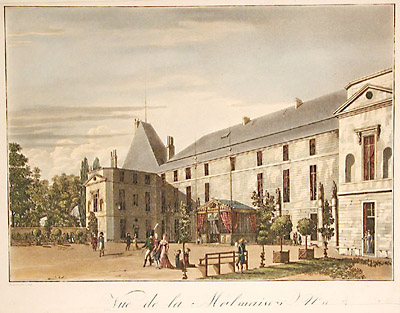
During the Regency, the French and most importantly the Empress Josephine had a significant impact on the development of the rose garden.The Empress Josephine collected roses for her gardens at the Chateau de la Malmaison from 1805 to 1810.  This collection gave the French an interest in the culture of roses in the vicinity of Paris that lead to some of the most important work in rose hybridization during the early years of the 19th century.
The French writer, De Pronville, stated that in 1814, there were only about 182 varieties of roses, but by mid-century due the keen interest in the rose and hybridization, there were 6,000 varieties--most created by cross-pollination and the resultant seed production.  The gardener of the Empress Josephine was a Frenchman named Dupont and he, along with Vilmorin and Descement were among the earliest cultivators of roses from seed.
The Empress Josephine had over 150 different Gallica cultivars in her collection, and as you may guess, the Gallica was the 'darling' of the Regency period.
When the allied armies entered Paris in 1815, Descement's garden contained 10,000 seedling roses which Vibert, succeeded in saving and carrying to his garden on the Marne in the countryside of France.
The Empress Josephine's goal with Malmaison was to obtain every species of rose then known.  Napoleon instructed the French Navy to seize any plants or rose seeds they found when they searched ships at sea.  In just one year, Josephine spent close to 2,600 pounds  with the English nursery of Kennedy and Lee, despite the war with Britain.  Despite the naval blockade, the British Admiralty granted a safe-conduct pass to the Kennedy and Lee firm to deliver the new China Roses to Malmaison.  The Englishman Kennedy was employed by the Empress to assist them in laying out her rose garden and interestingly enough, there was one plan (never used) that laid out a rose garden in a design close to the Union Jack.
Josephine set the standard for rose gardening for a very long time.  All the wealthy French followed her lead and many joined in the competition to see who could amass the largest collection.  Her influence was felt across the Channel, in England, as well.  The English, anxious to keep up with social fashion, made concerted efforts to collect roses, just like the French.
Her biggest rival was the Countess of Bougainville, who tried to amass as many new roses as possible.  It is no surprise that economically, the rose became the most important flower in France.
After her death, the gardeners who helped create Malmaison went to other positions throughout France and established gardens and nurseries which still have an impact on the rose industry today.
After her death in 1814, Malmaison quickie fell into neglect, but roses still passed from Britain to France.
Many of the men who trained at Malmaison went on to become rose hybridizers and they established France as the premiere country in rose-breeding.  During Josephine's residence at Malmaison, Dupont amassed nearly 260 rose species and cultivars.  Dupont passed on this legacy toAlexandre Hardy, who took over the Luxembourg Garden and raised many roses we still grow today, including 'Mme. Hardy' and 'Safrano'.  Hardy took on a young assistant at the Luxembourg Garden, Jacques-Julien Margottin, who also founded his own rose nursery.  He and his son Jules kept alive Josephine's dream and continued to grow and hybridize roses.
These gardens were probably the most important factor in establishing the popularity of the rose in the 19th century.  Part of Josephine's efforts at Malmaison included commissioning the painter, Pierre-Joseph Redoute to paint the roses in her collection.  He had been the court painter to Queen Marie-Antoinette, but despite the revolution, he managed to survive and become the court rose painter.
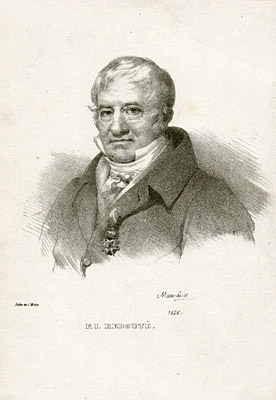
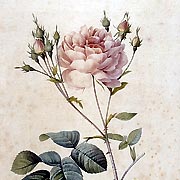
Redoute's work, Les Roses, was completed after Josephine's death, the three volumes, issued between 1817 and 1824 is one of the most beautiful and important books ever published on roses.  Botanist Claude-AntoineThory provided the commentary for the book and these volumes became the standard reference work on roses for quite some time.  It is still used as a reference work to identify older varieties of roses.  Thory made the first serious attempt to untangle the genealogy of roses.  Much of his work has proven to be accurate and still stands up today.
Many of the 170 roses illustrated by Redoute are still grown in garden today.  Many consider his painting of 'Blush Noisette' to be the all-time masterpiece of botanical illustration.
Even after the exile and death of Napoleon, Redoute continued to paint for Louise-Philippe, the new Bourbon king, in 1830.  Redoute died in 1840 at 81 years old.  He was painting a lily at the time.
Others carried on the work of cataloguing and growing roses.  Prevost, Pepinieriste a Rouen wrote "Catalogue descriptif, methodique et raisonne de especes, varietes et sous-varietes du genre rosier', which listed 880 names of roses.
There were two very famous Englishmen who specialized in roses:  Thomas Rivers and William Paul.  Rovers wrote:  Rivers's Rose Amateur's Guide in 1837, which lists current varieties and cultivation methods.  Paul's The Rose Garden was written in 1848 which included a rather pompous essay about the rose in Art, as well as how to cultivate the rose.  He describes 87 Damask, 76 Provence (Centifolia), 84 Moss and 471 French (Gallica) roses.  As I mentioned earlier, the Gallica rose was really the darling of the 1st half of the 19th century.
But, sadly, tastes changed rapidly.  By 1896, George Paul (a nephew to William Paul) wrote in RHS Journal, "Wanted:  a refuge for the old roses where they may be found gain when tastes change."  There were many wonderful, sumptuous, hardy Old Roses roses raised during the early years of the 19th century, including: 'Mme Hardy' - 1832; 'Felicite Parmentier' - 1836; 'Cardinal de Richelieu' - 1840; 'La Ville de Bruxelles' - 1849; and 'Tour de Malakoff' - 1856.  Their heyday of popularity was around 1810 to 1830 and had they not been so vigorous and simply gorgeous, they might have perished with the emergence in mid-century of the remontant varieties.


Wednesday, August 1, 2012

Napoleon Bonaparte's Lovers


Marie
Walewska

Mademoiselle
Georges

Napoleon's St Helena Sword up for Sale


First time Balcombe sword available in 200 years

By Richard Moore

Napoleonic collectors take note - you have the chance to pick up a very rare personal item from Emperor Napoleon Bonaparte himself.

It is Napoleon's ceremonial sword, pictured right, that the French emperor took with him into his final exile on St Helena.
The sword is currently in the possession of the last descendant of the Balcombe family - which lived on St Helena at the time of Napoleon's exile (1815 to 1821).
William Balcombe was a British merchant on St Helena and his family - particularly his daughter Betsy - became friendly with France's former leader.
In fact Betsy Balcombe was a favourite of Napoleon's - he spent a lot of time talking with the girl - and he allowed her to play with the sword that is now on offer.
As token of his affection for the Balcombes, Napoleon gifted many items to the family - including the ceremonial sword.
Many of the historically significant artefacts are on display at The Briars museum homestead, just south of Melbourne, in Australia.
They include furniture, a lock of Napoleon's hair and one of his death masks.
The sword remains in the Balcombe family some 200 years after being given it by Napoleon Bonaparte.
A fellow of the International Napoleonic Society Dr William Mayo says when William Balcombe moved to Australia from St Helena he brought the sword with him and it ended up with his grandson Alexander Balcombe and was then left to its present owner, who is also from the Balcombe family.
Dr Mayo says the provenance of this sword is outstanding - One of the main reasons being the unbroken link of 200 years it has been with the Balcombe's.
He has prepared an authentication letter for this historical gem.
Dr Mayo says he cannot give an exact dollar value for the weapon but the only other recent sale of one of Napoleon's swords was in Paris in 2008, where it fetched $6.8 million.
The Balcombe sword has a little damage, it was caught in a house fire, but Dr Mayo says the weapon still presents well.

Napoleon's Graves


The Island of Saint Helena
                                               
                                                             Napoleon's First Grave


Napoleon's current resting place

 In 1840, King Louis-Philippe decided to transfer the body of the Emperor. French sails men, under the Prince de Joinville command, brought back the coffin to France, aboard the "Belle Poule" ship.
National funerals followed the return of the Emperor Napoléon I remains, transferred to the Invalides on December 15th 1840, while the tomb was being constructed. It was commissioned in 1842, by Louis-Philippe, to the architect Visconti (1791-1853), who made vast transformations by excavating largely the inside of the Dome church, to host the tomb. The body of the Emperor Napoléon I was laid there on April 2nd 1861.
The tomb, crafted in red porphyry from Russia, placed on a green granite base from the Vosges, is circled by a crown of laurels and inscriptions, reminders of the great victories of the Empire. In the round gallery, a series of low-relief, sculpted by Simart, represent the main actions of the reign. A statue of the Emperor, bearing the imperial emblems, was erected at the back of the crypt, above the tombstone under which the King of Rome lies.
The Dome Church also houses the sepultures of two of Napoléon's brothers, Jérôme and Joseph Bonaparte, Napoléon's son, the so-called eaglet, as well as the more recent ones of marshals Foch and Lyautey. The Musée de l'Armée is responsible for those.