Translate

Sunday, December 1, 2013

THE HOUSE OF THEODORE 1432-85


http://warsoftheroses.devhub.com/blog/738912-the-house-of-theodore-1432-85/

December 22, 2011
Marriage of Henry V and Catherine of Valois
If The Wars of the Roses were fought by the men, it was the women who eventually sorted out the mess. By the late 1400s the royal family tree had become a crazy spider’s web of possible claimants to the throne, and it took female instinct to tease out the relevant strands from the tangle. The emotions of mothers and wives were to weave new patterns — and eventually they produced a most unlikely solution.

Owain ap Maredudd ap Tydwr was a silver-tongued Welsh gentleman who caught the eye of Henry V’s widow, Catherine of France. He was a servant in her household in the 1420S — probably Clerk of her Wardrobe — and being Welsh, he had no surname. The ‘ap’ in his name meant ‘son of’, so he was Owen, son of Meredith, son of Theodore.

But once he had captured the heart of the widowed Queen, Owen had needed a surname. According to later gossip, Catherine would spy on her energetic Welsh wardrobe clerk as he bathed naked in the Thames, and she decided she liked what she saw.

The court was outraged. An official inquiry was held. But Catherine stuck by her Owen and in 1432 their marriage was officially recognised. ‘Theodore’ became ‘Tudor’, and Owen went through life defiantly proud of the leap in fortune that he owed to love. Thirty years later, in 1461, cornered by his enemies after the Battle of Mortimer’s Cross, he would go to the block with insouciance. ’That head shall lie on the stock,’ he said jauntily, ‘that was wont to lie on Queen Catherine’s lap.’

From the outset, the Tudors confronted the world with attitude. Catherine and Owen had two sons, Edmund and Jasper, who were widely viewed as cuckoos in the royal nest. But the dowager Queen resolutely brought up her Welsh boys with her first-born royal son Henry VI, nine or ten years their senior, and the young King became fond of his boisterous half-brothers. In 1452 he raised them both to the peerage, giving Edmund the earldom of Richmond and making Jasper Earl of Pembroke. The two young Tudors were given precedence over all the earls in England, and Henry, who had produced no children, was rumoured to be considering making Edmund his heir. The new Earl of Richmond was granted a version of the royal arms to wear on his shield.

The Tudors rose still higher in the world a few years later, when Edmund married the twelve-year-old Lady Margaret Beaufort, who had her own claim to the throne. The great-granddaughter of John of Gaunt, she proved to be one of the most remarkable women of her time. Bright-eyed and birdlike, to judge from the portraits still to be seen in the several educational establishments she endowed, she was a woman of learning. She translated into English part of The Imitation of Christ, the early-fifteenth-century manual of contemplations in which the German monk Thomas of Kempen (Thomas a Kempis) taught how serenity comes through the judicious acceptance of life’s problems. ’Trouble often compels a man to search his own heart: it reminds him he is an exile here, and he can put his trust in nothing in this world.’

Diminutive in stature, Lady Margaret was nonetheless strong in both mind and body. She was married, pregnant and widowed before the age of thirteen, when Edmund died of plague. In the care of his brother Jasper, Margaret gave birth to Edmund’s son, Henry, in Jasper’s castle at Pembroke in the bleak and windswept south-west corner of Wales. But some complication of the birth, probably to do with her youth or small frame, meant that she had no more children. For the rest of her life she devoted her energies to her son —‘my only worldly joy’, as she lovingly described him — although circumstances kept them apart.

The young man’s links to the succession through his mother — and less directly through his grandmother, the French queen Catherine — made England a dangerous place for Henry Tudor. He spent most of his upbringing in exile, much of it in the company of his uncle Jasper. At the age of four he was separated from his mother, and he scarcely saw her for twenty years.

But Lady Margaret never abandoned the cause. She would later plot a marriage for her son that would make his claim to the throne unassailable, and she had already arranged a marriage for herself that would turn out to be the Tudor trump card. In 1472 she married Thomas, Lord Stanley, a landowner with large estates in Cheshire, Lancashire and other parts of the north-west. The Stanleys were a wily family whose local empire-building typified the rivalries that made up the disorderly jostlings of these years. Allied to Lady Margaret, the Stanleys would prove crucial partners as her son Henry Tudor jostled for the largest prize of all.

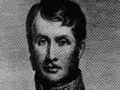
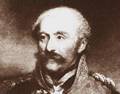
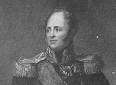
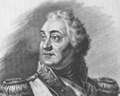
The Leaders Against Napoleon

http://www.napoleonguide.com/leadind.htm
Faced with a supremely talented foe, the men who opposed Napoleon Bonaparte and his armies were tested to the extreme. It was only by acting together and reforming their nations' armies that they were finally able to remove Bonaparte from power.
AUSTRIA
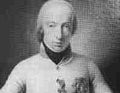
Francis I of Austria
Archduke Charles
BRITAIN
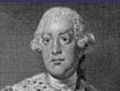
George III
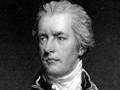
William Pitt the Younger
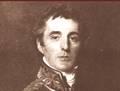
Arthur Wellesley, Duke of Welington
PRUSSIA
Gebhard von Blucher
RUSSIA
Tsar Alexander I
Mikhail Kutusov
SPAIN
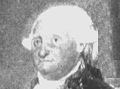
Charles IV of Spain
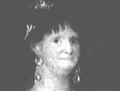
Maria-Louisa of Spain
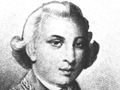
Manuel Godoy

Ygerna (Igraine)


..............................................................
According to Geoffrey of Monmouth, Ygerna or Igraine (Eigr in Welsh) was the Duchess of Cornwall, ravishing wife of Gorloisand mother of King Arthur. After the death of Gorlois, she married Uther Pendragon, who, under false pretenses and aided byMerlin's trickery, had slept with her, impregnated her with Arthur and had been responsible for her husband's death. Chretien de Troyes claims that after Uther's death, Ygerna retired to a palace she had had built for herself known as the Chastel des Merveillesor "Castle of Wonders".
She was the daughter of Amlawdd Wledig (the Imperator), a member of a younger branch of the Royal House of Dumnonia. He was probably a nobleman of Ergyng, though he has also been attached to the North of Britain and Brittany. His family are central to the Mabinogion story of "Culhwch and Olwen". As well as Arthur, various sources have attributed Ygerna with several children by her first marriage: daughters Elaine, (Anna)Morgause and, perhaps mistakenly, Morgan; sons Gormant and, mistakenly, Cador.

Wednesday, November 27, 2013

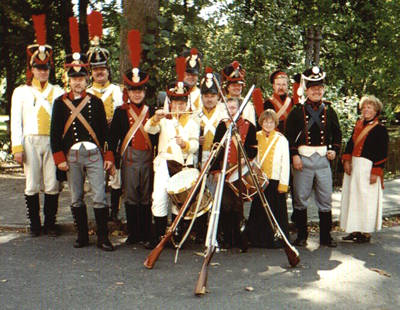
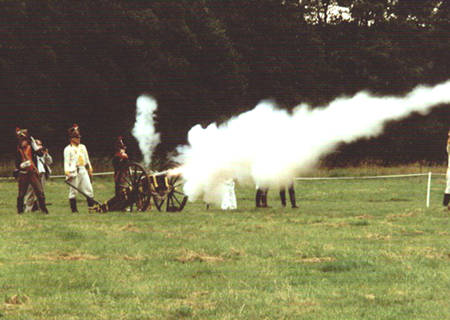
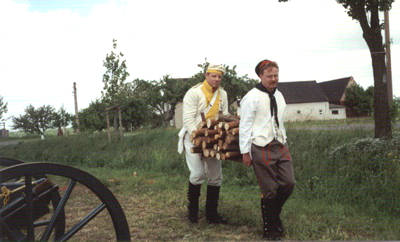
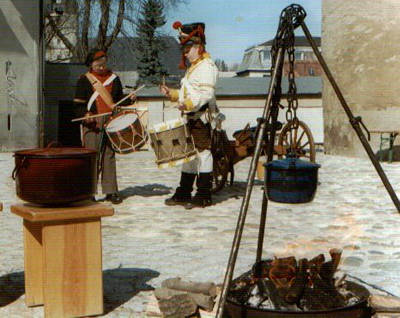
Napoleonic Reenactors


Royal Saxon Army (1810-1815)

http://www.grenadierbataillon-von-spiegel.de/

King Arthur, General of the Britons

King Arthur
Pic: John Hamer  http://celticmythpodshow.com/blog/did-king-arthur-really-exist/

A discussion by David Nash Ford
http://www.britannia.com/history/arthur/kageneral.html


Though Arthur is quite firmly established as an historical figure, there appears to be little evidence that he was the King of tradition. To quote Nennius,
Arthur fought...together with the Kings of the British; but he was Dux Bellorum.
This would seem to confirm the popular view today that Arthur was a professional soldier: a brilliant military leader employed in an official capacity by an alliance of British Kings to carry out their warfare against all coming enemies.

"Dux Bellorum" translates literally as Duke of Battles. This might be comparable to the Roman "Dux Britannorum" in charge of the Northern British defences. Though many think the Roman "Comes British History Clubrum" a better fit, for he led mobile cavalry forces across the country, as perhaps indicated by Arthur's supposed widespread battles.

None of this, however, precludes Arthur from also being a King. Nennius may have intended his phrase to imply that Arthur was one of the Kings alongside whom he fought, yet he was the greatest warrior among them. If the more formal title of Dux or Comes was meant, then perhaps a High-Kingship is implied as tradition would suggest. Early sources, no doubt, assumed that everyone already knew Arthur was a King, as with most Royal entries in the Annales Cambriae. There was no need to announce it.

Tuesday, November 26, 2013

Timeline of the Wars of the Roses

war of the roses, richard ii, lancaster, york, plantagenet, english civil war, tudor, bolingbroke


http://warsoftheroses.com/timeline.cfm

DateEvent
1421
6 December 1421Henry VI born
1429
  1429Margaret of Anjou born
1442
28 April 1442Edward IV born
1450
 August 1450Return of Richard, Duke of York from Ireland
1453
 December 1453Henry VI first bout with mental illness
1454
 April 1454Start of York's first protectorate
1455
 February 1455End of York's first protectorate
22 May 1455Wars of the Roses begins
22 May 1455Battle of First St. Albans
1459
23 September 1459Battle of Blore Heath
12 October 1459Battle of Ludford Bridge
1460
10 July 1460Battle of Northampton
30 December 1460Battle of Wakefield
1461
2 February 1461Battle of Mortimor's Cross
17 February 1461Battle of Second St. Albans
28 March 1461Battle of Ferrybridge
29 March 1461Battle of Towton
1464
25 April 1464Battle of Hedgeley Moor
15 May 1464Battle of Hexham
1469
26 July 1469Battle of Edgecote Moor
1470
12 March 1470Battle of Losecote Field
4 November 1470Edward V born
1471
14 April 1471Battle of Barnet
4 May 1471Battle of Tewkesbury
21 May 1471Henry VI dies
1483
9 April 1483Edward IV dies
1485
22 August 1485Richard III is killed at the battle of Bosworth
22 August 1485Battle of Bosworth
1487
16 June 1487Battle of Stoke
16 June 1487Wars of the Roses ends
war of the rosesRichard IIIRichard III

Coalitions Against France


image: http://www.tolentino815.it/

http://www.napoleonguide.com/coalitions.htm

The 1st Coalition1792-1797

Austria, Prussia, Great Britain, Spain, Piedmont.


Campaign History:
Revolutionary Wars

The 2nd Coalition1798-1801 
Russia, Britain, Austria, Ottoman Empire, Portugal, Naples, Vatican.

Campaign History:
Trial in Egypt 
Marengo

The 3rd Coalition1805

Austria, Great Britain, Russia, Sweden.

Campaign History:
Austerlitz

The 4th Coalition1806-1807

Prussia, Saxony, Russia.

Campaign History:
Conquest of Prussia

The 5th Coalition1809

Great Britain and Austria.

Campaign History:
War Along the Danube
The Peninsular War

The 6th Coalition1812-1814

Great Britain and Russia, joined by Prussia, Sweden, Austria, German States.

Campaign History:
Invasion of Russia
1813 Liberation of GermanyDefence of France

The 7th Coalition1815

Great Britain, Russia, Prussia, Sweden, Austria, German States.

Campaign History:
The 100 Days and Waterloo.