Translate

Showing posts with label midwives. Show all posts

Friday, September 14, 2012

Marie LaChapelle Biography


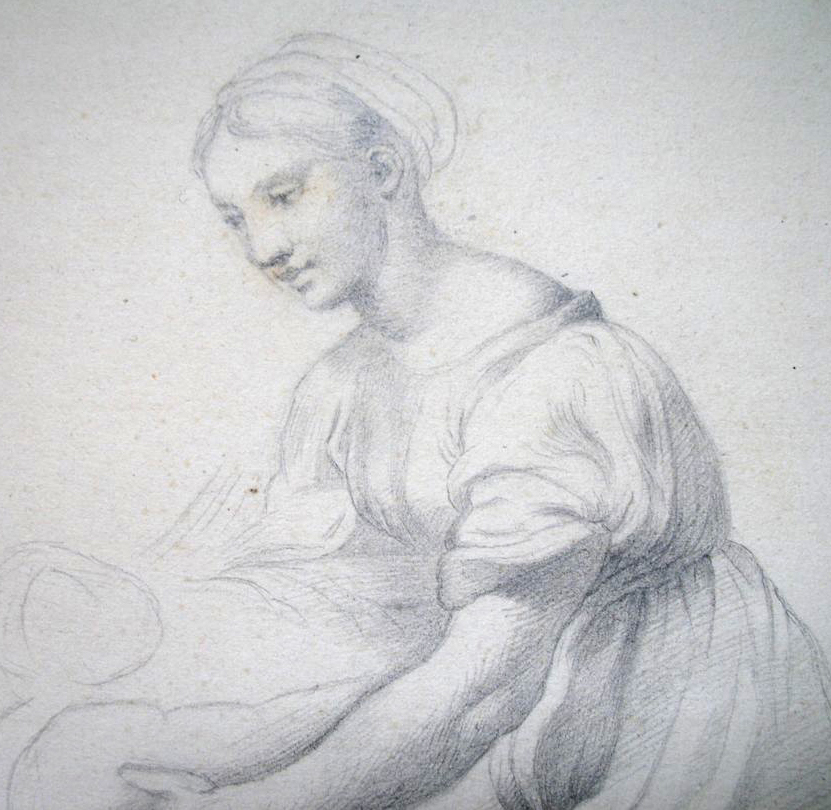
This mid 19th Century drawing, circa 1860, signed by a French woman artist: Louise Sellerier


French obstetrician Marie Louise LaChapelle (1769-1821) introduced many innovations to the management of childbirth, especially in the cases of difficult labor. She attended thousands of births and produced a massive three-volume book describing her observations and recommendations. Her book went through several editions and was an important resource for teaching the art of delivering a baby with minimal interference by the attendant.
For what little has been written in English about the life of Marie LaChapelle, history is mainly indebted to Kate Campbell Hurd-Mead, M.D., whose 1938 work, A History of Women in Medicine, devoted portions of seven pages to describing LaChapelle's life and accomplishments.

Born in Troubled Times

Marie Louise LaChapelle was born in Paris in 1769. The eighteenth century was a tumultuous time in French history. The country was engaged in wars throughout much of it, culminating in the huge upheaval of the French Revolution (1789-99). Revolutionary activities centered on Paris, where people had endured years of high taxes and recurrent food shortages.
The practice of medicine at the time was very primitive, ranging from outright neglect of poor patients to frequent bloodletting in the case of the wealthy. (Bloodletting, the treatment of choice for nearly every condition, including pregnancy, was the removal of an arbitrary quantity of blood using instruments, leeches, or both.) Midwives attended most births. Their talents and training varied widely. Convinced that France's infant mortality rate was too high, King Louis XV initiated measures to try to lower it in the mid-eighteenth century. Midwives were sent into the countryside to instruct peasant women in the art of childbirth. Laws were gradually passed to regulate health care practitioners. The laws excluded women from the practice of every kind of medicine except obstetrics. However, women were not allowed to receive a degree designating them as doctors of obstetrics. Instead, the laws prescribed a rigorous and expensive three-year apprenticeship for aspiring midwives who chose to apply for the training. Nina Rattner Gelbart described the eighteenth-century French midwife's qualifying exam as "a hair-raising test administered by a panel composed of the king's first surgeon or his lieutenant, a number of Paris surgeons, various deans of the medical faculty and royal surgical school, four sworn midwives of Paris and receivers, provosts, class masters, and council members. An intimidating ordeal, an awesome rite of passage" and one that was ignored by the vast majority of practicing midwives of the time.
LaChapelle's mother was a licensed midwife. Apparently known to history only as Madame Duges, she had learned the craft from her own mother and also received instruction from her husband (LaChapelle's father), a French health officer who had some knowledge of obstetrics. Madame Duges then finished her training at La Maternite. According to Hurd-Mead, Madame Duges was appointed "medico-legal midwife" to the local courts and prison. (In addition to assisting at births, midwives were often called upon to testify in court, settling such questions as whether a girl was still a virgin, or whether a dead baby died in the womb or was killed after birth.) From that position Madame Duges went to the Hotel Dieu, a famous hospital of Paris devoted to the care of the poorest of the poor. Hospital conditions of that time were generally very bad, but the conditions at Hotel Dieu were reportedly among the worst. Its maternity ward lodged four or more girls or women in each soiled bed, delivery rooms were open to any and all passersby, and germs were freely passed from patient to patient. Puerperal (childbed) fever was common. Puerperal fever is an infection of the birth canal that occurs following delivery of a baby; symptoms include headache, muscle aches, appetite loss, rapid heartbeat, and abdominal pain. By some estimates, as many as ten percent of mothers who delivered babies in eighteenth-century Parisian hospitals died of the fever.
Madame Duges cleaned up and reorganized the maternity ward at the Hotel Dieu. She taught her craft to other aspiring midwives and probably to some male doctors of obstetrics as well. Madame Duges also wrote several instructive books on the topic of delivering babies, and she was instrumental in making the Hotel Dieu a major center for the teaching of labor and delivery methods.

Intensive Training as Midwife

As a girl, LaChapelle was her mother's frequent companion and learned from her the trade of midwifery. In 1792 she married a surgeon by the name of LaChapelle, but he died only three years later. Thereafter, she devoted herself full-time to her profession. Upon her mother's death in 1797, LaChapelle took over as head of the maternity department at the Hotel Dieu. When she tried to introduce reforms to the practice of obstetrics and gynecology, LaChapelle ran afoul of the renowned Dr. Baudelocque, who taught obstetrics at the hospital. Although he admired her work, Baudelocque did not agree with some of her methods and ideas. Over LaChapelle's protests, he favored the frequent use of instruments to hasten labor, especially forceps, which were used to extract the baby from the womb. Baudelocque did not believe that puerperal fever was contagious and that unnecessary onlookers at a birth frequently carried the disease from patient to patient. (In fact, the contagiousness of puerperal fever was debated well into the nineteenth century. Today, doctors agree that a risk factor for the development of puerperal fever is repeated vaginal examinations with unsterilized equipment during labor. The custom of allowing large numbers of unnecessary people in the delivery area has been abandoned since LaChapelle's day.)
Despite the obstacles LaChapelle faced in implementing her obstetric innovations, France and especially Germany were considered fairly enlightened when it came to women practicing in certain areas of medicine. And according to Eric v. d. Luft, "Female students of midwifery in the mid-nineteenth century in Germany received a level of medical education superior to that which was offered to female medical students in the same era in America." At some point LaChapelle went to Heidelberg, Germany, to study under the great obstetrician, Franz Naegele, for whom Naegele's Rule is named (still in use today, it is a way of calculating a pregnant woman's expected date of delivery). Upon her return to Paris, LaChapelle set about organizing a maternity and children's hospital at Port-Royal de Paris, the Hopital de la Maternite (formerly a prison). There she continued to introduce new techniques in patient care and attempted to modernize the training of midwives.
But old customs die hard, and LaChapelle had little success in convincing other birth attendants to change the practices she opposed. According to Hurd-Mead, she was more successful in introducing new labor management techniques, including "the immediate repair of a torn perineum [the area between the anus and the posterior part of the external genitalia], and in cases of placenta praevia [an abnormal positioning of the placenta that causes it to precede the child at birth, usually causing severe maternal bleeding] she insisted upon quick dilation of the os uteri [mouth of the uterus] with tampons and the extraction of the infant by version [turning], thus saving the lives of both mother and child." She invented a technique for repositioning a fetus that eliminated the need for forceps. She also compiled statistical tables based on her observations that were helpful in settling questions about pregnancy and labor.

Master Work Published After Her Death

LaChapelle died of stomach cancer in 1821. She left behind one daughter (a Roman Catholic nun) and a portrait of herself. According to Hurd-Mead, the portrait showed "an attractive woman in a Gainsborough hat trimmed with ostrich plumes. She wears a ruffled collar, immense puffed sleeves, an absurdly small waist, and an elaborate gown with beautiful laces."
LaChapelle's master work was published in three volumes over a four-year period beginning in 1821. It was called Pratique des Accouchemens, ou Memoirs et Observations choisies, sur les points les plus importans de l'Art; Par Mme. Lachapelle, sage-femme en chef de la maison d'Accouchement de Paris (Childbirth Practices, or memories and choice observations on the most important points of the art, by Madame Lachapelle, midwife and head of the Paris childbed house). According to Hurd-Mead, the book opposed and annoyed the great Baudelocque in several respects. In volume one, LaChapelle "classified the positions of the fetus better than he did, reducing his 94 positions to 22. She insisted that instruments should be used as little as possible, and never for the mere sake of shortening labor. She showed how to insert forceps deftly. In all her 40,000 cases she interfered with nature in only 1.73%, using forceps only 93 times, version 155 times, symphisiotomy twice, and Caesarian section but once." Volume two described her most unusual cases and the treatment she had employed, and volume three dealt with the then-new operation of symphisiotomy, a surgical procedure to bring about an immediate dramatic increase in the size of the pelvic outlet to permit delivery of a baby. LaChapelle's book became an important resource in the training of midwives throughout Europe.

Books

Gelbart, Nina Rattner, The King's Midwife: A History and Mystery of Madame du Coudray, University of California Press, 1998.
Ogilvie, Marilyn Bailey, Women in Science: Antiquity Through the Nineteenth Century: A Biographical Dictionary With Annotated Bibliography, MIT Press, 1986.
Hurd-Mead, Kate Campbell, Women in Medicine: From the Earliest Times to the Beginning of the Nineteenth Century, Haddam Press, 1938.

Online

Luft, Eric v.d., Ph.D., M.L.S., "Mid-Nineteenth Century Attitudes Toward Women Physicians: Reflections on Elizabeth Blackwell and the 150th Anniversary of Women in Medicine," http://www.upstate.edu/library/history/cppblackwell.html (January 15, 2001).
"Modern History Sourcebook: Oliver Wendell Holmes (1809-1894): Contagiousness Of Puerperal Fever, 1843," http://www.fordham.edu/halsall/mod/1843holmes-fever.html (January 14, 2001). □

Marie la Chapelle


b. 1769, Paris; d. 1821, Paris
Daughter of the renowned midwife Marie Dugés, Marie la Chapelle became director of the maternity ward at the Hôtel-Dieu, a hospital for the poor in Paris, after her mother's death in 1797. La Chapelle delivered thousands of babies, recording her clinical observations and recommending improvements in the methods of childbirth. These were compiled in the three-volume, posthumously published Pratique des accouchemens, ou, Memoirs et observations choises, sur les points les plus importans de l'art; par Mme. Lachapelle, sagefemme en chef de la maison d'accouchement de Paris (Childbirth Practices, or memories and choice observations on the most important points of the art, by Madame Chapelle, midwife and head of the Paris childbed house).

Wednesday, September 12, 2012

The Role of the French Midwives in Establishing the First Special Care Units for Sick Newborns


http://www.nature.com/jp/journal/v22/n1/full/7210621a.html

At the end of the 19th century, under Dr. Tarnier's direction, the first trials of incubators were performed at the Paris Maternity. The success led to the construction of a special pavilion for sick newborns. The midwife-in-chief, Mrs. Henry, raised the funds for the construction. The results of the initial trial are reported. In 1892, the successor of Dr. Tarnier, Dr. Budin, the Chair of Obstetrics, did not approve of the condition of the nursery. Mrs. Henry left abruptly. The unit was placed under medical direction in order to bring a scientific approach to the care of the sick newborns. Stepdown units called pouponnieres were created to assure the transition of the infants to the home and decrease neonatal mortality. Journal of Perinatology (2002) 22, 75-77 DOI: 10.1038/sj/jp/7210621
It is impossible to describe the genesis of advanced newborn care without talking about the convent of Port Royal, a maternity and midwife school. At the end of the 19th century, new concepts of maternal and neonatal care emerged from the facility. Medical knowledge spread rapidly across Europe, and allowed the diffusion of new technology. Medicine entered a scientific era, which ultimately gave new directions to perinatal health care.
The Port Royal convent, close to the Luxembourg Garden in Paris in 1625, was transformed into a prison during the French Revolution (also called Prison de La Bourbe and Port-Libre). In 1814, the prison was converted into a maternity, and was fully completed in 1818.1,2
The Paris School of Midwives moved in 1794 from the Hotel Dieu, close to the church of Notre Dame where it had been located since 1610, to two different specialized locations. One taught the art of delivery and was located at the Oratoire rue d'Enfer; the other, dedicated to post-partum and breastfeeding, moved to the ex-prison of La Bourbe. From there, it moved again to the Port Royal Maternity in 1814.2
In 1802, Napoleon Bonaparte, then first consul, massively reformed and centralized the French institutions, including much-needed medical schools, to, among other tasks, keep the quantity and quality of soldiers for the numerous military campaigns necessary to establish a strong French Empire. The midwives were thought to be the source of good care for mothers and babies and thus could help to decrease the neonatal and infant mortality. The first French National School of Midwives was established by Jean Antoine Chaptal, then Minister of the Interior, to provide a model of midwife training for the entire nation. This chemist, who among other things improved the quality of gunpowder, designed the school after existing technical schools, like the weaving school and the school of pharmacy. The duration of the midwifery course was 6 months, but soon became a 1-year program. Students were taught, "The theory and practice of delivery, vaccination, blood-letting, the knowledge of usual plants used during pregnancy and post-partum".3
A Surgeon-Obstetrician was the President of the School of Midwives. The Director was the Midwife-in-Chief who had the same salary as a surgeon. She also received a stipend of 30 Francs (gold) per student. The student midwives received very comprehensive training with a discipline identical to military academics. The Midwife-in-Chief had the authority of a general. The student midwives were interns, arose at 5:30 am, attended mass, received four lectures every day, attended physician rounds, spent 2 hours writing patient reports, and went to bed at 10 pmwhen they were not on call at night.3
The most important points of their education,3,4 framed in a quasi military-monastic discipline, included the care of the mother at all stages of pregnancy and the care of the infant.
All students attended, each in turn, the deliveries. Depending on the complexity of the case, they performed the delivery alone or with the help of the Midwife-in-Chief or the Surgeon-Obstetrician in case of major difficulties. Two students stayed with the patient at least 2 hours after delivery, and then one student accompanied the patient to the post-partum unit. Two students then took care of the mother and the newborn. The students kept a registry of all deliveries that were reviewed daily by the Surgeon-Obstetrician.
At the end of the course, the student midwife took an oral test given by four physicians. Gold and silver medals were given to the best students-soldiers-midwives. Ultimately, they received a national diploma, certifying their competency.
The midwives of this period were powerless witnesses of the high rate of death of the young mothers they attended, a tragedy due of puerperal fever. At the end of the 19th century, maternal death after birth due to sepsis was progressively decreasing with handwashing in sterile solutions as recommended by Lister in England, and appropriate isolation of infected patients.4 With the decreasing maternal mortality rate,5 the focus of medical attention shifted progressively toward the sick newborn. It was imperative to curb the infant mortality in order to ultimately increase the work force in this new era of industrialization and colonization. The French government was attempting to decrease the infant mortality and increase the size of the French population. France, which was a demographic giant at the time of the French revolution in 1789,6 was a country in expansion through industrialization and colonization. Men were needed for the industry and the military, not only to defend the borders but also to expand the French Empire. The depopulation phenomenon was of extreme concern and the burden was placed on medical science to find a solution. Motivated by desire for quick results, the French government provided the means to achieve this goal through education of future mothers as early as primary schools and a structured hospital system to provide the optimal care to pregnant women. The man who ultimately orchestrated this effort toward the second half of the 19th century was Dr. Tarnier7 (1828 to 1897). This observant and creative obstetrician became the model of modern obstetrics and, to some extent, pediatrics.
Dr. Stephane Tarnier, the leader of French obstetrics and Chairman of Obstetrics of the University of Paris,7 had observed on a daily basis the tragedies of the healthy, young, pregnant mothers arriving at the Maternity and dying there of puerperal fever. He had sent Pierre Budin,5his assistant, to study with Lister and learn about antisepsis and also the use of anesthesia during labor. Significant progress had been made, and because the maternal mortality rate was decreasing, it was time to attack the urgent problem of infant mortality, which was also the responsibility of the obstetricians who cared for the infants until they were 2 years of age.
The statisticians of the French government (statistics was then a new discipline) translated the tragedies of the families into numbers.8 The various ministries (commerce/industry and the armed forces) wanted more children to reinforce an aging and threatened nation. The mission was to increase the French population to increase the production of industry and produce more soldiers to expand the French colonial empire. Under the strong influence of Senator Bourneville, himself a physician and the discoverer of tuberous sclerosis,9 new maternity wards were built and physicians were specially trained to achieve this goal. The discipline of obstetrics, established on October 18, 1881,9 was first on the line to receive a massive boost with the creation of new positions and selecting the best physician through a system of special examinations.
Tarnier was the first obstetrician interested in understanding and helping the "weaklings." The word meant premature, small, and/or sick infant. Besides a few assistants and residents, midwives performed the bulk of perinatal care during this period.
According to Pinard,4 when "in cold weather, Tarnier arrived at the Maternity, he felt tortured, when examining the numerous unfortunate infants, he found them inactive, covered with cotton, already rigid and cold forever." Premature infants were the first victims. Hypothermia strongly contributed, among other causes, to the infant mortality, which was the source of extreme concern for Tarnier. Tarnier was convinced of the futility of the treatment of sclerema. In 1880, convinced that the maintenance of thermal homeostasis was key to the survival of the premature infant, he introduced the first incubator for use in human babies. The concept was not new, since as early as 1857, Denuce had introduced the concept of the incubator crib. Further, Crede4,10 in 1864, was using a double-wall crib in which hot water circulated to warm the walls of the crib. Dr. Tarnier did not invent the incubator, but he applied it to the regular care of the premature and sick infant. He did so after a visit to the Paris fair, having observed how it was used for the incubation of chicken eggs. The primitive, bulky instrument made of wood and glass could accommodate one or two infants. The Martin couveuse with a thermosiphon heater proved too wieldly and was modified so that a warm environment was provided by heated water bottles. The instrument received national and international attention.
"Monsieur Tarnier" delegated the care of the newborn to "Madame Henry" (1858 to 1867), his newly appointed Midwife-in-Chief.11 Mrs. Henry, then aged 44, found a disorganized, crowded nursery, and realized that structure was needed. She had been well educated at the Paris School of Midwives by Mrs. Alliot and her motto included leadership, discipline, authority, and order. In an article, which we recently found and translated,11 she described the actions that led to the building of the pavilion of weakling newborns ¾ a milestone in neonatal care.
During the next 12 years, following her idea that a special building was needed to treat the sick newborn, she raised money and obtained the appropriate authorizations to have a special pavilion erected. Opened in 1893, the pavilion was equipped with 12 incubators. For 2 years, Mrs. Henry supervised the treatment of 721 infants. Three hundred and sixty-four infants were discharged in good health, 357 died. Among the 357, 24 were born before viability, 15 had grave malformations, and 68 died within 24 hours after their admission. In 1895, a 51% survival rate was a success. The article of Mrs. Henry indicates that sterilization of milk took place in an American cooker. Many of our NICUs would envy today the concise manner in which nurses graphed the weight and temperature of the infants on a daily basis. Studies were made about the digestion of milk. Complications of feedings, including gastro-esophageal reflux, as well as obstructive cyanotic apneic spells, are very well described. Infection of the nasal cavity or eyes and pneumonia were some of the major preoccupations of the caretakers of these infants. In 1895, Mrs. Henry resigned "for personal reasons" when Dr. Budin, the founder of the well-baby clinics5 and successor of Dr. Tarnier as Chairman of Obstetrics, took over the Paris Maternity. Budin had invested much of his time in the follow-up of infants and had developed in Paris a system of well-baby clinics to teach mothers how to feed their infants and prevent the devastating effects of gastroenteritis by boiling the milk. Infant mortality decreased rapidly, and the role of the obstetrician in infant care started to overtake the role of the omnipotent midwives. The physicians took control of an area of care that needed systematic study rather than empiric trials. The midwives, after having been at the forefront of special newborn care, had to give back the keys of the pavilion, which they had created. The personal reasons of Mrs. Henry disguised a mortal humiliation. The long-term outcome, as noted by Budin,12 was not good. Infants discharged from the Pavilion frequently died due to the ignorance of parents. An intermediate system had to be found to raise infants in hygienic conditions.
Budin extended the care of the infants discharged from the Pavilion of weaklings through a system of Pouponnieres (stepdown nurseries). The most famous model was the Pouponniere of Porchefontaine, established near Versailles in 1896.13,14 This became the first modern institution dedicated to puericulture. They ultimately multiplied.
As one can see, the French government, through a combination of state money, philanthropy, and other programs, was supportive of any experimental effort to decrease infant mortality. It was a theme; it was a cause considered vital to the French nation, its industry, and its colonies. This entire process started with the midwives.
References
La Bedolliere. Le Nouveau Paris Paris: Gustave Barba, 1860, 216-8.
Bodo O. Port Royal de Paris: De Port Libre a la Maternite: Chroniques de Port Royal Paris: Bibliotheque Mazarine, 185-93.
Martin M. Evolution de l'Ecole de sage-femmes de Port Royal a Baudelocque, de 1802 a nos jours. Memoire de Fin d'Etudes Universite Paris V: Ecole de Sages Femmes, 1994.
Pinard A. Tarnier. Ann Gynecol Obstet 1909; 6: (ns). 2-28.
Toubas PL. Forgotten lessons of the past; biography of Pierre Budin. Perinat Sect News 1992; 17: (N2).
Tulard J, Fayard JP, Fierro A. Histoire et Dictionnaire de la Revolution Francaise 1789-1799 Paris: Robert Laffont, 1987, 9-24.
Budin P. Le Professeur Tarnier Progres Medical Paris, 1898.
LaBerge A. Mothers and infants: Alfred Donne and the medicalization of child care in nineteenth century, France. J Hist Med 1991; 46.
Poirier J, Signoret JL. De Bourneville a la Sclerose Tubereuse, La Specialisation Des Medecins des Hopitaux Paris: Flamarrion, 1991, 91-2.
10 Baker JP. The incubator controversy: pediatricians and the origins of premature infant technology in the United States, 1890 to 1910. Pediatrics 1991; 87: 5.
11 Henry M. Fondation du Pavillon des Enfants Debiles a la Maternite de Paris (Foundation of the Pavilion of Weaklings at the Maternity of Paris). Revue des Maladies de L'Enfance 1908; 142-54.
12 Budin P. Manuel Pratique d'Allaitement (Practical Manual of Feeding) Paris: Octave Doin Edit, 1906.
13 Brueyre. Les Pouponnieres. Revue d'Assistance 1897.
14 Pinard. Hygiene de la Puericulture. Rev Sci 1897; VIII: (4). 135-40.
January 2002, Volume 22, Number 1, Pages 75-77

Marie Duges


Marie Duges 
b. 1730, France; d. 1797, Paris
Marie Dugés was chief of midwives from 1775 to 1797 at the Hôtel-Dieu in Paris. The hospital, serving the poor and indigent, was notorious for its unsanitary conditions. Dugés instituted reforms in the maternity ward, taught her craft to the other midwives, and wrote instructional manuals on delivery practices. She was a key figure in making the Hôtel-Dieu into an important center for the teaching of midwifery and passed on her skills to her daughter,Marie la Chapelle.

Tuesday, September 11, 2012

The King’s Midwife - 2


[Machine+Pic+Blog.jpg]

http://www.wondersandmarvels.com/2009/02/madame-du-coudray.html


Angelique Marguerite Le Boursier du Coudray, midwife to the nation of France, holds a substantial position in the history of early modern medicine. Mme du Coudray is most famous for her revolutionary midwifery teaching techniques, including an incredibly detailed textbook and lifelike machines utilized to simulate childbirth (1).

As a practicing midwife in 18th century Paris, Mme du Coudray violated the majority of standards demanded of midwives; she had no children of her own, was not married (though possibly widowed), and believed in the organization of midwives (2).

In 1751, Mme du Coudray traveled to Auvergne, where birth survival rates were incredibly low, and was exposed to the horrors of untrained peasant midwifery. She dedicated herself to improving midwifery practices in rural France, designing child-bearing machines constructed from leather, dyed fabric, padding, and real pelvic bones, wicker, or wood to replicate deliveries (3, 4). Later models included sponges that released dyed liquids representing blood and amniotic fluid at proper moments (3).

In 1759, the same year that Mme du Coudray released the first edition of her midwifery manual Abrege de L’art des Accouchements, King Louis XV appointed her to spearhead a nationwide public health campaign educating female students and male surgeons in rural provinces (5). This campaign, the first of its kind, would counteract the low birth survival rates throughout the country and rebuild the soldier population that had been depleted in the Seven Years’ War.

Mme du Coudray’s teaching initiative was a huge success, lasting 30 years and educating an approximated 400,000 peasant women; in addition, a number of male surgeons taught her technique to later students. By the end of her career in the 1780s, approximately 2/3 of practicing French midwives used her techniques; success rates were reflected in the increased numbers of successful births that appeared in the 1780 and 1790 censuses (5, 6). Before her 1794 death, she ensured that her legacy was lasting by providing for her “niece” Marguerite Guillaumanche and her surgeon husband Coutanceau to continue teaching the du Coudray technique at France’s first maternity hospital (5).

Image: “The Machine.” Madame du Coudray’s MachinesMusees en Haute Normandie.
Sources:
(1) Gelbart, Nina. “The Monarchy’s Midwife who Left No Memoirs.” French Historical Studies (19) 1996: 997-1023.

(2) Cody, Lisa. “Sex, Civility, and the Self: du Coudray, d’Eon, and Eighteenth Century Conceptions of Gendered, National, and Psychological Identity.”French Historical Studies (24) 2001: 379-407.

(3) Riskin, Jessica. “Eighteenth Century Wetware.” Representations (83) 2003: 97-125.

(4) Stanley, Autumn. Mother and Daughters of Invention. New Jersey: Rutgers UP, 1995.

(5) Marland, Hilary, ed. The Art of Midwifery: Early Modern Midwives on Europe. London: Routledge, 1993.

(6) Gelbart, Nina. The King’s Midwife: A History and Mystery of Madame du Coudray. Berkeley: University of California Press, 1998.


The King's Midwife


A History and Mystery of Madame du Coudray

Cover Image

Nina Rattner Gelbart (Author)

Available worldwide


This unorthodox biography explores the life of an extraordinary Enlightenment woman who, by sheer force of character, parlayed a skill in midwifery into a national institution. In 1759, in an effort to end infant mortality, Louis XV commissioned Madame Angélique Marguerite Le Boursier du Coudray to travel throughout France teaching the art of childbirth to illiterate peasant women. For the next thirty years, this royal emissary taught in nearly forty cities and reached an estimated ten thousand students. She wrote a textbook and invented a life-sized obstetrical mannequin for her demonstrations. She contributed significantly to France's demographic upswing after 1760.

Who was the woman, both the private self and the pseudonymous public celebrity? Nina Rattner Gelbart reconstructs Madame du Coudray's astonishing mission through extensive research in the hundreds of letters by, to, and about her in provincial archives throughout France. Tracing her subject's footsteps around the country, Gelbart chronicles du Coudray's battles with finance ministers, village matrons, local administrators, and recalcitrant physicians, her rises in power and falls from grace, and her death at the height of the Reign of Terror. At a deeper level, Gelbart recaptures du Coudray's interior journey as well, by questioning and dismantling the neat paper trail that the great midwife so carefully left behind. Delightfully written, this tale of a fascinating life at the end of the French Old Regime sheds new light on the histories of medicine, gender, society, politics, and culture.

Historical Background of Midwifery


Contributions by the
Midwives of Antiquity
to the Art and Science
of Modern Medicine

"The practice of midwifery is as old as the human race. Its history runs parallel with the history of the people and its functions antedate any record we have of medicine as an applied scienceMidwives, as a class, were recognized in history from early Egyptian times. The practice of midwifery is closely bound by many ties to social customs and prejudices." [1925-A; Hardin, MD p. 347] ^104
 "As a class midwives were recognized in history from early Egyptian times. In the history of European continent the practice of midwifery by the medical profession did not begin until the middle of the 16th century. [1911-E; PriceMD, p.221] ^103
 "That Socrates' mother was a midwife bears testimony to the honorable nature of such a profession at a time when civilization in one of its highest forms was at its summit." [1911-G; BakerMD, p. 232] ^108
"The practice of midwifery dates back to the beginning of human life in this world. At this supreme moment of motherhood it is probable that some assistance has always been required and given. Its history runs parallel with the history of the people, and its functions antedate any record we have of medicine as an applied process. To deny its right to exist as a calling is to take issue with the eternal verities of life. [1911-G; BakerMD, p. 232]

Midwives of Great Antiquity
and Historical Influence
The mother of Socrates and the wife of Pericles were both midwives. Aristotle speaks of the wisdom and intelligence of the midwives of Greece.
Midwives had positions of authority and influence in Germany, France, and England, writing well-known treatises on midwifery (the art of normal childbearing) and obstetrics (management of the complications of childbearing).

France’s most famous midwife was Louise Bourgeois, born in 1553, who enjoyed great distinction as a teacher, author and midwife to the Royal Court for 27 years. She delivered the future Louis XIII and 6 children of King Henry IV. Another notable French midwife was Madame Le Boursier Du Courdray. Louis XVI gave her permission to go into the providences and give free instruction to the midwives. She invented a life-size mannequin for teaching purposes, permitting her to demonstrate the position of the baby and techniques of delivery.

According to Herbert Thomas, MD, Professor Emeritus of Obstetrics and Gynecology, Yale University and author of Our Obstetrical Heritage -- The Story of Safe Childbirth (1960), “The French midwives as a group were highly influential in advancing obstetrics.” Other French midwives of note were Marie Duges, chief midwife at the time of the French revolution and mother of the famous midwife Louis La Chapelle, born 1769.

The celebrated German midwife Justine Siegemundin (“Pious Justine”) who was Court Midwife to the Electorate of Brandenburg wrote an early midwifery text published in 1776. It was subsequently translated into Dutch and used in the universities of Germany. She was called a “lantern-bearer in the darkness of ignorance and superstition”.

Alice Dennis was a Danish royal midwife who attended Anne of Denmark.

Jane Sharp was the first English midwife to write a book on midwifery called "The Midwives Book or the Whole art of Midwifery Discovered; directing childbearing women in how to behave themselves (1671). Mrs. Margaret Stevens who delivered Queen Charlotte, wrote a “commendable treatise” call “The Domestic Midwife” giving instructions to midwives in the use of obstetrical forceps.

During the 1800s, Florence Nightingale, usually only remembered for her association with nursing, and was especially interested in midwifery and wrote a book on the subject. One of her nurses-- Dame Rosalind (Padget) was the leading spirit in founding the English Midwives Institute in 1881.

The literary works by these exceptionally gifted midwives did much to contribute to the understanding of normal labor and birth by “medical men” of the day. These midwifery textbooks, along with the work of the vivisectionists, laid the foundation for the classical obstetrical texts written during the renaissance period. The body of knowledge which has became the modern-day surgical discipline of obstetrics is directly traceable to these early midwives.