Throughout the ages, women have experimented with beauty treatments to enhance natural features, slow the aging process, and care for the outer body. Beginning in the Ancient era, the Biblical account of Queen Esther's life mentions the elaborate spa-type treatments that young women underwent for an entire 12-month period to prepare themselves for a reception with the King. The first six months involved treatments with oil and myrrh, and the second with perfumes and cosmetics! In Ancient Egypt, aristocrats applied minerals to their faces to provide color and definition of features. Ancient Egyptian women wore foundation to lighten their skin, and used kohl eyeliner to widen the appearances of their eyes. Men in Egypt also applied a powdered pigment made from mixing fat and oil and other substances, to protect their eyes from the sun. Pigments were often made out of malachite, copper ore, or lead ore, with the favorite colors being green powdered malachite and black crushed lead ore or kohl. Meanwhile, Persians believed that henna dyes, used to stain their hair and faces, enabled them to summon the majesty of the earth. The Greeks were also known to paint their faces with white lead and chalk, while the Romans used oil-based perfumes in their baths. The Roman Lucian is noted to have talked about women and cosmetics in his time, referring to their polishing their teeth and eyebrows. The Roman philosopher, Plautus, also wrote, "A woman without paint is like food without salt."
The European Middle Ages followed the Greco-Roman trend of pale faces. Those who were wealthy enough not to have to labor outdoors wanted to show off their affluence by being pale. Fashionable sixth-century women would achieve the look by bleeding themselves. During the Medieval ages, one popular beauty treatment of the day was the taking of long, hot baths. By the mid-1200s, many European towns had public bathhouses. But as forests were depleted, firewood became expensive and the rising costs of heating the water forced most of the bathhouses to close. Some families tried burning coal to heat water, but the fumes proved to be unhealthy. By the mid-1300s, only the wealthiest ladies could afford firewood for hot water in the winter. For those who could not afford to take hot baths, perfume became an easy, quick fix. Perfumes made from the oils of flowers combined with spices were very popular during the Middle Ages as trade between countries improved. In particular, alcohol-based perfumes developed in the Middle East were brought to Europe by the Crusaders in the thirteenth century. During this era, cosmetics also became a popular commodity. Every part of a woman's face would be painted with some type of cosmetic, and many women also sun-bleached their hair. Medieval fashion also prompted young women to pluck their hairline, giving them a higher forehead. Spanish prostitutes wore pink makeup to contrast with high-class women's pale faces, while regal 13th-century Italian women wore pink lipstick to show they could afford synthetic makeup.
During the Renaissance, women strived for pale skin, and used a whitening agent composed of carbonate, hydroxide, and lead oxide to create a porcelain-like face. These agents, cumulatively stored in the body with each use, were responsible for numerous physical problems and resulted in some cases in muscle paralysis. During the time of Louis XIV and Queen Elizabeth I (known for her pale face), the problem became catastrophic and resulted in many early deaths. In Italy, one scheming Signora Toffana created a face powder made from arsenic for wealthy women. Signora instructed her clients to apply the powder to their cheeks when their husbands were around. Six hundred dead husbands (and many wealthy widows) later, Toffana was executed.
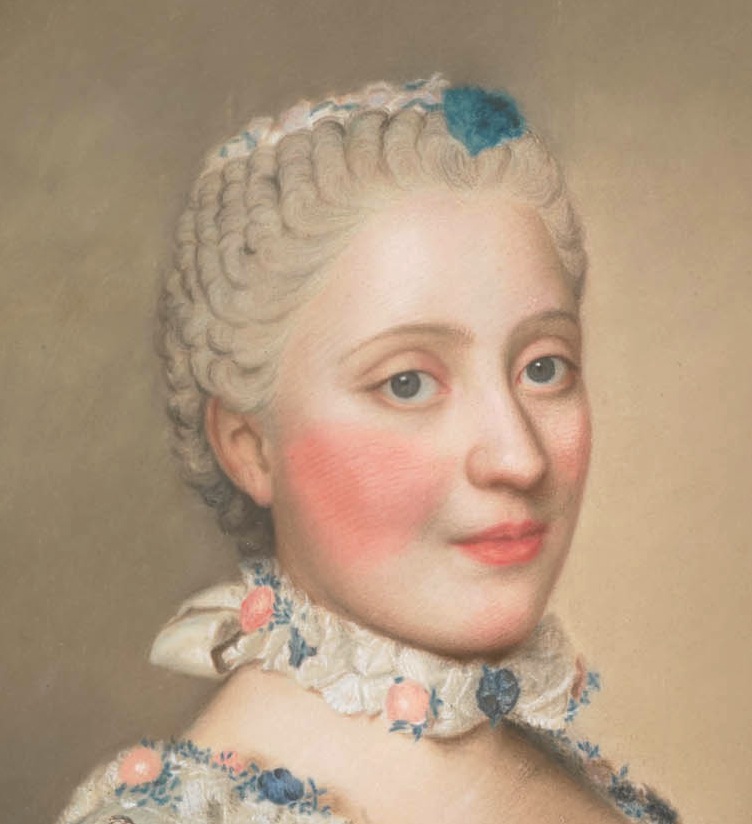
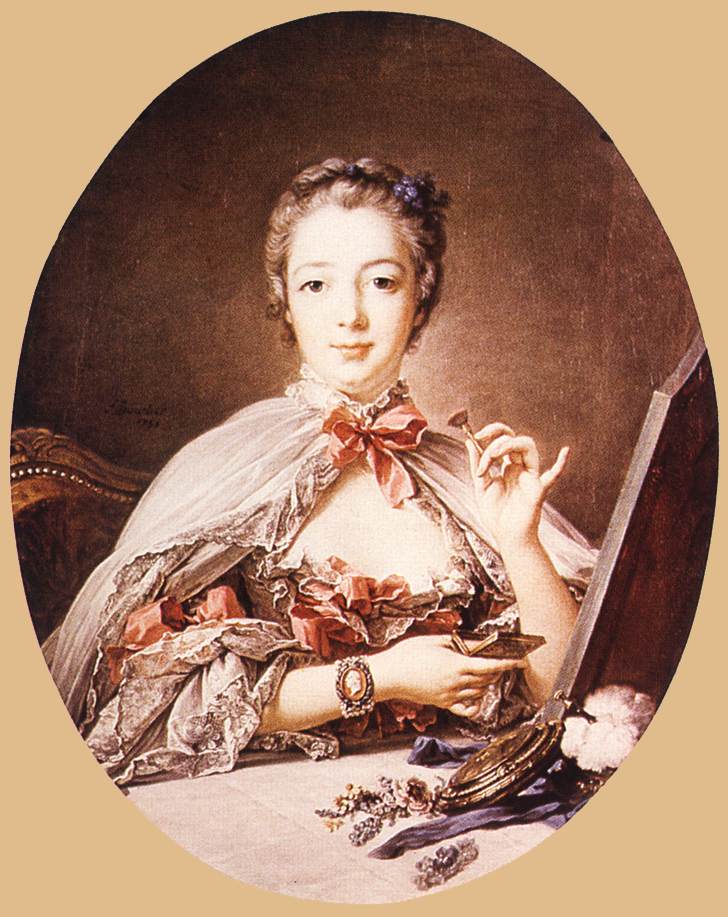
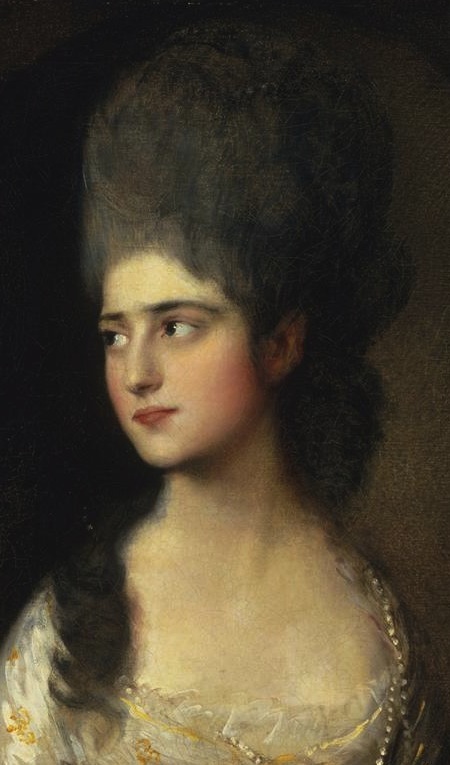
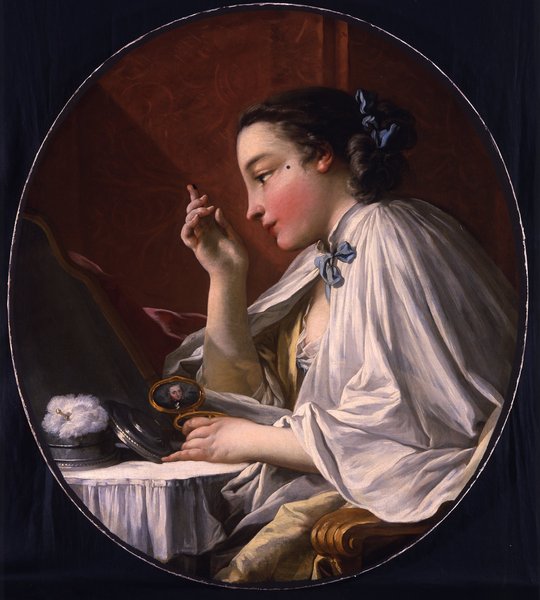
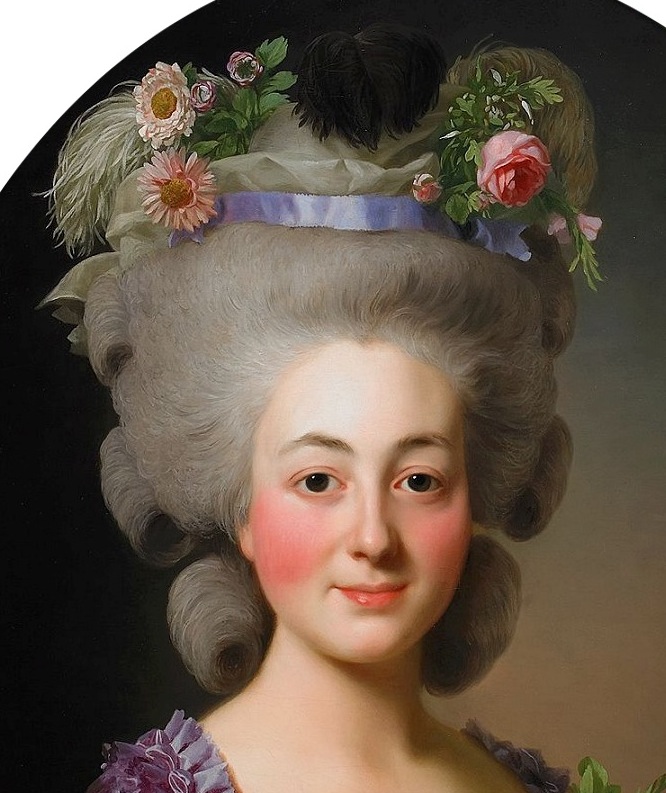
In Elizabethan England, cosmetics were seen as a health threat because many thought they would block vapors and energy from circulating properly. Because men's makeup wasn't as obvious as women's (women wore egg whites over their faces to create a glazed look), it was considered even more deceptive than women's. During this time, women also began bleaching their hair with lye. Understandably, this substance caused hair to fall out... so, wigs were introduced. However, women's wigs were often so elaborate that they had to be greased with lard to keep them in place, which attracted lice and other pests! On a more pleasant note, the art of creating new fragrances by blending ingredients was developed in France in the seventeenth century. Natural perfumes were made from ingredients such as flowers, roots, fruits, rinds or barks, or any other natural aromatic substance. Perfume-making was an incredibly laborious process that required enormous amounts of natural ingredients to produce small quantities of fragrance. By the reign of Charles II, the trend in pale faces had been obliterated, after Europe saw the ravages of widespread illness. For sun-fearing people whose pale faces made them appear sickly, heavy makeup supplied the color of a healthy glow. During the French Restoration in the 18th century, red rouge and lipstick were the rage and implied a fun-loving spirit. This stuck in France, but eventually people in other countries became repulsed by excessive makeup use and said the painted French must be unattractive because they had something to hide.
The Victorian era saw a number of advances in cosmetics and beauty products. By the nineteenth century, zinc oxide became widely used as a facial powder, replacing the more deadly mixture of the past. However, Victorians unknowingly continued to use other poisonous substances for eyeshadow (lead and antimony sulfide), lip reddeners (mercuric sulfide), and powder to make one's eyes sparkle (belladonna, or deadly nightshade). At the same time, Queen Victoria's commitment to strict morals and modesty among women created a backlash against cosmetics. During the Victorian era, cosmetics were considered the devil's making, associated with prostitutes and women of questionable morals. When makeup regained acceptance in the late 19th century, it was with natural tones so that the healthy, pink-cheeked look could be achieved without giving in to the moral decadence of full makeup, which was still seen as sinful.
The dawn of the Industrial Age, however, changed everything. By the Edwardian era, cosmetics again became a commercial industry. Anti-perspirants and deodorants first appeared in the 1890s, with aluminum chloride as the active ingredient. Through mass publishing made possible by advances in printing, the cosmetics industry saw a substantial growth at the turn of the century. Magazines kept women informed that exercise, diet, and the proper use of cosmetics and hair products could make them more attractive. World War I also had an unlikely impact on cosmetics. Given the sudden absence of men in American society, women gained more independence in the late 1910s, both socially and financially. This enabled them to acquire a disposable income, which many working class women used to buy colored powders, eye shadows and lipstick. Once American women gained the vote, the newly liberated woman showed how free she was by displaying her right to speak out: red lipstick practically became a social necessity. From the 1930s through the 1950s, the looks of various movie stars whose faces became known through the advent of color cinema defined vogue, from Mary Pickford's baby-doll face to Audrey Hepburn's cat-eyes eyeliner. The 1960s brought a slew of makeup changes, from whited-out lips and Egyptian-style eyeliner to fantasy images like butterflies painted on faces at high-fashion outings. The heavy eyeliner look remained through the late 1970s and 1980s, with wide color ranges entering the wearer's palette. The bright flourescent tones of clothing during the 1980s was only paralleled by the frosted pastel lipsticks and wild eye color popularized by pop rock and punk music stars. Makeup of today's Western world claims to be a melange of past styles with a new emphasis on the natural look. This natural look, strangely enough, has taken centuries of painting faces to achieve!