Translate

Wednesday, December 4, 2013

Shrapnel: Items in Brief


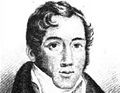
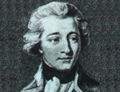
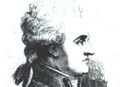
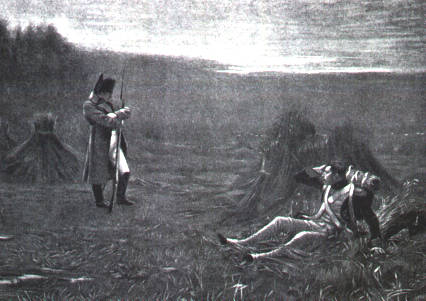
A soldier awakens to find Napoleon on guard dutyNelson mortally woundedhttp://www.napoleonguide.com/ashotshell.htm
Bonaparte letter goes for 150,000 euros

A 200-year-old letter by Napoleon Bonaparte in which he promises to blow up the Kremlin has been sold for 150,000 euros. The 1812 letter was bought by the Museum of Letters and Manuscripts in Paris. The letter is written in code and was sold with a deciphered transcript. The original estimate for the item was about 15,000 euro. In the letter Bonaparte said to his Foreign Minister Hugues-Bernard Maret: "On the 22nd at 3am I will be blowing up the Kremlin." It also shows Napoleon's frustration at the campaign, with his army ravaged by disease, cold and hunger: "My cavalry is in tatters, a lot of horses are dying. Make sure we buy more as soon as possible." Napoleon kept the promise to blow up the Moscow Kremlin, destroying the Kremlin's walls and towers before retreating with his army on its fatal march home.

No Jewish officers
While more than 35,000 Jews served in the Austrian army during the Revolutionary and Napoleonic Wars, none were allowed to officially become officers until 1815.

Austrian moustaches
In keeping with the great European tradition of hussars wearing moustaches, Austria's generals who came from the light-cavalry regiments kept them throughout their careers. The most notable being Dagobert Wurmser and Peter Vecsey.

Never Give Up
It's doubtful that courage has ever been more impressively shown than that by Frenchman Aristide-Aubert Dupetit Thouars, captain of the Tonnant, during the Battle of the Nile. Thouars had his right arm shot away, then the left and finally one of his legs was taken off by a cannonball. Refusing to give up command, he insisted on being put in a tub of bran that was on deck and led his men until he collapsed from blood loss. One of his final orders was to nail the Tricolour to the mast so it could not be taken down in surrender.

Ups and downs
The slow velocity of musketballs meant the projectiles climbed quickly in flight. Of course they dropped quickly as well and so French infantrymen were told to aim for the head at 140-200 metres, the waist at 100 metres and at the knees at 50.

Gunpowder Plot
French gunpowder was coarse and that meant the barrel needed to be thoroughly cleaned after 40 to 50 shots. Failure to do so resulted in loading times being drastically increased and there was a danger of the weapon exploding. This is because the build up of powder residue made it difficult to ram home the next round. It was also the build up of powder that could cause a ball to jam in the barrel after the weapon was fired with the resultant pressure build up causing the weapon to explode.

Skin Flints
To save wear and tear on both firing mechanisms and precious flints, French recruits practised musket drills with pierre de bois - or false flints made of wood, or a piece of cow's hoof. During the Napoleonic Wars flints became difficult to get and so soldiers were ordered to take them from the dead and wounded on a battlefield.

Napoleon's Height
Although known as the Little Corporal, Napoleon Bonaparte was in fact of average height for the era. In French measure he stood 5 foot two inches (or 5 foot six inches in the British equivalent). This is about 168 centimetres.

French Muskets
The regular musket of French Napoleonic infantry was the Charleville, named after the gunworks at which it was produced. It weighed 4.5 kilos (10 pounds) and was about five feet (1.5 metres) long.

Napoleon's Hand
Many people want to know what was the reason Napoleon Bonaparte kept his hand in his vest and the answer is easy. It was fashionable at the time for gentlemen to stand in that way.

Road Hogs
A column of cavalry troopers certainly filled the roadways of Napoleonic Europe as these figures indicate. Each cavalryman would take up a width of 0.75 metres (2.5 feet) and, if riding four abreast, the columns would completely take up the narrow roads. The width of the columns, however, pales when matched with the fact a column of 1000 men and horses would tail back 750 metres (2500 feet).

Easy Really
France's 17th Century expert in fortifications and sieges, Marshal Vauban (1633-1707), believed there was no fortress in the world that could hold out longer than a month. The proviso was that the attacking force needed to have 60,000 troops (with 2500 tonnes of supplies) and 132 heavy cannons with 16,000 rounds of shot (consuming a paltry 132 tonnes of ball and powder). Add to that 20,000 supply animals and 80,000 tonnes of fodder and it's all rather easy really.

Poor Prussians
Pay was so appalling in the Prussian army of the Napoleonic Wars that Helmuth von Moltke, a young officer who would become the architect of German military success in the Franco-Prussian (1870) and Austro-Prussian (1866) wars, had to translate The Rise and Fall of the Roman Empire to make enough extra money to make ends meet.

Most Wounded
France's Marshal Nicolas Oudinot was celebrated as the senior officer most wounded during the long campaigns. Oudinot was injured by the enemy on no fewer than 24 occasions and averaged 1.14 wounds per year of his Napoleonic service. In 1795 and 1796 he was shot twice and suffered nine sword cuts.

... and the Runners-up
General Jean Rapp rivalled Oudinot for wounds - two dozen counted - while Marshal Emmanuel Grouchy suffered 18 wounds. Mind you, several - one report up of 14 - of those came during the fight before Grouchy was captured following Novi.

Fiery Flags
As Allied forces closed in on Paris in late March 1814, Marshal Jean Serurier, governor of Les Invalides, oversaw the mass burning of battle flags taken from enemy units over hundreds of years. Some 1500 of the battle trophies were burned.

Captured Eagles
The first French eagles captured by British forces during the Napoleonic Wars were those of the 26th and 82nd line regiments taken on Martinque in 1809.

Lucky City
When Napoleon Bonaparte marched into Venice in 1797 he was at the head of the first army to have entered the Italian city since it was founded some 1350 years before.

Last Battleship
The last wooden battleship to slip beneath the waves was HMS Implacable in 1947. The Implacable was captured by the Royal Navy from France in 1805 when it was known as Duguay-Trouin.

No Turkey
Despite finding himself at a disadvantage against the modern armies of France, the Ottoman Empire's ruler Sultan Selim was a dab hand with older weapons. In 1798, the sultan let fly with the longest two shots ever from a bow when he sent arrows flying 899 metres (974 yards).

Bad Egg
A tale is told of how the Duke of Wellington was so disinterested in his meals that he once ate a rotten egg - without noticing he had done so!

Victory Cost
As the banker of France's enemies during the Revolutionary and Napoleonic Wars, the British paid a pretty penny for defeating Napoleon Bonaparte. It is estimated the bill for the eventual victory was close to £700million, or 90 years of peacetime military spending.

Last Survivor
The last veteran of the War of 1812 to die was Hiram Cronk, who was 105 when he passed on in 1905.

Man Overboard
Until the mid-17th Century, warships still required their men to load the cannons from outside the vessel. Britain first adopted the practice of actually having the guns reloaded after being run-in and dramatically boosted its naval firepower.

Tuesday, December 3, 2013

Declassified spy photos uncover a lost Roman Eastern frontier

Lost Roman Frontier
Lost Roman Frontier
Pic: Art Daily

Research by archaeologists at the Universities of Glasgow and Exeter has identified a long wall that ran 60 kilometres from the Danube to the Black Sea over what is modern Romania. It is considered the most easterly example of a man-made frontier barrier system in the Roman Empire. Built in the mid-second century AD, ‘Trajan’s Rampart’ as it is known locally, once stood 8.5m wide and over 3.5m high and included at least 32 forts and 31 smaller fort lets along its course. It is thought to have served a similar purpose to other Roman frontier walls, such as Hadrian’s Wall, built to defend the Empire from threats to the borders.

Trajan’s Rampart actually consists of three separate walls of different dates; the ‘Small Earthen Wall’, the ‘Large Earthen Wall’ and the ‘Stone Wall’. The constructions were previously known about, although wrongly thought to date to the Byzantine or Early medieval period.
Although it is estimated that over 50% of all archaeological sites in the UK have been discovered from the air, other countries are less well studied. Archaeologists believe that studying declassified photographs taken during covert surveillance may herald a new era for archaeological discovery, and may help to uncover and identify thousands of new archaeological sites around the world.

De-classified War-time photographs

Tens of millions of images of Europe and the Middle East were taken by Allied and German air forces during the First and Second World Wars and are now held in vast public archives. Alongside this, a considerable historical aerial resource is also now available from the recently declassified covert US CORONA satellite intelligence programme of the 1960s, 70s and 80s, which includes around 900,000 photographs from around the world.
These images are particularly valuable to modern archaeologists as they effectively turn back the clock to a time before later Twentieth Century development changed the face of the landscape through industrialisation, intensive farming practices and urban development.
Bill Hanson, Professor of Roman Archaeology from the University of Glasgow, said:
We believe we have enough evidence here to demonstrate the existence of a chronologically complex Roman frontier system, and the most easterly example of a man-made barrier in the Roman Empire, serving to block an important and strategically valuable routeway. It is an incredibly important discovery for the study of Roman history.
Dr Ioana Oltean, Senior Lecturer in the Archaeology Department, University of Exeter, said:
Photographs from military surveillance are revealing more than those who took them could have imagined because now, half a century or more later, they are proving to be of enormous benefit in showing us our lost archaeological heritage. Thanks to such images, the landscape of this frontier zone is now known to have been as busy in the past as it is today. We hope that this discovery will provide stimulus for further examination of many more neglected frontiers.

Leading Napoleonic Era Sailors

http://www.napoleonguide.com/navy_topsail.htm

War of the Roses


1453 to 1485

Lancastrians — versus — Yorkists


http://www.heritage-history.com/www/heritage.php?Dir=wars&FileName=wars_roses.php

Introduction : 


roses

 One after another all the nobles plucked red or white roses and put them in their caps.
The War of the Roses was a terribly destructive, long-lasting, civil war in England between two families with rival claims to the throne, the Yorks and the Lancasters. Its net result was to kill off almost all the direct claimants to the throne on either side of the royal family, wreak havoc and destruction, turn long term resentments into blood-feuds, and bring the entire Plantagenet line, which had ruled England for over 300 years, to an ignominious end. Furthermore, in terms of convoluted plot twists, reversals, treachery, shifting alliances, military setbacks, and 'surprise' endings, it has few parallels in history. In other words, it is not an easy war to follow either in terms of alliances, or military progress.
The war takes its name from the two Roses that symbolized respectively, the houses of Lancaster (red rose) and York (white rose), among the English aristocracy. It had its roots in a disputed succession that had occurred two generations previously, when Henry IV (Bolingbroke, a Lancaster), ascended to the throne after Richard II had been deposed. It truth, his cousin Clarence, whose descendents were the Yorks, had a better claim, but Bolingbroke was able to make good his claim because his father, John of Gaunt, had been regent and was very influential. Henry V, who succeeded Bolingbroke was very popular due to his great victories in France, so no one disputed his claim to the throne, or that of his son, as long as he lived. Unfortunately, Henry V died young, and Henry VI proved to be a weak and indecisive king, surrounded by unpopular advisors. In this circumstance, the York family, spurred on by the Earl of Warwick, began to actively reassert their claim.
The political machinations to reclaim the throne for the York line started long before the actual fighting, and when, after the first several years of his marriage to Margaret of Anjou, Henry VI failed to produce an heir, there was great optimism that on his death, the throne would pass peaceably to the Yorks. An official agreement of succession was made, and for a long while, it appeared that the Yorks would prevail without bloodshed. But after seven years of marriage, Henry VI did unexpectedly produce an heir, and his wife Margaret of Anjou, who had all of the strength of character and decision that her husband lacked, abrogated the agreement on Yorkish succession, and insisted on the rights of her son to the throne of England.
In the early years of the war, Margaret of Anjou, rather than her husband was driving force behind the Lancaster cause, and she shrank at nothing, from leading armies herself, to beheading her enemies to promote the cause of her son. On the York side, the driving force was the Earl of Warwick, and the Duke of York, who were cousins by marriage. Warwick was the wealthiest and most influential man in England at the time, but had no male heirs and was therefore, determined that his daughters should marry into the Royal family.
The war itself occurred in three phases. The first phase was the longest and bloodiest, and resulted in a York victory. The second phase involved a rebellion within the York family which provided an opportunity for the Lancaster's to reassert their claim. They briefly succeeded, but the crown soon fell back into the hands of the Yorks. The third phase occurred following the death of the Yorkish King Edward IV, and was fought between Richard III, a usurper, and Henry Tudor a distant cousin on the Lancaster side.


Phase I—Defeat and exile of Lancasters : 1453–1464


roses

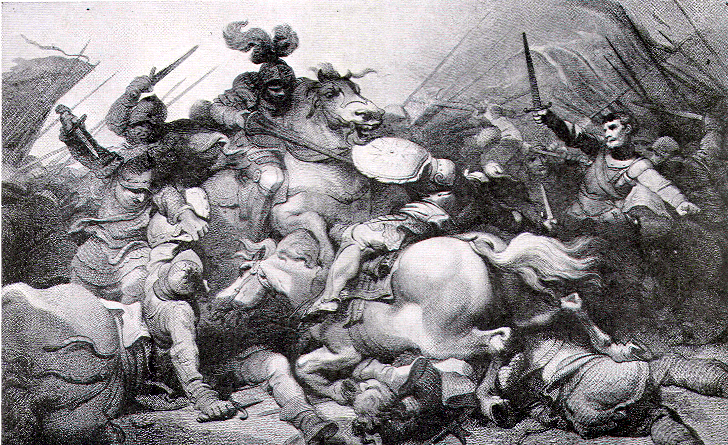
 Early battle in the War of the Roses
The most serious years of fighting between the Yorks and Lancasters occurred between 1459 and 1461, and resulted in a victory for the Yorks—the Lancaster Royal family was sent into exile in France, and Henry VI was imprisoned in England. There were however, very many striking reverses during this period of the fighting, and at times it seemed as though the Yorkish cause was lost. In 1453 at Stamford bridge, and again in 1455 at St. Albans, the conflict between the Lancaster's and Yorks had broken into armed combat, but on both of these occasions, the conflicts were temporarily resolved by compromise. The underlying issues however, and the conflict between the Queen, who was essentially running the country, and the Duke of York worsened over time and again broke into open warfare at the battle of Blore Heath.
Once both sides had settled on open war, the early victories went in favor of the Yorks, but at the battle of Wakefield, in December of 1460, the Yorks met with disaster. The Duke of York and his eldest son were both ambushed and beheaded, and the Yorkish forces were scattered. Far from discouraging the Yorks however, this horrid loss enraged their supporters and over the next few months, the Yorks raised more armies under Edward IV, the second son of the deceased Duke of York. The Yorks prevailed over the Lancasters first at (second) St. Albans, and then at Towton, the largest and bloodiest battle ever fought on English soil. Towton was as great a disaster for the Lancasters as Wakefield was for the Yorks, and the royal family scarcely escaped with their lives. London had been, from the beginning, a Yorkish stronghold, so with the Royals in exile, in 1461, Edward IV was crowned King of England and assumed control of the government in the south. Lancastrian strongholds in the north continued to hold out, however, and broke out in rebellion in 1464. When Somerset, the military leader of the Lancasters, was killed at the battle of Hexham however, all armed resistance ceased for almost a decade.


Battle / Outcome

Description
Battle of Stamford Bridge
Drawn Battle (Yorks vs. Lancastrians)
An encounter between the retainers of Sir Thomas Neville, and those of Lord Egremont, which developed into a pitched battle, in August, 1453. It is considered to be the beginning of the Wars of the Roses.
Battle of St. Alban's
Yorks defeat Lancastrians
Two engagements were fought here in the course of the war. On May 22, 1455, 2,000 Lancastrians, under Henry VI, posted in the town, were attacked by 3,000 Yorkists, under the Duke of York. The Duke pierced the Lancastrian centre, and drove them out of St. Alban's with heavy loss, among those who were killed being the Earls of Somerset and Northumberland.
Battle of Bloore Heath
Yorks defeat Lancastrians
Fought September 23, 1459, between the Yorkists under the Earl of Salisbury, and the Lancastrians under Henry VI. The former, who were inferior in numbers, were attacked by Henry, who crossed a brook before the assault. As the Lancastrians were reforming after the crossing, the Yorkists charged down upon them, and dispersed them with heavy loss.
Battle of Northampton
Yorks defeat Lancastrians
Fought July 10, 1460, between the Lancastrians, under Henry VI, and the Yorkists, under the Earl of Warwick. The king's entrenchments were betrayed by Lord Grey de Ruthyn, and the Lancastrians were defeated with a loss of 300 killed, including Buckingham, Shrewsbury, Egremont, and other prominent men. The King was made prisoner.
Battle of Wakefield
Lancastrians defeat Yorks
Fought December 30, 1460, between the Lancastrians, under Somerset, and the Yorkists, under Richard, Duke of York. The Lancastrians advanced from Pontefract and offered battle to Richard, who, though weakened by the absence of foraging parties, accepted the challenge. Somerset prepared an ambush, into which the Duke fell as he marched out of Wakefield, and the Yorkists were defeated with heavy loss. The Duke and many other nobles were killed, and Salisbury captured and beheaded.
Battle of Mortimer's Cross
Yorks defeat Lancastrians
Fought February 2, 1461, when Edward, Duke of York, defeated the Lancastrians, under the Earls of Pembroke and Wiltshire, and drove them back into Wales, thus preventing a concentration of the Lancastrian forces.
Battle of St. Alban’s
Lancastrians defeat Yorks
The second battle took place February 17, 1461, when the army of Margaret of Anjou, led by Somerset, Exeter, and others, attacked the Yorkists, under Warwick, Warwick withdrew his main body, leaving his left unsupported to withstand the Lancastrian attacks, and these troops, after a feeble resistance, broke and fled. Henry VI, who was a prisoner in Warwick's camp, escaped and rejoined the Queen, and a rapid advance on London would probably have led to his reinstatement. Warwick, however, took such prompt measures as to render the Lancastrian victory practically fruitless.
Battle of Ferrybridge
Lancastrians defeat Yorks
Fought 1461, shortly before the battle of Towton, when a force of Lancastrian cavalry, under Lord Clifford, defeated the Yorkists, under Lord Fitzwalter, who was endeavoring to secure the passage of the Aire at Ferrybridge. Lord Fitzwalter was killed.
Battle of Towton
Yorks defeat Lancastrians
Fought March 29, 1461, when Edward IV, immediately after his proclamation, marched against the Lancastrians, under Henry VI, and vigorously attacked their entrenched position at Towton. Aided by a heavy snowstorm, blowing in the faces of the defenders, Edward defeated them all along the line, with heavy loss, among the killed being Northumberland, Dacre and de Manley. Henry and Margaret escaped from the field, and fled northward.
Battle of Hedgeley Moor
Yorks defeat Lancastrians
Fought April 25, 1464, between the Lancastrians, under Margaret of Anjou and Sir Ralph Percy, and the Yorkists, under Lord Montague. The Lancastrians were totally defeated, Percy falling in the battle.
Battle of Hexham
Yorks defeat Lancastrians
Fought May 15, 1464, when the Yorkists, under Montague, surprised the Lancastrians, under Somerset, in their camp at Linnels, near Hexham. The Lancastrians were practically in a trap, and had no option but to surrender. Somerset and many other important leaders were taken, and promptly executed. This success secured Edward IV on the throne.


Commander

Short Biography
Earl of WarwickPrimary figure in war of the Roses. Changed sides from York to Lancaster. Killed at Barnet.
Margaret of AnjouRuled in stead of her weak husband, Henry VI. Led armies against Yorks. Deposed after the York victory at Hexham.
Duke of YorkAspirant to the throne in the early years of War of the Roses. Killed in action with eldest son.
Henry VI of EnglandLancastrian king of England whose weak rule, and loss of much of France, inspired the Yorks to oppose him in the War of the Roses.
SomersetLeading general on the Lancaster side. Killed at the battle of Hexham.

Sunday, December 1, 2013

THE HOUSE OF THEODORE 1432-85


http://warsoftheroses.devhub.com/blog/738912-the-house-of-theodore-1432-85/

December 22, 2011
Marriage of Henry V and Catherine of Valois
If The Wars of the Roses were fought by the men, it was the women who eventually sorted out the mess. By the late 1400s the royal family tree had become a crazy spider’s web of possible claimants to the throne, and it took female instinct to tease out the relevant strands from the tangle. The emotions of mothers and wives were to weave new patterns — and eventually they produced a most unlikely solution.

Owain ap Maredudd ap Tydwr was a silver-tongued Welsh gentleman who caught the eye of Henry V’s widow, Catherine of France. He was a servant in her household in the 1420S — probably Clerk of her Wardrobe — and being Welsh, he had no surname. The ‘ap’ in his name meant ‘son of’, so he was Owen, son of Meredith, son of Theodore.

But once he had captured the heart of the widowed Queen, Owen had needed a surname. According to later gossip, Catherine would spy on her energetic Welsh wardrobe clerk as he bathed naked in the Thames, and she decided she liked what she saw.

The court was outraged. An official inquiry was held. But Catherine stuck by her Owen and in 1432 their marriage was officially recognised. ‘Theodore’ became ‘Tudor’, and Owen went through life defiantly proud of the leap in fortune that he owed to love. Thirty years later, in 1461, cornered by his enemies after the Battle of Mortimer’s Cross, he would go to the block with insouciance. ’That head shall lie on the stock,’ he said jauntily, ‘that was wont to lie on Queen Catherine’s lap.’

From the outset, the Tudors confronted the world with attitude. Catherine and Owen had two sons, Edmund and Jasper, who were widely viewed as cuckoos in the royal nest. But the dowager Queen resolutely brought up her Welsh boys with her first-born royal son Henry VI, nine or ten years their senior, and the young King became fond of his boisterous half-brothers. In 1452 he raised them both to the peerage, giving Edmund the earldom of Richmond and making Jasper Earl of Pembroke. The two young Tudors were given precedence over all the earls in England, and Henry, who had produced no children, was rumoured to be considering making Edmund his heir. The new Earl of Richmond was granted a version of the royal arms to wear on his shield.

The Tudors rose still higher in the world a few years later, when Edmund married the twelve-year-old Lady Margaret Beaufort, who had her own claim to the throne. The great-granddaughter of John of Gaunt, she proved to be one of the most remarkable women of her time. Bright-eyed and birdlike, to judge from the portraits still to be seen in the several educational establishments she endowed, she was a woman of learning. She translated into English part of The Imitation of Christ, the early-fifteenth-century manual of contemplations in which the German monk Thomas of Kempen (Thomas a Kempis) taught how serenity comes through the judicious acceptance of life’s problems. ’Trouble often compels a man to search his own heart: it reminds him he is an exile here, and he can put his trust in nothing in this world.’

Diminutive in stature, Lady Margaret was nonetheless strong in both mind and body. She was married, pregnant and widowed before the age of thirteen, when Edmund died of plague. In the care of his brother Jasper, Margaret gave birth to Edmund’s son, Henry, in Jasper’s castle at Pembroke in the bleak and windswept south-west corner of Wales. But some complication of the birth, probably to do with her youth or small frame, meant that she had no more children. For the rest of her life she devoted her energies to her son —‘my only worldly joy’, as she lovingly described him — although circumstances kept them apart.

The young man’s links to the succession through his mother — and less directly through his grandmother, the French queen Catherine — made England a dangerous place for Henry Tudor. He spent most of his upbringing in exile, much of it in the company of his uncle Jasper. At the age of four he was separated from his mother, and he scarcely saw her for twenty years.

But Lady Margaret never abandoned the cause. She would later plot a marriage for her son that would make his claim to the throne unassailable, and she had already arranged a marriage for herself that would turn out to be the Tudor trump card. In 1472 she married Thomas, Lord Stanley, a landowner with large estates in Cheshire, Lancashire and other parts of the north-west. The Stanleys were a wily family whose local empire-building typified the rivalries that made up the disorderly jostlings of these years. Allied to Lady Margaret, the Stanleys would prove crucial partners as her son Henry Tudor jostled for the largest prize of all.

The Leaders Against Napoleon

http://www.napoleonguide.com/leadind.htm
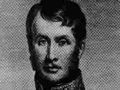
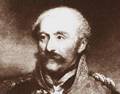
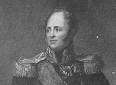
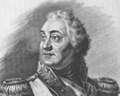
Faced with a supremely talented foe, the men who opposed Napoleon Bonaparte and his armies were tested to the extreme. It was only by acting together and reforming their nations' armies that they were finally able to remove Bonaparte from power.
AUSTRIA
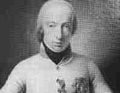
Francis I of Austria
Archduke Charles
BRITAIN
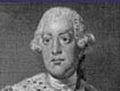
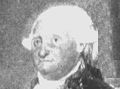
George III
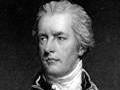
William Pitt the Younger
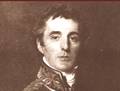
Arthur Wellesley, Duke of Welington
PRUSSIA
Gebhard von Blucher
RUSSIA
Tsar Alexander I
Mikhail Kutusov
SPAIN
Charles IV of Spain
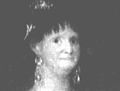
Maria-Louisa of Spain
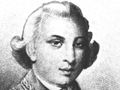
Manuel Godoy

Ygerna (Igraine)


..............................................................
According to Geoffrey of Monmouth, Ygerna or Igraine (Eigr in Welsh) was the Duchess of Cornwall, ravishing wife of Gorloisand mother of King Arthur. After the death of Gorlois, she married Uther Pendragon, who, under false pretenses and aided byMerlin's trickery, had slept with her, impregnated her with Arthur and had been responsible for her husband's death. Chretien de Troyes claims that after Uther's death, Ygerna retired to a palace she had had built for herself known as the Chastel des Merveillesor "Castle of Wonders".
She was the daughter of Amlawdd Wledig (the Imperator), a member of a younger branch of the Royal House of Dumnonia. He was probably a nobleman of Ergyng, though he has also been attached to the North of Britain and Brittany. His family are central to the Mabinogion story of "Culhwch and Olwen". As well as Arthur, various sources have attributed Ygerna with several children by her first marriage: daughters Elaine, (Anna)Morgause and, perhaps mistakenly, Morgan; sons Gormant and, mistakenly, Cador.