Translate

Saturday, December 28, 2013

Kingdom of Summer


Published by Sourcebooks
"[An] engaging mix of history, legend, and romance." -Publisher's Weekly starred review "A fast-paced Arthurian novel with broad appeal." -Historical Novels Review On the path toward greatness, even a hero makes mistakes. Armed with his magical sword and otherworldly horse, Gwalchmai proves himself the most feared and faithful warrior of Arthur's noble followers. But while defending the kingdom, he commits a grave offense against the woman he loves, leading her to disappear from his life and haunt his memories. With his trusted servant, Rhys, a commonsense peasant, Gwalchmai tries to find her in the Kingdom of Summer, where Arthur has sent him. But an unexpected and most malevolent force of evil and darkness is loose-that of his mother, the witch-queen Morgawse-and Gwalchmai finds that the secrets of his past may deny him peace... In the second book of Gillian Bradshaw's critically acclaimed trilogy, Sir Gawain comes to life as Gwalchmai, startlingly human yet fantastically heroic. PRAISE FOR Gillian Bradshaw "Compelling...splendid...vibrant...exhilirating, a novel seduces us into accepting sorcery and sanctity in King Arthur's England." -New York Times Book Review "Courage, darkness, magic, cruelty and kindness, justice and liberation...all the things that you have come to relish in the tales of King Arthur and his brave knights." -Yankee Romance Reviewers "This engaging and enchanting retelling of the Arthur legend will appeal to adults and younger readers alike." -Publishers W


Pauline Bonaparte


Published: March 19, 2009
True to his Corsican roots, Napoleon Bonaparte made empire a family business. In the wake of his conquering armies, one brother was sent to rule the Kingdom of Naples, another the Kingdom of Holland; a sister and her husband, packed off to Germany, became Grand Duke and Duchess of Berg. But how to deploy his 25-year-old sister Pauline, already a disciplinary hard case, notorious for philandering in a court not known for circumspection? “What is Guastalla, dear brother?” she inquired, when informed of the principality where she and her husband, Prince Camillo Borghese, were to preside. “Is it a fine great town, with a palace and subjects?” Told it was a four-square-mile strip of northern Italy, she erupted in a tearful rage, shouting that she wanted a government and ministers, just like her sister had, and threatening to scratch out the emperor’s eyes. “And my poor Camillo,” she demanded. “How can you do nothing for him?” When Napoleon pointed out that her husband was an imbecile, her answer was simple and direct: “True, but so what?”

It was the sort of impasse Napoleon would often face in dealing with Pauline, who resembled him both in temper and in looks. His solution indicates how well he understood her. Pauline was allowed to retain the title Duchess of Guastalla, along with the subsidiary income that went with it, and the principality itself was sold for six million francs, making her extremely (and, equally important, independently) wealthy. As Flora Fraser remarks in “Pauline Bonaparte: Venus of Empire,” her juicy portrait of Napoleon’s most flamboyant and most favored sibling, one of the few things Pauline respected was the power of money.
Fraser, the author of highly praised biographies of Emma Hamilton, Queen Caroline and the six daughters of George III, prefers to illuminate history from the domestic sidelines, but even she seems to have been surprised by how far into the boudoir Pauline would take her. In a recent interview, Fraser argued that this “caustic, chic and contrary” woman has been unfairly “airbrushed out of the story” — known these days only as the model for Canova’s semi-nude marble statue of Venus Victorious, a tourist attraction in Rome since 1804, when the first plaster model was cast. Yet aside from Pauline’s six-year first marriage to General Victor Emmanuel Leclerc, the “blond Bonaparte,” whom she accompanied to the West Indies in his disastrous attempt to combat Toussaint L’Ouverture’s rebel slaves, her part of the Napoleonic pageant consists mostly of scandalous footnotes — schemes to hide lovers from her brother’s spies, sybaritic retreats to fashionable spas, a lot of social one-upmanship and even more shopping and decorating.
She was said to be the most beautiful woman in Europe: elegantly lithe and long-limbed, with pale skin and dark eyes, as small in stature as her brother. Rumor had it that she numbered him among her lovers. Her great rival, the Empress Josephine, appears to have believed it — and so does Fraser, who thinks Napoleon might have given Pauline venereal disease. But there were many other candidates, particularly after she returned from the Caribbean following Leclerc’s death in a yellow fever epidemic, trailing whispers about her tropical experiments with black and lesbian partners. Back in Paris, she was initially attracted to Prince Borghese (and especially his fortune), but not long after their marriage she was on the prowl again, and would be for the next 20 years. Paganini was said to have sampled her favors; so too the father of Alexandre Dumas, whose son wrote a tantalizingly discreet account of their visit to her country estate. Chateaubriand delivered slippers to her in Rome, shipped via the diplomatic pouch. In between trysts, Italy’s great actor, Talma, read to her from Molière, and she herself was fond of declaiming lines of Petrarch learned at 15 from one of her first lovers (to whom she had sworn “my heart is not for sharing”). When her last great amour died in Russia at the Battle of Borodino, the bullet came from the gun of a fellow French officer. Some wondered whether he’d fired out of jealousy — or on orders from Napoleon.
Only when she entered middle age did Pauline’s predations acquire a tinge of desperation. The sort of antics that had previously seemed mischievous (camouflaging a lover as her chamberlain, hiring a handsome violinist to lead her nonexistent orchestra) began to look pathetic. But in her early 40s, she managed to pull off one last coup. Losing her looks and succumbing to the cancer that would soon kill her, she persuaded the pope to shame Prince Camillo, whose company she’d long spurned, into evicting his mistress from his Florentine palazzo and welcoming back this most unrepentant of unfaithful wives. Pauline remained difficult to the end. On her deathbed, she interrupted the priest’s homily and substituted her own, then carefully dictated a long will (providing, among other matters, for the disposition of the urn in which she kept the embalmed hearts of her first husband and her only son, felled in early childhood by a fever) and lectured her maid on precisely how her corpse was to be dressed. She was interred in the Borghese family vault in Rome, “the Corsican cuckoo,” as Fraser puts it, in the company of a pope and a cardinal.
Pauline’s life wasn’t entirely self-­indulgent. She appears to have been courageous in the face of horrific violence and disease in the West Indies. She alone of all his brothers and sisters joined Napoleon in exile on Elba. In the lining of the carriage he abandoned at Waterloo was a diamond necklace worth half a million francs, her contribution to his aborted restoration. She was preparing to join him on St. Helena when word came of his death. Still, after reading Fraser’s account of Pauline’s mostly amorous adventures, it’s hard not to agree with a friend of her first husband’s who observed that “she had no principles and was likely to do the right thing only by caprice.”
Certainly it’s the caprice that’s most memorable. Pauline’s two favorite roles were seductress and invalid, and she combined them in inventive ways as she roamed southern Europe in search of a cure for what Fraser believes was salpingitis, an inflammation of the fallopian tubes (which can occur after childbirth, but is also caused by multiple sexual partners and gonorrhea). One of the symptoms of the condition is abdominal pain that can be aggravated by walking — so Pauline insisted on being carried from bed to chaise longue to bath and back again, preferably by whatever man she had her eye on. Those who weren’t candidates for romance were treated more cavalierly. One visitor was stunned to find Pauline’s lady in waiting flat on the floor, Pauline’s feet firmly planted on her throat, in what was apparently her accustomed position. The lady remained there as Pauline chatted with her guest, joining the conversation in garbled tones. On another occasion, en route to a spa, Pauline made a brief rest stop. The owner of the estate had already been informed that she bathed in milk, but although he’d made sure to have plenty on hand, the arrangements were insufficient. “And my shower?” she demanded. In the absence of such a device, she required that a hole be cut in the ceiling above the bath so more milk could be poured down. This done, she continued on her way, ready to torment a new host.
Impetuous, cruel, alternately spendthrift and miserly, wildly manipulative and so self-destructive that her doctors helplessly sought ways to curb her sexual appetite, Pauline was, Fraser admits, “a terrible role model.” Which is, of course, why she’s such fun to read about. “I don’t suppose,” Fraser confesses, “I’ll ever write about anyone so infinitelyentertaining again.” Well, maybe not the next time out. Fraser has just started researching what looks to be a much more sedate project: “Portrait of a Marriage: The Washingtons.”

Alida Becker is an editor at the Book Review.

Friday, December 27, 2013

Susan Higginbotham’s Guest Post: Margaret of Anjou


Monday, January 10th, 2011 | Guest PostsSusan Higginbotham


Susan Higginbotham, author of the wonderful novel THE QUEEN OF LAST HOPES, has been kind enough to join us today for a guest post about her new novel. Specifically, about the woman who gives the novel its title. This post is about Margaret of Anjou, and her courage.
“In August 1482, a queen of England died in a borrowed house in France. Margaret of Anjou, the widow of Henry VI, had ceased to be of much importance to anyone. She had long since ceded what the French king, her kinsman Louis XI, wanted—her interest in her father’s lands. In the days before her death, all that she owned of any interest to him were her dogs.
Across the English Channel, if anyone took note of Margaret’s death, it must have seemed to be of little moment. Edward IV, who had triumphed over Margaret in 1471, was securely on the throne. Most of the men who had fought for Henry VI and Margaret had reconciled themselves to Edward IV’s reign; some, like John Morton, now Bishop of Ely, had flourished in it. John de Vere, Earl of Oxford, one of the few men who had remained a steadfast Lancastrian, was locked up in Hammes Castle and seemed likely to remain there as a prisoner for the rest of his life. Jasper Tudor, Henry VI’s half brother, was an exile in Brittany, along with his nephew, Henry Tudor. Margaret Beaufort, Countess of Richmond, Henry Tudor’s mother, had even entered into negotiations with Edward IV to allow her son Henry to return to England. When Margaret breathed her last, the cause of the House of Lancaster already seemed dead.
Then things fell apart. Just eight months after Margaret of Anjou died, Edward IV followed her to the grave. His sons were declared bastards by the brother he had trusted above all others, who took the throne as Richard III. Suddenly Henry Tudor, known to hardly anyone in England, found himself in a position to claim the throne, and he did. On August 22, 1485, just three years after Margaret of Anjou had died in exile, Richard III was defeated at the Battle of Bosworth, and a Lancastrian king was on the throne of England.
Margaret of Anjou has not always found sympathy with modern audiences. The cause she fought for—the divine right of Henry VI to reign as king, and of his son, Edward of Lancaster, to inherit his throne—is not one that resonates with us. She did not champion the rights of women or of an oppressed minority. Her cause had no charismatic figure to gather round, only a young boy and an ineffectual king who was blundering at the best of times and mentally ill at the worst. Most damning in our eyes, perhaps, is the fact that her intransigence cost the lives of tens of thousands of men.  Yet Margaret lived in a time when people were expected to fight for their rights, and it is hard to see how she could have reconciled her conscience to passively sitting back and allowing her son to be disinherited. She—and others—believed passionately in her cause, sacrificed all for it, and never wavered from it. Whatever else can be said about Margaret of Anjou, she had the courage of her convictions.
Henry Tudor on the throne was not the outcome Margaret had sought, of course: it had been the rights of her husband, Henry VI, and her son, Edward of Lancaster, for which she had struggled. Her own fight ended in 1471, when Edward of Lancaster died on the field of Tewkesbury and Henry VI met a mysterious death in the Tower of London. It is unlikely that she had any hopes that Henry Tudor, a mere boy in 1471, would continue her cause. Perhaps, having lost the men she had struggled so bravely for, she did not even care. Yet some of the men who supported Henry Tudor in 1485, notably Jasper Tudor and the Earl of Oxford, had been Margaret’s loyal supporters, and in a sense, their eventual triumph was hers. I wish she had lived to see it.”

The long, strange trip of Désirée Clary

http://jasonlefkowitz.net/2013/03/the-long-strange-trip-of-desiree-clary/

Posted on Tuesday, March 19, 2013

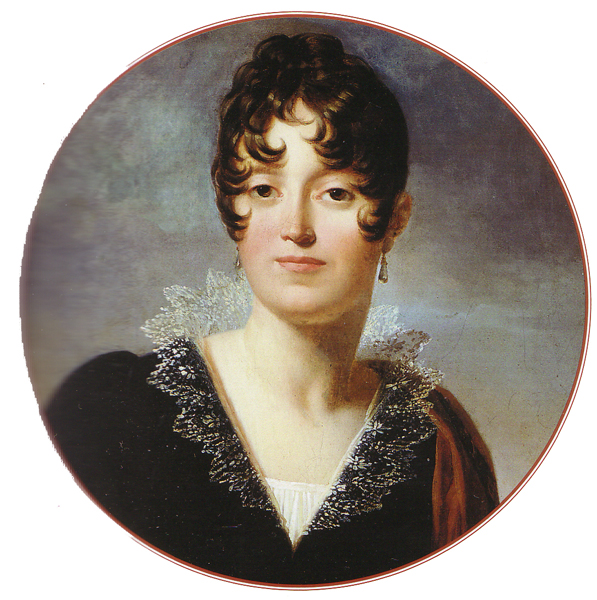
Désirée ClaryImage: from “Portrait of Désirée Clary,” by François Pascal Simon, Baron Gérard, 1810.
I like the Portrait of Désirée Claryjust because it’s so striking to look at. But even if you don’t care about its aesthetic appeal, its subject is an interesting figure to learn about.Désirée Clary is one of those fascinating figures you sometimes find on the fringes of Big History.
In her teenage years, she attracted the attention of a young Corsican artillery officer of little note namedNapoléon Bonaparte. The two became engaged, but the engagement was broken when her family moved to Genoa. Depressed, Bonaparte poured his feelings about the relationship into a self-pitying romantic novella, Clisson et Eugenie(Clisson and Eugenie), about a doomed relationship between a dutiful soldier and his faithless wife back home.
Upon her return to France some years later, she met and married another soldier, General Jean Baptiste Jules Bernadotte. Bernadotte was a talented soldier himself, and after Napoléon seized power and made himself Emperor he elevated Bernadotte to the elite rank of Marshal of the Empire.The Marshals led Napoléon’s armies through the whirlwind of the Napoleonic Wars, as the little artillerist led France to conquer most of Europe.
Bernadotte was one of the few Marshals who had built a reputation on his own before the rise of Napoléon; this made his relationship with the Emperor a delicate one, since both were conscious that he could be seen in the right light as a potential rival for the Imperial throne. Because of the unique relationship she had with both Bonaparte and Bernadotte, both men periodically employed her in attempts to influence the other, with varying degrees of success. That all came to an end in 1809, one year before the Portrait of Désirée Clary was made, when Napoléon, furious at Bernadotte for his lackluster performance at the Battle of Wagram, stripped him of his Marshal’s baton. This effectively ended his career in the French military.
From a strictly ladder-climbing perspective, it may therefore appear that Désirée had married below her potential; if she had married Bonaparte, she would have become Empress of France, rather than wife of a disgraced Marshal. Time and fate would prove this judgement incorrect, however.
Back in 1806, at the Battle of Lübeck, Bernadotte’s forces had captured a contingent of Swedes. As was his usual practice — while he had plenty of faults, cruelty to prisoners was not one of them –  Bernadotte had taken care to see that these prisoners were treated with kindness. When they returned to Sweden, the prisoners therefore had a story to tell of at least one French Marshal who was not a faceless, inhuman enemy. And tell it they did, all across Sweden.
This story redounded to Bernadotte’s benefit a few years later, when it became clear that the reigning (and quite old) King of Sweden, Charles XIII, was not going to be fathering any heirs to continue his royal line. This led that country’s nobility to search for a person who could be adopted into the royal family in order to take the throne when Charles died. Since Europe was embroiled in war, they thought, it was important that this person have a good military mind; and since Imperial France was at the peak of its strength, good connections there would be important too. Then someone cast their mind back to 1806. What was the name of that French general who had shown such kindness to the Swedes he had captured? What an excellent candidate he would make! So it was that in 1810, the year the Portrait was made, Jean Baptiste Jules Bernadotte was adopted into the Swedish royal line, and Désirée became Crown Princess of Sweden.
This would prove to be a much better long-term position than being Napoléon’s Empress would have been. By 1815 Napoléon’s power had been shattered for good, while Bernadotte would rule Sweden (and eventually Norway, too) for nearly three more decades. And even after Bernadotte’s death, Désirée would have influence in his kingdom as Queen Dowager until her own death in 1860, long after the First French Empire had been consigned to history.
But while her choices brought her incredible success at ascending the power structures of Europe — success that any ordinary social climber would have deeply envied — they were less successful at bringing her happiness. She had never sought a crown of her own, and had always preferred life in Paris to anywhere else in the world; she resisted actually moving to her new kingdom for years, leading to long separations as Bernadotte took the reins in Stockholm. She briefly attempted to live there in after her husband’s adoption, but found the climate unappealing and the royal family unwelcoming; she left for Paris in 1811 and would not return for twelve years, during which time both she and Bernadotte fell in love with others. Even after she came back to Stockholm and tried to live up to her royal role, she and Bernadotte drifted further apart, divided by her lack of interest in politics and dislike of the tiresome formality a Queen was expected to live under at all times. She became, as a result, a marginal figure in her own kingdom, viewed by her subjects as a sort of strange hothouse import, a Frenchwoman transplanted unsuccessfully into Swedish soil.
Much of the disconnectedness of her later life can be understood from a single fact: despite being queen of Sweden for almost 50 years, she never learned Swedish.
The woman who had been born a Marseilles silk-maker’s daughter died a queen in Stockholm in 1860. In an age of turmoil that struck down established personages and elevated new ones up to unprecedented heights, she had been elevated higher than nearly anyone else. But one has to wonder, as she gazed upon her unwanted crown, if it ever truly seemed worth what it had cost her.

Review: Kingdom of Summer


Front Cover

by Gillian Bradshaw
First published 1981. Edition reviewed: Sourcebooks, 2011. ISBN 978-1-4022-4072-0. 329 pages. Advance review copy supplied by publisher.
Kingdom of Summer is the second in Gillian Bradshaw's Arthurian trilogy, sequel to Hawk of May (reviewed here). The story still revolves around Gwalchmai (Sir Gawain in the later legends), though it is narrated by his (fictional) servant Rhys ap Sion. Many of the characters are figures from the legends, including Morgause, her husband King Lot of Orkney, their sons Gwalchmai and Agravain, Morgause's illegitimate son Medraut, Arthur's knights Cei and Bedwyr, and Arthur himself. Maelgwn Gwynedd, historical king of Gwynedd in the early to mid sixth century, appears as a secondary character*. The central character, Rhys ap Sion, and an Irish servant girl called Eivlin are fictional.
Rhys ap Sion is a freeborn farmer, peaceably working his family's land near the River Severn. When a wounded warrior, Gwalchmai ap Lot, seeks hospitality at the farm in a bitter winter, Rhys feels drawn to him and goes with him as his servant to Arthur's stronghold at Camlann and then on a diplomatic mission to Maelgwn Gwynedd. There Rhys encounters Gwalchmai's sinisterly beautiful mother Morgause and suave brother Medraut, not to mention their attractive Irish serving girl Eivlin. As Rhys learns more of the dark secrets haunting Gwalchmai's past, he comes to realise that the schemes afoot threaten not only Gwalchmai but Arthur's kingdom itself.
Fantasy is less dominant in Kingdom of Summer than in Hawk of May, a plus point for me. Gwalchmai still has his magical Otherworld sword and horse, and supernatural duels and healing miracles feature in the plot, but for me the strongest aspect of the novel was the interplay between the characters. Apart from Morgause, who is evil incarnate (as expected from her role in the previous book), everyone has a mix of strengths and weaknesses. Gwalchmai is at first sight the ideal hero of legend, brave, courteous and near-invincible in battle, but he is haunted by his not-entirely-honourable treatment of a woman several years earlier, and he is endearingly hopeless at practical matters such as obtaining food and shelter. Agravain is a complete contrast, brash, arrogant, inclined to casual violence and not given to thinking if he can help it, but also likeable in his ebullience. Medraut is a contrast again, charming, subtle and persuasive. The conflicts between the three Orkney brothers are sharply drawn, and test Rhys's loyalty to Gwalchmai.
Rhys himself, as the narrator, is a central character in the novel, and the tale is as much his as Gwalchmai's. A hard-headed farmer - both literally and figuratively - he is rather out of his depth in the world of warrior honour and Otherworldly weapons, and his down-to-earth common sense is both a support and a contrast to Gwalchmai's rather abstract concerns. The Irish girl Eivlin is a delight. Her first line, on being asked where she got that kettle, is to reply, "A hen laid it in the rafters, having been affrighted in a coppersmith's shop", which sold me straight away. In her own way, she demonstrates as much courage and loyalty as any of the warriors.
There are two distinct plot strands, Gwalchmai's search for the woman he wronged and Morgause's evil schemes to destroy Arthur and all he stands for. The first is resolved - although there is, I think, scope for it to reappear - and the second is clearly setting up for a climax in the last book of the trilogy. I shall be interested to see how it plays out.
There's a sketch map in the front for anyone who is unfamiliar with the geography of Arthurian Britain, although not all the place names are marked and Less Britain appears to be placed in modern Picardy and Normandy rather than its more usual location in modern Brittany. The ARC has no historical or author's note, although there may be one in the finished version. Not that it matters greatly, because the Arthurian legends have been told and retold so many times that they have near-limitless scope for interpretation.
Second in an engaging fantasy trilogy retelling the story of Gwalchmai (later Sir Gawain) of Arthurian legend.

*Although Maelgwn is dated to the early to mid sixth century (died in 547), I'm not sure that Kingdom of Summer is intended as set in the same period; Maelgwn may have been displaced earlier in time to make him contemporary with Arthur's heyday. The author's note for Hawk of May commented that 'the novel is only partially historical', so chronology is not that important.

Thursday, December 26, 2013

French Hunting dogs


French Spaniel


ima

The French Spaniel is both a pointing and retrieving hunting breed. It was originally used in 14th century France for falconry and net hunting. During the 19th century, the breed had a close call with extinction; however a French priest reestablished the breed. The breed is thought to be related to several other hunting breeds.
The breed stands 21 to 24 inches high and weighs 50 to 70 pounds, making it one of the largest Spaniel breeds. Its coat is flat over most of the body, but slightly wavy on the chest. The French Spaniel has a white coat with brown markings.
The French Spaniel is very trainable, responding well to positive reinforcement and repetition. The breed is a “people-pleaser”. It is a calm breed and makes a wonderful house dog as well as hunting companion. It is happiest and works its hardest when hunting in the forests or fields. It is a very determined breed and can adapt to several types of terrain.


The Art of Bryce Christian Lowry

http://sketchpendium.blogspot.com/2011/08/gwalchmai-ap-lot.html


Gwalchmai ap Lot

Here is an image of a character from Gillian Bradshaw's amazing Arthurian novels. His name is Gwalchmai, and he is the son of King Lot of the Orcades. He escapes his island home to Britain to become a warrior in King Arthur's family and is generally a very cool guy. This scene is from the second book in the series, "Kingdom of Summer."


Here is a detail of the Character so you can see him up close: